
A coupon is usually only half the job. The visitor takes the code, and then has to get to the shop where it works – often an affiliate site.
The Coupon Code widget can do both in one click. Which tab the shop opens in depends on one setting.
For the full settings tour of the Coupon Code widget, see Coupon Code Widget: Settings Overview.
Requirement – This widget is a part of The Plus Addons for Elementor Pro, make sure it’s installed & activated to enjoy all its powers.
Before You Start
- Edition: Pro — Coupon Code ships only in The Plus Addons for Elementor Pro. The free plugin contains no coupon widget at all, so there is nothing to fall back to.
- Prerequisite: Elementor (free) installed and active.
- Widget to enable: go to The Plus Addons > Widgets, search for Coupon Code and turn its toggle on. This is the Widgets screen, not Extensions.
- Have the destination ready. The address goes in Redirect Link. Both routes below use that one field.
Open the link in a new tab
- Edit the page with Elementor and drag the Coupon Code widget onto it.
- In Content > Layout, leave Coupon Type on Standard and pick a picture under Standard Style.
- In Content > Content, write the button text in Title and paste the destination into Redirect Link.
- Type the coupon into Code.
- Leave Select Action on Click.
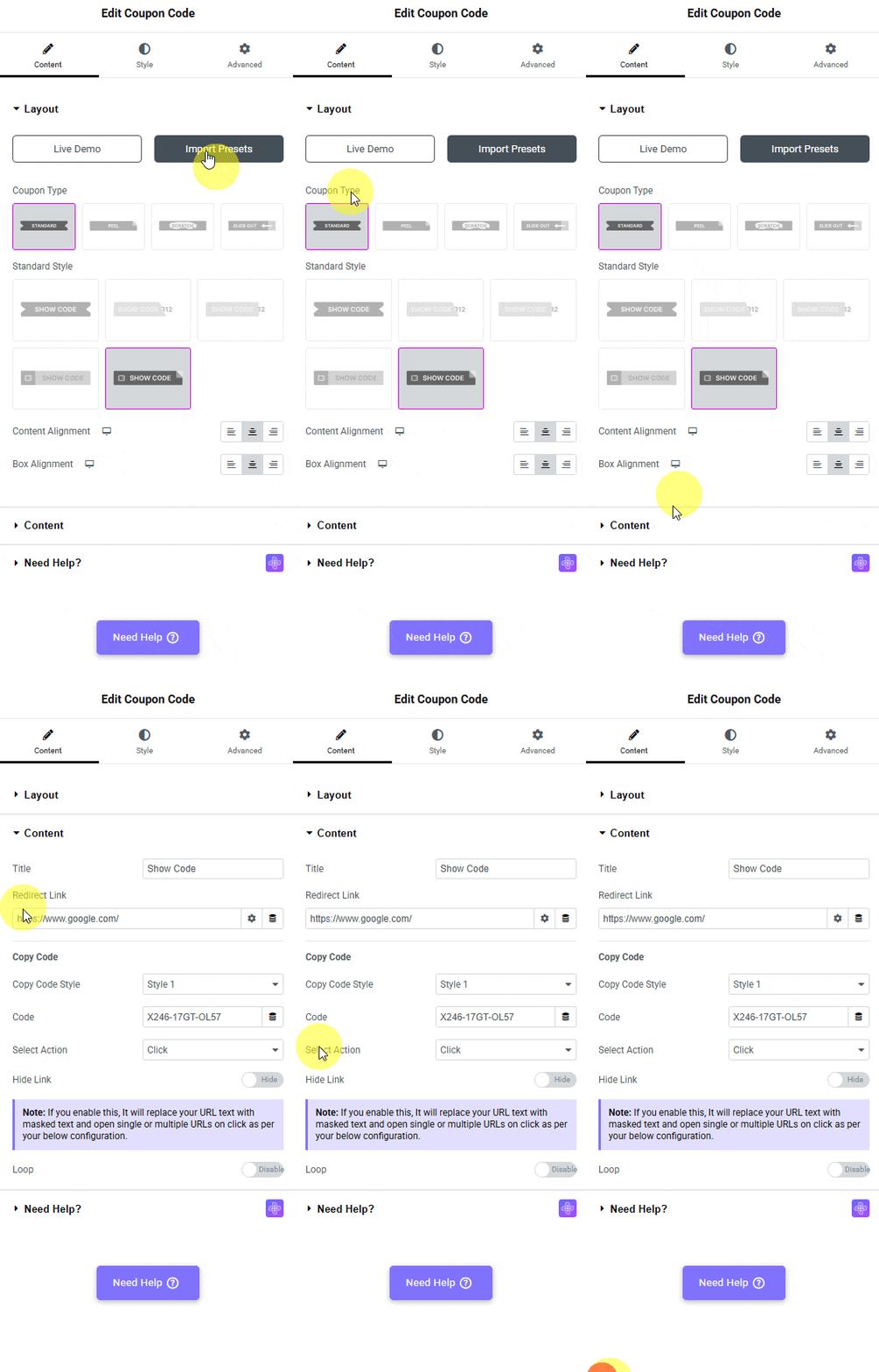
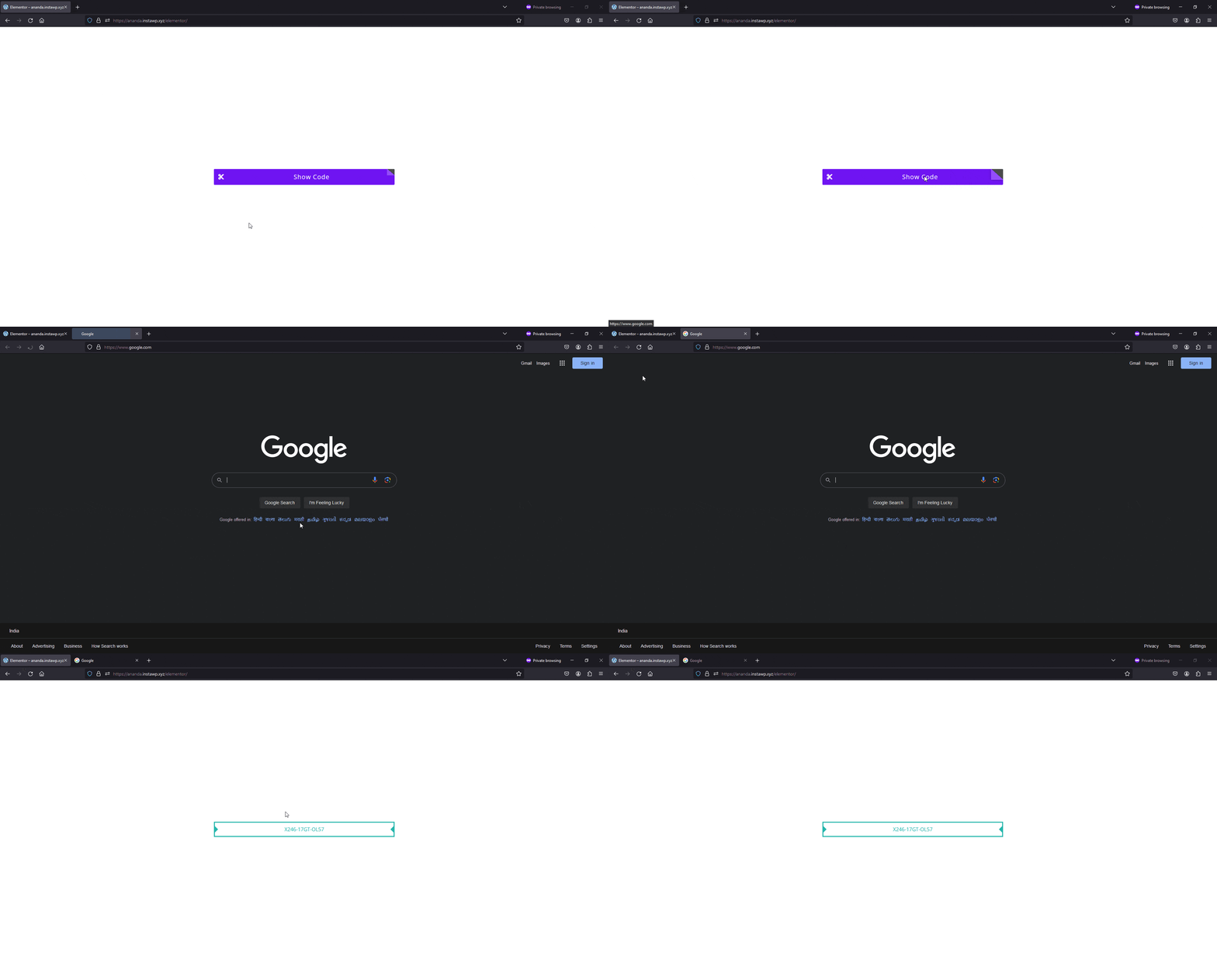
On the published page, clicking the coupon does two things at once: the button is replaced in place by the code, and the destination opens in a new tab. The visitor keeps the code in front of them in the tab they were on.

Open the link in the same tab
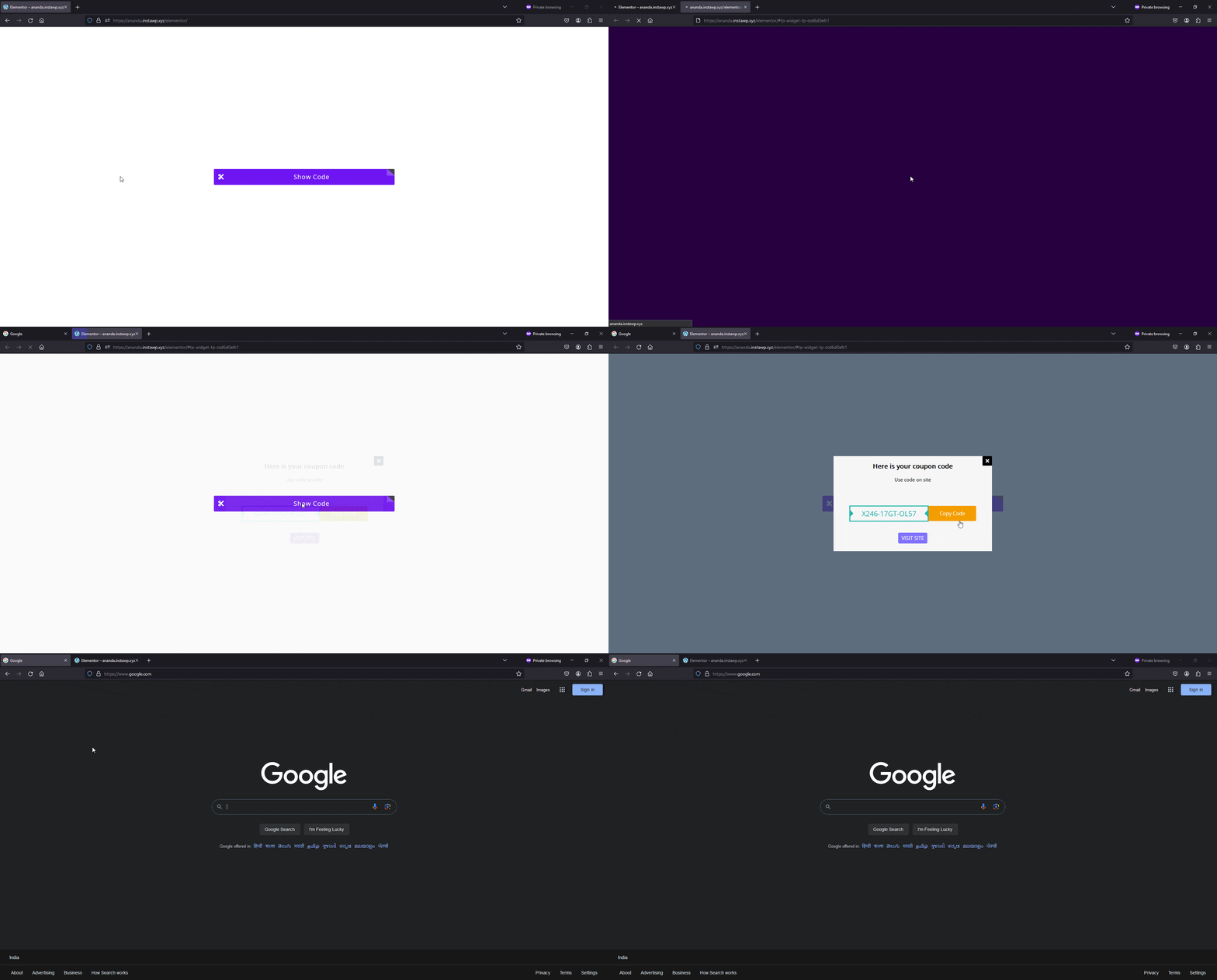
This route uses the popup, and it sends the two halves to different tabs: your link takes over the tab the visitor was on, and the popup with the code opens in a new one.
- Set up the widget as above – Standard, a Standard Style, a Title, a Redirect Link and a Code.
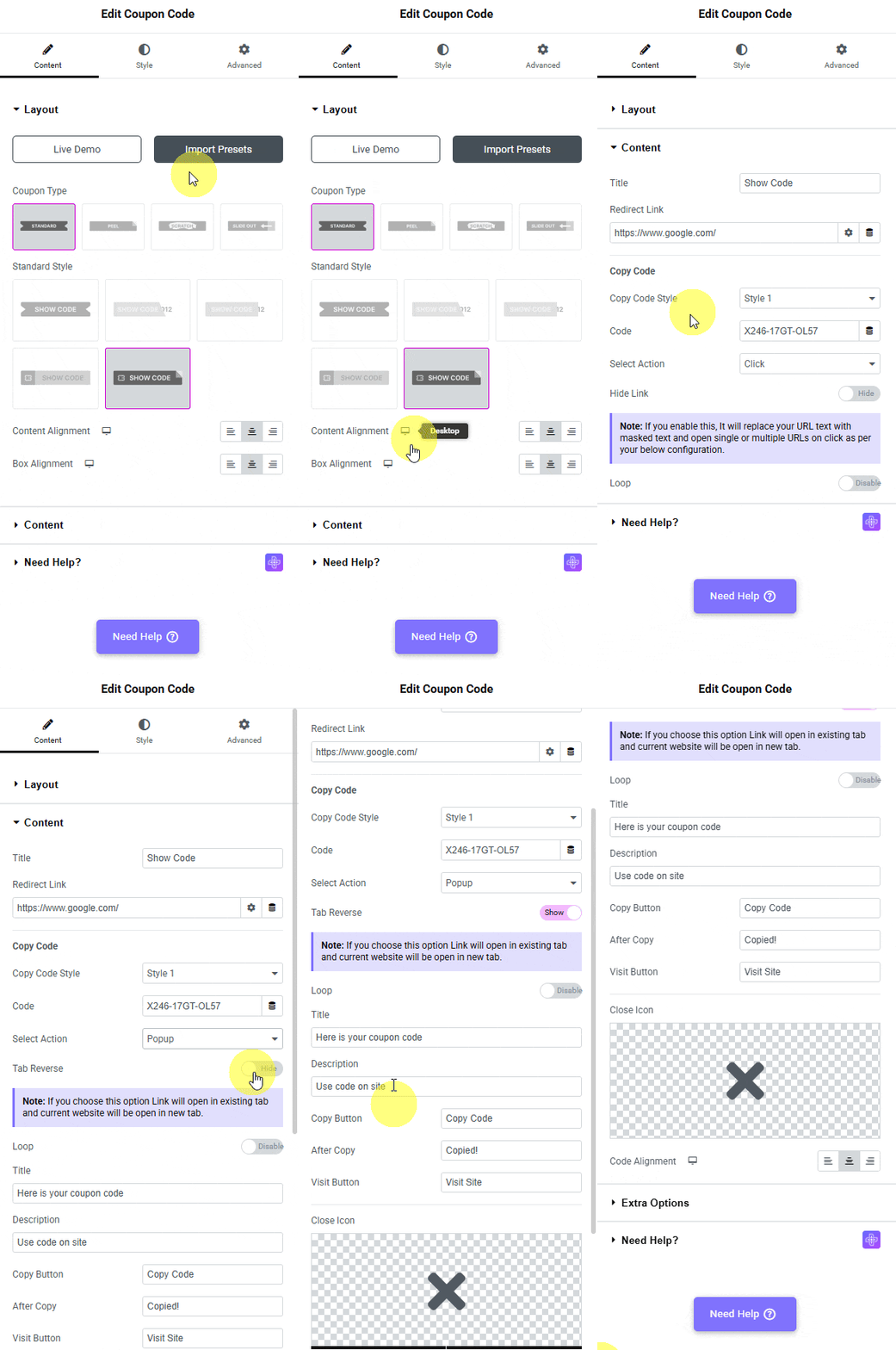
- Set Select Action to Popup. The popup fields appear.
- Turn on Tab Reverse. It only exists once the action is Popup.
- Fill in the popup’s Title, Description, Copy Button, After Copy and Visit Button as you want them.
Measured on a published page: after the click the original tab went to the Redirect Link, and a second tab opened showing the same page with the coupon popup already open, reading the popup title, the description, the code, Copy Code and Visit Site.
Which one to use
| Setting | Where the shop opens | Where the code is |
|---|---|---|
| Select Action Click | A new tab. | In place, in the tab the visitor was already on. |
| Select Action Popup | Only when the visitor presses Visit Site. | In the popup, with a copy button. |
| Popup plus Tab Reverse | The tab the visitor was on. | In a popup in a new tab. |
How It Behaves
- Click opens exactly one new tab. With a Redirect Link set, one click produced one new tab at that address and revealed the code in the original tab.
- With no Redirect Link, Click opens nothing. The code is still revealed.
- Tab Reverse really does swap the two. The link took the current tab and the popup took a new one – not the other way round.
- Without Tab Reverse, the popup’s link is manual. Nothing is opened until the visitor presses Visit Site.
Limitations
- The Click action reveals the code; it does not copy it. Only the Popup action has a Copy Code button. With Click the code is simply printed in place and the visitor has to select it by hand.
- The reveal cannot be undone. Once the code is shown, the button that said Show Code is replaced by the code itself. There is no way back to the button without reloading the page.
- Closing the popup rewrites the address bar. The close handler strips the query string from the URL, so a visitor who arrived on
?utm_source=…or on any filtered or paginated address loses it the moment they close the popup. Measured: a page opened at/?page_id=4610showed/after the popup was closed. - Pop-up blockers apply. Both routes open a tab from JavaScript during a click. That is normally allowed, but a strict blocker or an in-app browser can still stop it.
- Nothing here adds a
nofollowor sponsored marker for you. If the destination is an affiliate link, check your site’s own disclosure requirements.
Not verified
So you know exactly what has and has not been checked:
- The Style tab. Standard Style 1 and Style 3 were rendered; no colour, typography, border or popup-styling control was exercised.
- Behaviour in an in-app browser (a link opened inside a social app). Both routes were measured in a desktop Chromium only.
- A destination on another domain. The measured link pointed at the test site itself; nothing in the widget treats an external address differently, but that was not separately observed.
Troubleshooting
Tab Reverse is not in the panel
It needs Coupon Type Standard and Select Action Popup. With Click you get Hide Link in its place.
Nothing opens when the coupon is clicked
Check Redirect Link is filled in, then check the browser did not block the new tab. Test on the published page, not in the editor preview.
The visitor sees the popup but the shop never opens
Without Tab Reverse the popup does not navigate anywhere on its own – the visitor has to press Visit Site. Give that button a label that says so.