
The Social Feed widget reads YouTube through the YouTube Data API, and that needs an API key from a Google Cloud project.
The key is not an access token and there is no login involved — but the widget has one credential field per source, so the key goes into the field labelled Access Token.
Requirement – This widget is a part of The Plus Addons for Elementor Pro, make sure it’s installed & activated to enjoy all its powers.
Before You Start
- Edition: Pro — Social Feed ships only in The Plus Addons for Elementor Pro. With Pro deactivated the widget does not render at all, and there is no free version of it.
- Prerequisite: Elementor (free) installed and active.
- Widget to enable: go to The Plus Addons > Widgets, search for Social Feed and turn its toggle on.
- Prerequisite: a Google account.
- Where the key ends up: in the Social Feed widget, open the item under Social Feeds, set Source to Youtube, and paste the key into Access Token.
These steps happen in the Google Cloud console, not in WordPress. Google redesigns that console regularly, so read the sequence as the shape of the job — see Not verified at the bottom of this page.
Generate a YouTube API key
- Log in to your Google account and go to the Google Developers Console.
- If you have no project yet, click CREATE PROJECT.
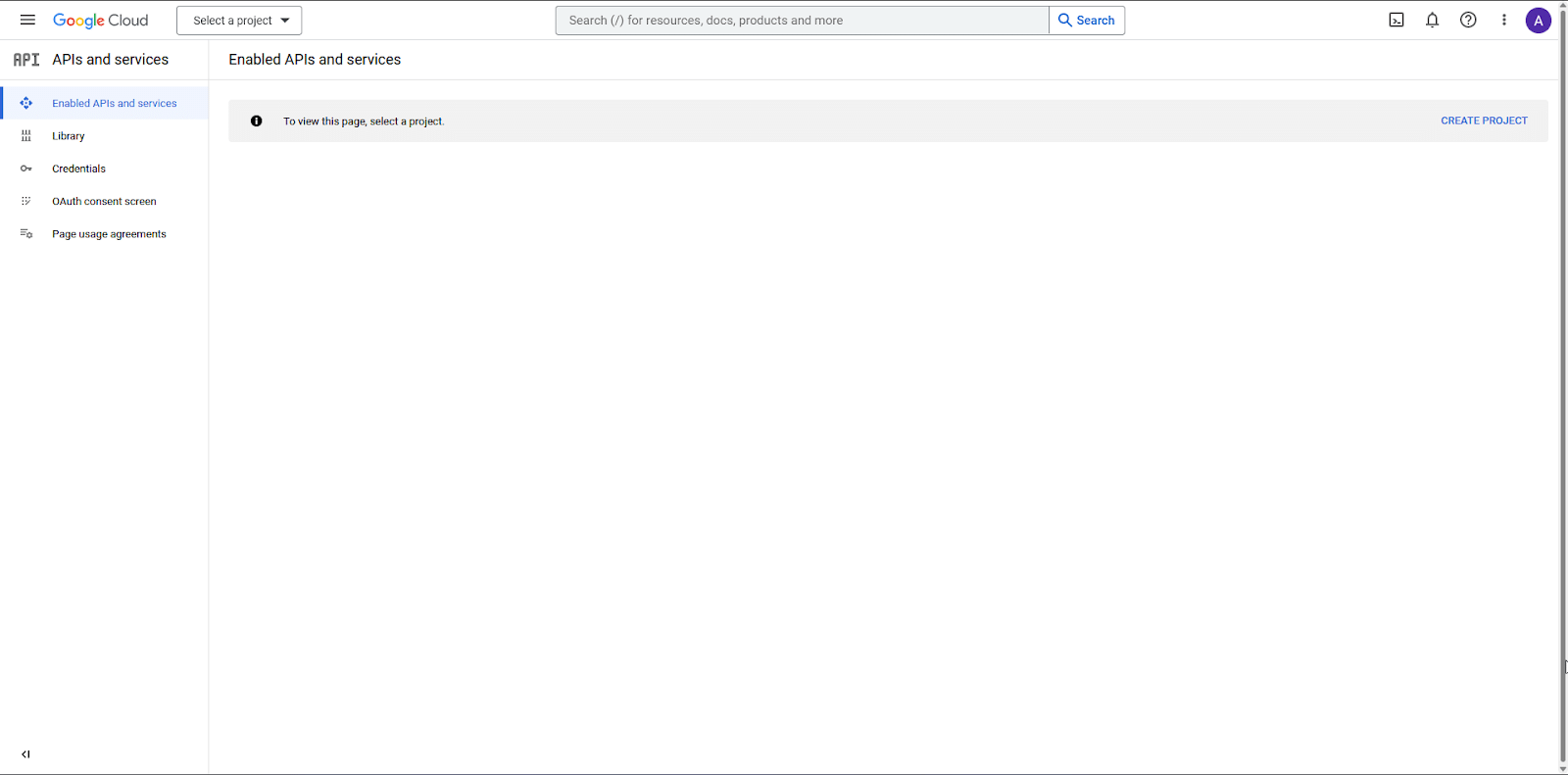
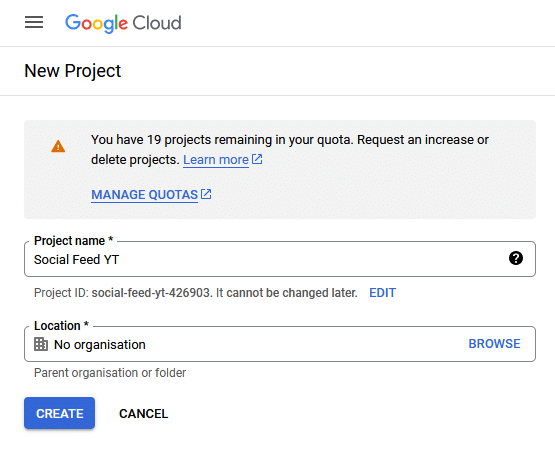
If you already have projects, click the dropdown at the top and then New Project in the Select a Project popup.
- Add a Project name and click CREATE.
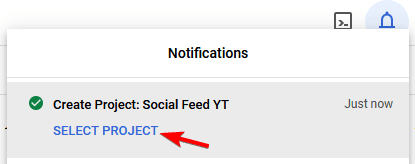
- Select the project from the notification, or from the dropdown at the top.
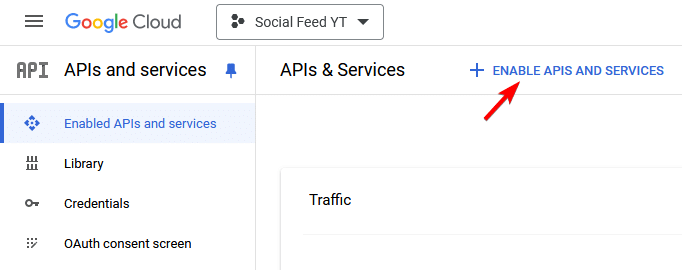
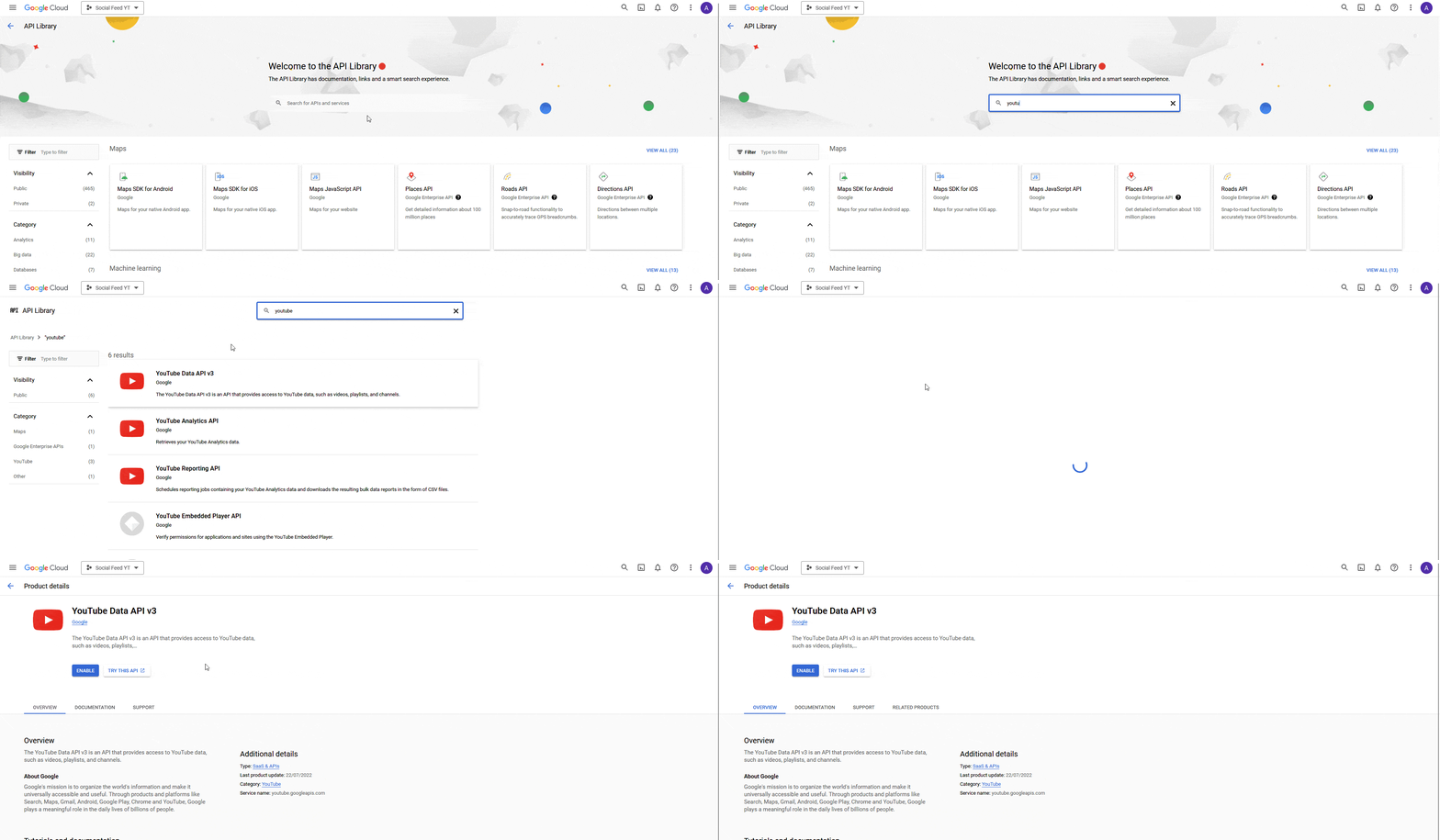
- Click + ENABLE APIS AND SERVICES at the top.
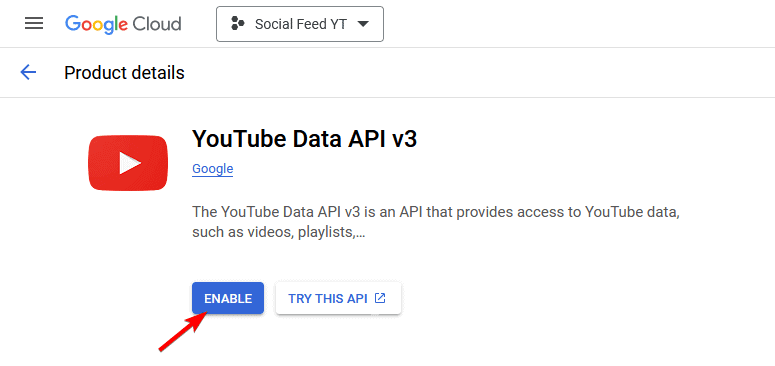
- Search for YouTube and select the current API — YouTube Data API v3.
- Click ENABLE.
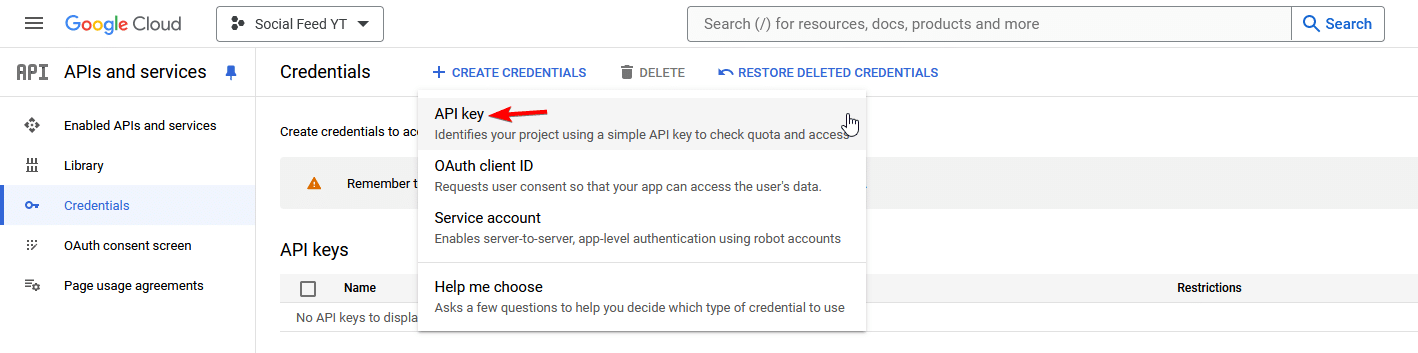
- Click Credentials in the left sidebar.

- At the top of the Credentials page, click + CREATE CREDENTIALS > API key.
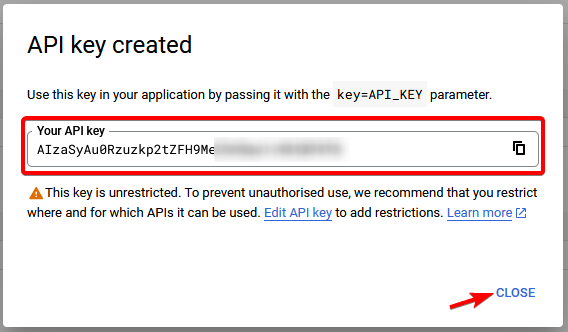
- Your key appears in a popup. Click the copy button, save the key, and click CLOSE.
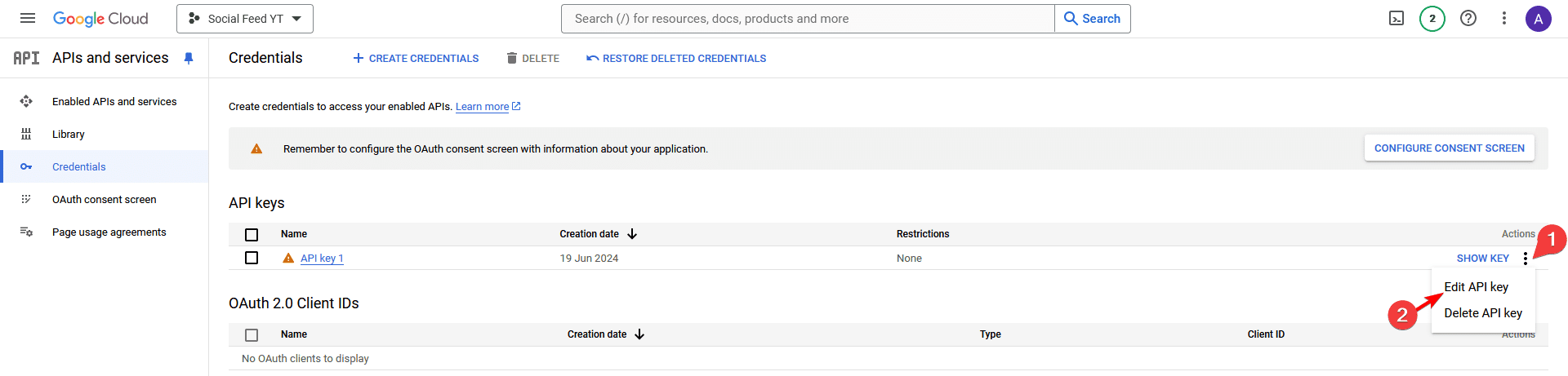
- Restrict the key: click the three dots beside SHOW KEY and choose Edit API Key.
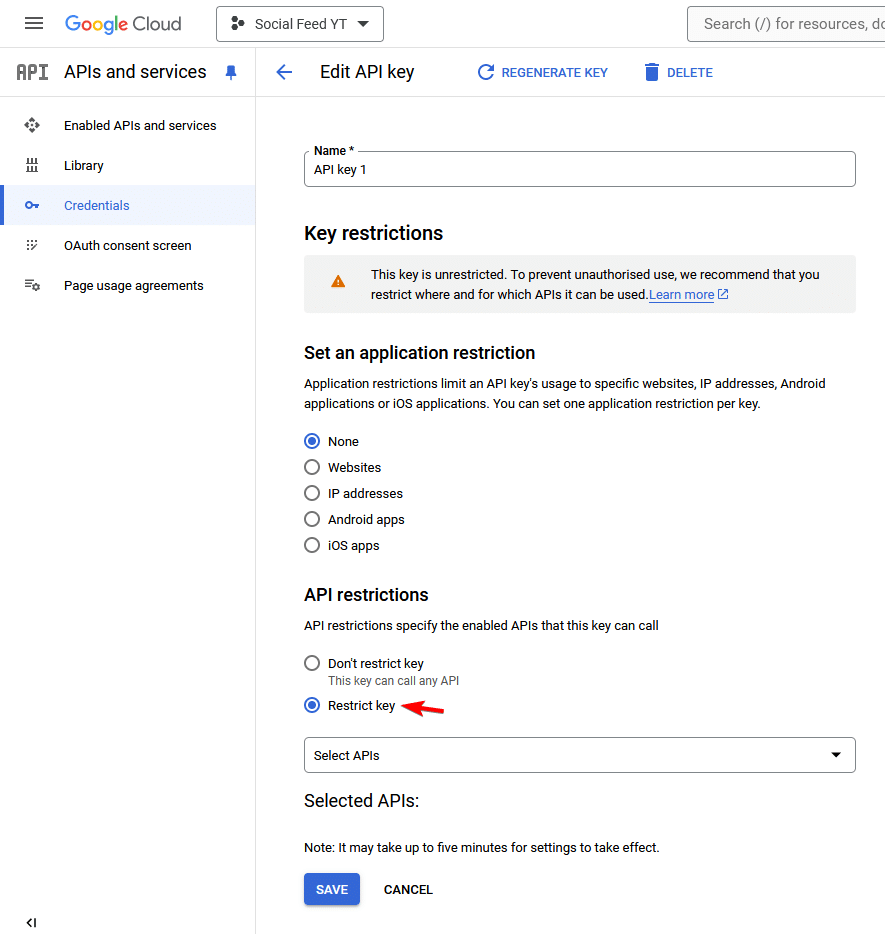
- Under API restrictions, select Restrict Key.
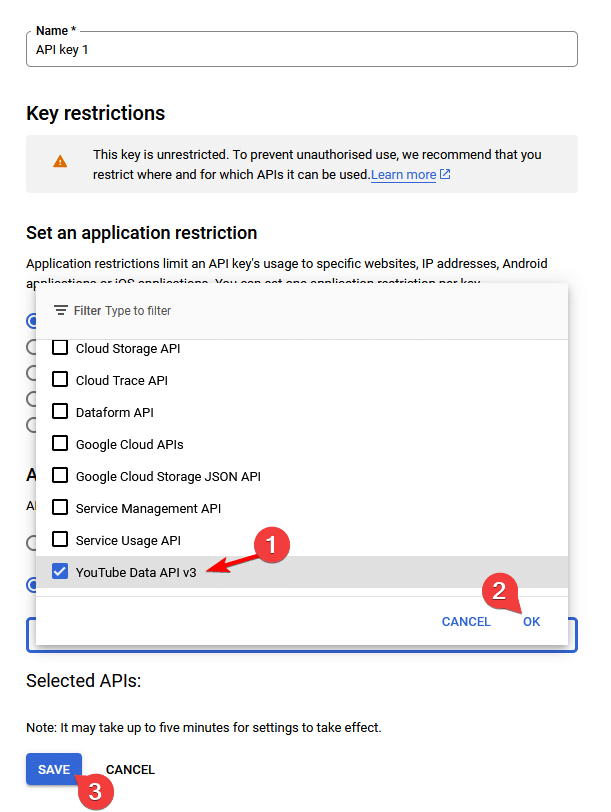
- From the Select APIs dropdown choose the API you enabled in step 6 — YouTube Data API v3 — click OK, then SAVE.
The key is ready. Paste it into the widget’s Access Token field and choose a YouTube Type — see How to Add Live YouTube Video Feed in Elementor?.
Limitations
- The YouTube Data API has a daily quota. Every page render that is not served from cache spends some of it. When the quota runs out the API stops answering until it resets, and the widget shows its error card. Turning Performance on in the widget, with Refresh Time at 1 day, keeps the call count low.
- Restricting the key to the wrong API breaks the feed. If you restrict, the restriction must include YouTube Data API v3.
- An API key is public once the page renders. Restrict it — that is what steps 11 to 13 are for — rather than leaving it unrestricted.
- A key reads public data only. It cannot reach private or unlisted videos; that would need OAuth, which the widget does not use.
Not verified
So you know exactly what has and has not been checked:
- The developer-console steps themselves. Google’s developer screens change often and were not walked through for this revision; the sequence and the screenshots below are the ones this page already carried.
- A feed of real posts from a connected YouTube account. This page was checked without ever entering a real access token, API key or password, so what the finished YouTube feed looks like once connected was not observed for this revision.
- Whether an HTTP-referrer restriction works here. Only the API restriction is described. The request is made by your server, not the browser, so a referrer restriction may not behave as you expect; this was not tested.
Troubleshooting
The feed shows "Somthing Wrong" and Error Code : 400
Google refused the request — that spelling is the plugin’s, not a typo here. Check, in order: the key is pasted into Access Token; YouTube Data API v3 is enabled on that project; the key’s restriction includes that API; and the id in the field below YouTube Type is the right kind of id.
The feed worked this morning and stopped this afternoon
That pattern is the daily quota. Enable Performance in the widget so the feed is served from your database between refreshes.
I cannot find the key again
Open Credentials in the project and click SHOW KEY. Unlike an access token, an API key can be read back.
I restricted the key and the feed broke
Edit the key and make sure YouTube Data API v3 is ticked under API restrictions.