Four names keep coming up in every AI search conversation right now: llms.txt, schema, MCP, and Google’s new OKF. People treat them as rival checkboxes, which leads to a lot of wasted effort.
They are not rivals. They are layers of one stack, each doing a different job, and only some of them matter for a public WordPress site. Here is the whole picture in one place, plus what to actually do.
What you’ll learn: the four layers of the AI-readiness stack, what each one is for, which deserve your time on a public site, and how to run the whole thing from WordPress.
The AI-Readiness Stack at a Glance
| Layer | What it is | Mainly for | Priority for a public WP site |
|---|---|---|---|
| Content + schema | Helpful, structured content with markup | Everyone | High |
| llms.txt | A signpost file at your root | The public web | Medium (cheap hedge) |
| OKF | A Markdown knowledge bundle | Internal and enterprise | Low for public sites |
| MCP | A protocol for tool and data access | Apps and agents | Situational |
Layer 1: Helpful Content and Schema (the foundation)
Everything else rests on this. Clear, helpful content that answers the question, marked up with schema so machines know what each page is.
This is the bulk of answer engine optimization, and our schema markup guide shows the free ways to add the markup. If you only ever touch one layer, make it this one.
Layer 2: llms.txt (the public signpost)
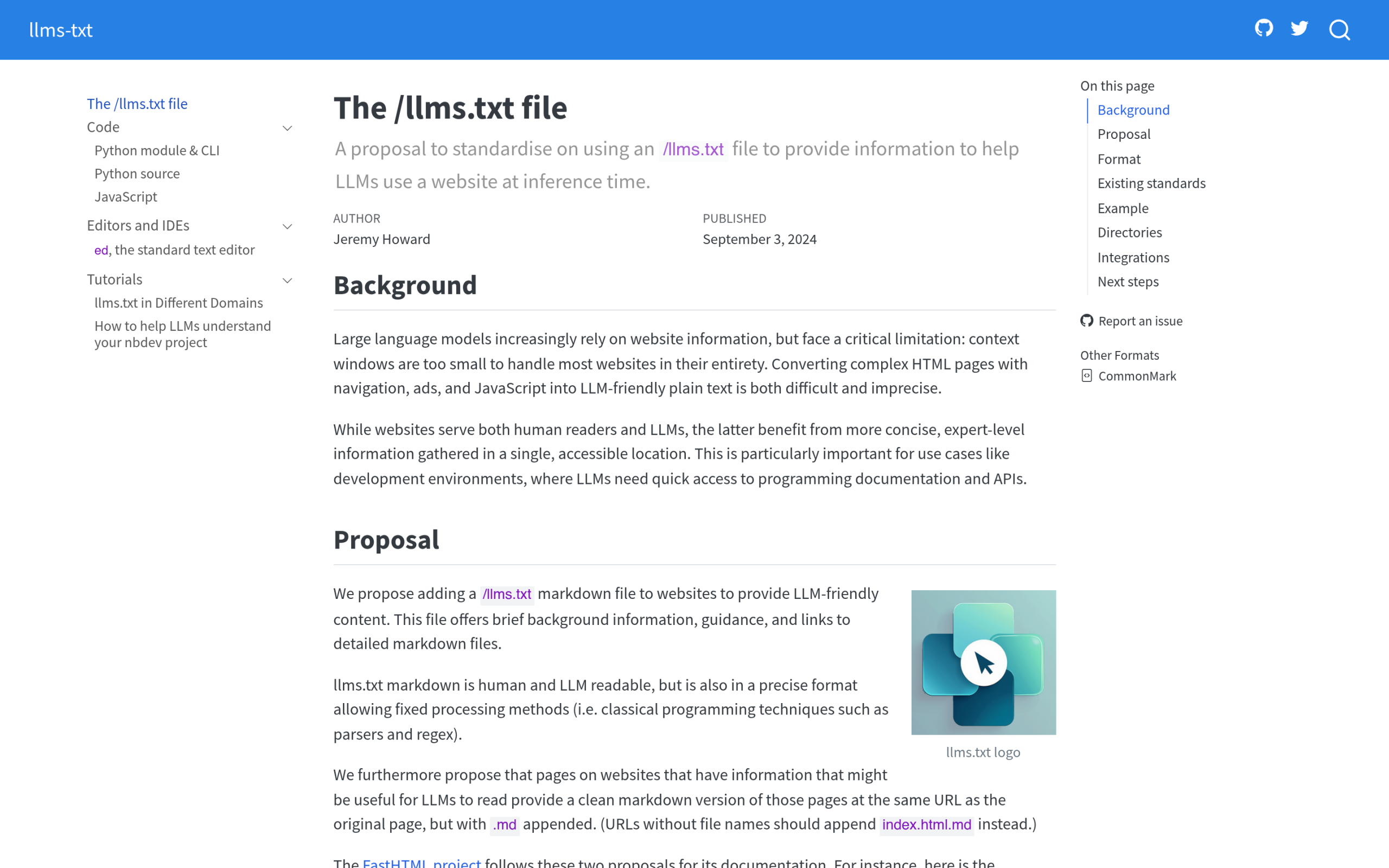
An llms.txt file points AI tools to your priority pages. It is cheap to publish, but be realistic: as of early 2026 no major AI engine has committed to using it and Google has said it does not.
Treat it as a low-cost hedge, not a guaranteed win. We covered the trade-off in OKF vs llms.txt.
Layer 3: OKF (the internal library)
Google’s Open Knowledge Format packages curated knowledge as a directory of Markdown files for AI agents. It is built for internal and enterprise knowledge, and in its version 0.1 form it is not a ranking signal.
For most public WordPress sites this layer is optional today. Worth understanding, not worth a fire drill.
Layer 4: MCP (the live connection)
The Model Context Protocol is an open standard for connecting AI agents to tools and live data. Where llms.txt and OKF hand over static content, MCP lets an agent take actions and pull current information.
For a content site it is situational, more relevant if you are building an app or exposing data to agents than if you are publishing articles.
How to Run the Stack on WordPress
You do not need four plugins for four layers. RankReady acts as the control panel for the parts that matter on a public site: it outputs Article, Speakable, FAQPage, HowTo, and ItemList schema, generates your llms.txt and per-post Markdown, scores each post from 0 to 100 for AI readiness, and logs which AI crawlers actually fetch your pages.
It will not invent results that are not there, but it puts the foundation and the public-facing layers in one place. RankReady is free, GPL-2.0, runs on WordPress 6.0 and PHP 7.4 or higher, and works alongside Rank Math, Yoast, AIOSEO, and SEOPress.
The Bottom Line
Stop treating llms.txt, schema, MCP, and OKF as four separate races to win.
They are layers, and for a public WordPress site the order of importance is clear: nail content and schema first, publish llms.txt as a cheap hedge, keep an eye on OKF, and reach for MCP only when you are connecting agents to data. Spend your effort where it compounds.
Suggested Reading
- What Is Google’s Open Knowledge Format (OKF)?
- OKF vs llms.txt: Two Ways to Feed AI Your Site’s Knowledge
- What Is an llms.txt File and How to Add One in WordPress
- What Is an MCP Server? The WordPress Guide to Model Context Protocol
- What Is Answer Engine Optimization (AEO)?
- AI SEO Myths in 2026: What Actually Helps