


When Google Cloud shipped the Open Knowledge Format last week, a familiar thing happened in our inbox. People who had just gotten comfortable with llms.txt started asking whether OKF replaces it, whether they now need both, or whether they had backed the wrong horse. The short answer is that llms.txt and OKF are not rivals. They solve different problems, and once you see the split it is easy to decide what to actually do on your WordPress site.
What you’ll learn: what llms.txt and OKF each are in plain terms, where they overlap and where they do not, which one actually matters for a public WordPress site today, and how to set up llms.txt without maintaining it by hand.
What llms.txt Is (the short version)
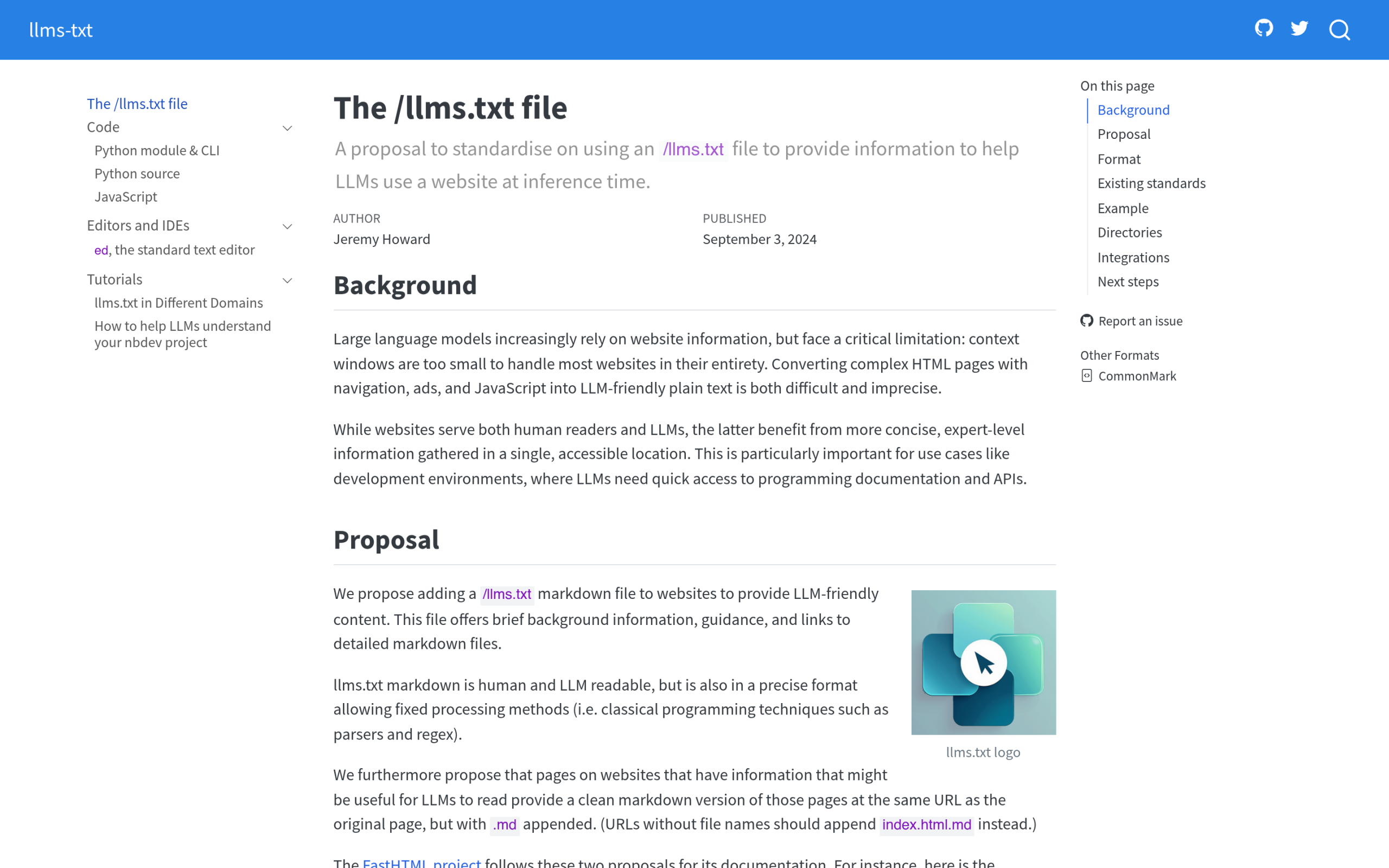
Jeremy Howard of Answer.AI proposed llms.txt on September 3, 2024. It is a single Markdown file that lives at your site root, at /llms.txt. The spec keeps it deliberately simple: an H1 with the name of the site or project is the only required part, followed by an optional blockquote summary and H2 sections that list links to your key pages. Its stated purpose is “to help LLMs use a website at inference time.” Think of it as a curated menu you hand an AI, so it does not have to guess which of your pages actually matter.
You will also see llms-full.txt in the wild. That is a related convention that grew up alongside the original spec, where the file inlines the full text of your priority pages rather than just linking to them. Our full guide to llms.txt on WordPress goes deeper on the format itself.
What OKF Is (the short version)
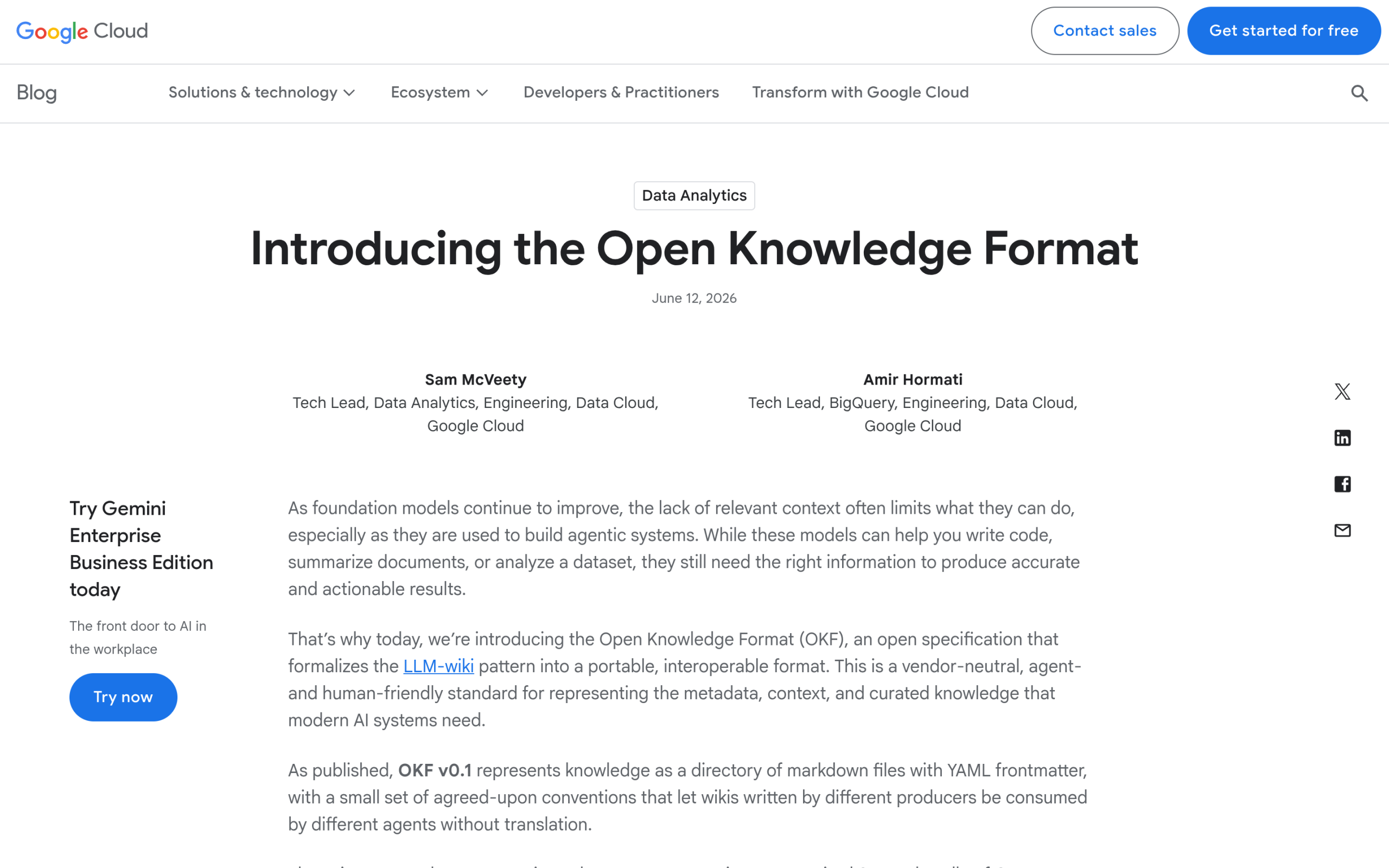
Google Cloud published the Open Knowledge Format on June 13, 2026. Instead of one signpost file, OKF is a whole bundle: a directory of Markdown files, each with a small block of YAML frontmatter, and it can include an index.md that enumerates the contents. The only required field on a file is type; everything else is optional. It was built for internal organizational knowledge, the kind that explains how a company’s data, metrics, and processes work, so that AI agents can read it without a custom integration. For the full picture, see our WordPress owner’s guide to OKF.
OKF vs llms.txt: The Core Difference
The cleanest way to hold the two apart: llms.txt is a signpost, and OKF is the library. One points an AI toward your best content; the other hands over a curated body of knowledge in full.
| llms.txt | OKF | |
|---|---|---|
| Shipped by | Jeremy Howard / Answer.AI, 2024 | Google Cloud, 2026 |
| Shape | One file at /llms.txt | A directory of Markdown files |
| Its job | Point AI to your priority pages | Hand over a curated body of knowledge |
| Mainly for | Public websites | Internal and enterprise agent knowledge |
| Maturity | Widely adopted | Version 0.1 draft |
Where They Overlap, and Where They Don’t
The overlap is real. Both are Markdown-first, both are open, and both exist for the same underlying reason: AI systems work with your content better when you give it to them in a clean, structured form instead of making them parse a page built for browsers. That is the shared instinct behind this whole wave, the same one driving answer engine optimization.
The difference is audience. llms.txt is aimed at the public web and the AI crawlers that visit it. OKF is aimed mostly at knowledge that lives inside an organization. They are not mutually exclusive, and they are not competing for the same slot. With the Model Context Protocol handling how agents call tools and fetch live data, the three stack into a fuller picture rather than canceling each other out.
Which One Should You Use on WordPress?
For a normal WordPress site or blog, the honest answer is to start with llms.txt. It is the standard built for public content, it is widely supported, and it is the one AI tools actually look for today. OKF is worth understanding, but in its current version 0.1 form it is aimed at internal and enterprise knowledge bases, not at getting a blog post cited in an AI answer. You do not need to build an OKF bundle for a public site yet. Watch it, and act on llms.txt now. If you want the reasoning in full, our OKF guide covers why a bundle will not move your rankings this week.
How to Set Up llms.txt on WordPress
Doing this by hand means writing the file, listing your priority URLs, and updating it every time you publish, which gets old quickly. This is where RankReady helps. It generates both your /llms.txt and /llms-full.txt and keeps them current as you publish, lets you add .md to any post URL for a clean Markdown version with the right Content-Type, and outputs Article, Speakable, FAQPage, HowTo, and ItemList schema. It then scores every post from 0 to 100 on schema, freshness, content depth, and author signals, so you can see what is actually ready for AI rather than guessing.
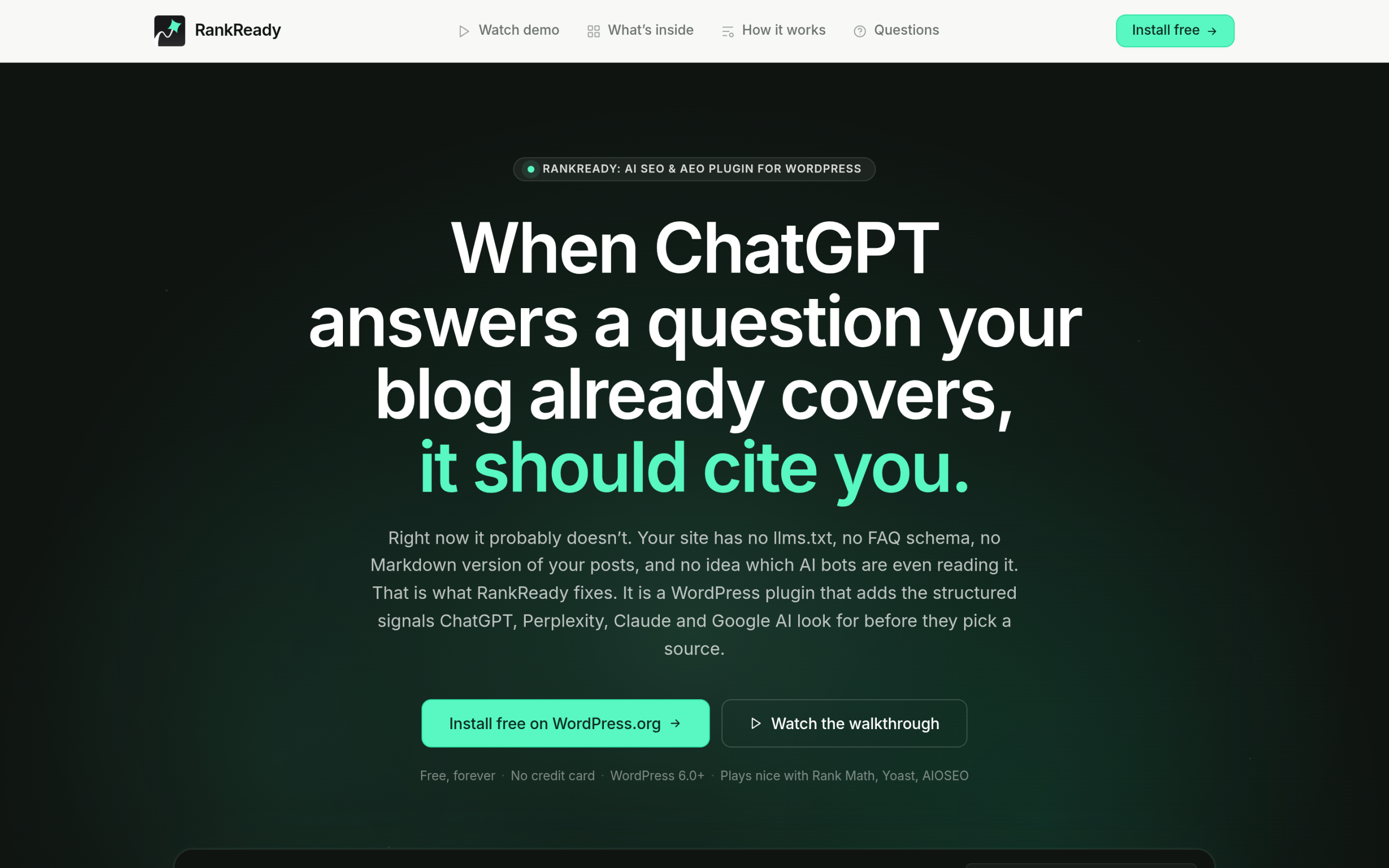
RankReady is free, released under the GPL-2.0 license, runs on WordPress 6.0 and PHP 7.4 or higher, and works alongside Rank Math, Yoast, AIOSEO, and SEOPress rather than replacing them.
The Bottom Line
llms.txt and OKF answer the same instinct from different angles: give machines a clean version of your knowledge. For a public WordPress site, llms.txt is the practical move today, and OKF is the enterprise cousin worth watching. Get your llms.txt, Markdown, and schema in order, and you are ready for whichever standard the AI tools your audience uses end up leaning on next.
Suggested Reading
- What Is Google’s Open Knowledge Format (OKF)? A WordPress Owner’s Guide
- What Is an llms.txt File and How to Add One in WordPress
- What Is an MCP Server? The WordPress Guide to Model Context Protocol
- What Is Answer Engine Optimization (AEO)? A WordPress Guide
- Schema Markup Generator for WordPress: The Free Ways to Do It
- How Google’s Knowledge Graph Works (and How to Get Into It)