



How to Add Post Meta in Elementor Blog Post?

Key Takeaways

  • Post Meta widget from The Plus Addons for Elementor allows users to add various post meta on the Elementor blog post page.
  • Users can select from four post meta types: Date, Taxonomies, Author, and Comments using the Select Field dropdown.
  • The Plus Addons for Elementor requires the Elementor FREE Plugin to be installed and activated for functionality.
  • Users can customize the style of the Post Meta widget further from the Style tab.
Table Of Content

Do you want to add different post meta in the Elementor blog post? Showing different post meta, such as date, author name, taxonomies etc. can add context to blog posts by providing additional details.

With the Post Meta widget from The Plus Addons for Elementor, you can easily add different post meta on the Elementor blog post page.

To check the complete feature overview documentation of The Plus Addons for Elementor Blog Builder, click here.

Required Setup

  • Elementor FREE Plugin installed & activated.
  • You need to have The Plus Addons for Elementor plugin installed and activated.
  • Make sure the Post Meta widget is activated, to verify this visit The Plus Addons → Widgets → and Search for Post Meta and activate.

How to Activate the Post Meta Widget?

Go to 

  • The Plus Addons Widgets 
  • Search the widget name and turn on the toggle.
Post meta activation 1 how to add post meta in elementor blog post? From the plus addons for elementor

Add Post Meta

Add the Post Meta widget to the appropriate location on the blog post template.

To create the blog post template, you can use the free Nexter Builder or you can use Elementor Pro if you are already using it.

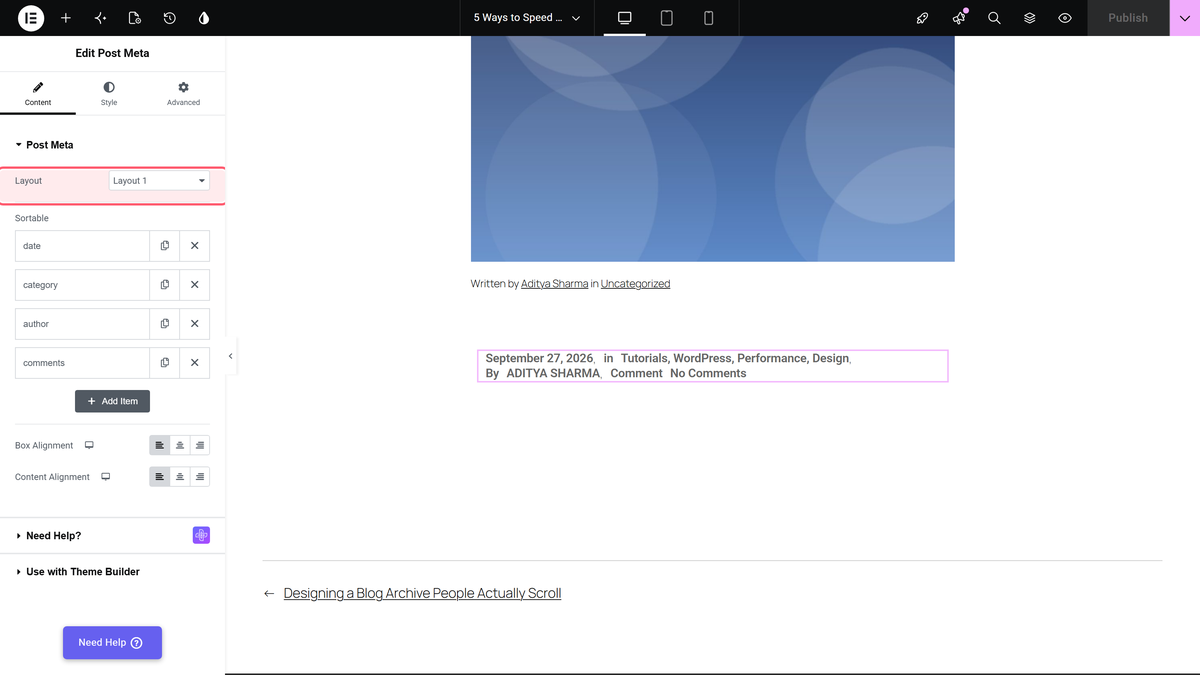
From the Layout dropdown, you can select from two predefined styles.

In the Sortable section, you’ll find four items. Open one item.

From the Select Field dropdown, you have to select the meta type. Here, you’ll find four options – 

Date – To show the post date.

Taxonomies – To show different taxonomies such as category, tag etc.

Author – To show the post author name.

Comments – To show the number of comments on the post.

Select the option as per your requirement.

In a similar way, you can edit the other items.

You can click on the + Add Item button to add more items.

From the Box Alignment section, you can align the content within the container.

You can align the content from the Content Alignment section.

Show the Post Date

To show the post date on a blog post, open an item from the Sortable section.

From the Select Field dropdown, select Date.

From the Type dropdown, you can set the published date or last modified date.

Now, the post date will show on the post.

Show the Post Taxonomies

To add the post taxonomies to a blog post, open an item from the Sortable section.

From the Select Field dropdown, select Taxonomies.

Then, from the Taxonomies dropdown, you have to select the taxonomy. 

category – To show post category.

post_tag – To show post tags.

Note: If you have custom taxonomies or different plugins that create custom taxonomies, such as the WooCommerce plugin, you’ll see more relevant options.

From the Show dropdown, you can show all the items or items related to the current post only.

Show the Post Author

To show the post author’s name on a blog post, open an item from the Sortable section.

From the Select Field dropdown, select Author.

Now, the post author’s name will show on the post.

Show Number of Comments

To show the number of comments on a blog post, open an item from the Sortable section.

From the Select Field dropdown, select Comments.

Now, the number of comments will show on the post.

Now based on your selection, you’ll see relevant post meta on your bog post.

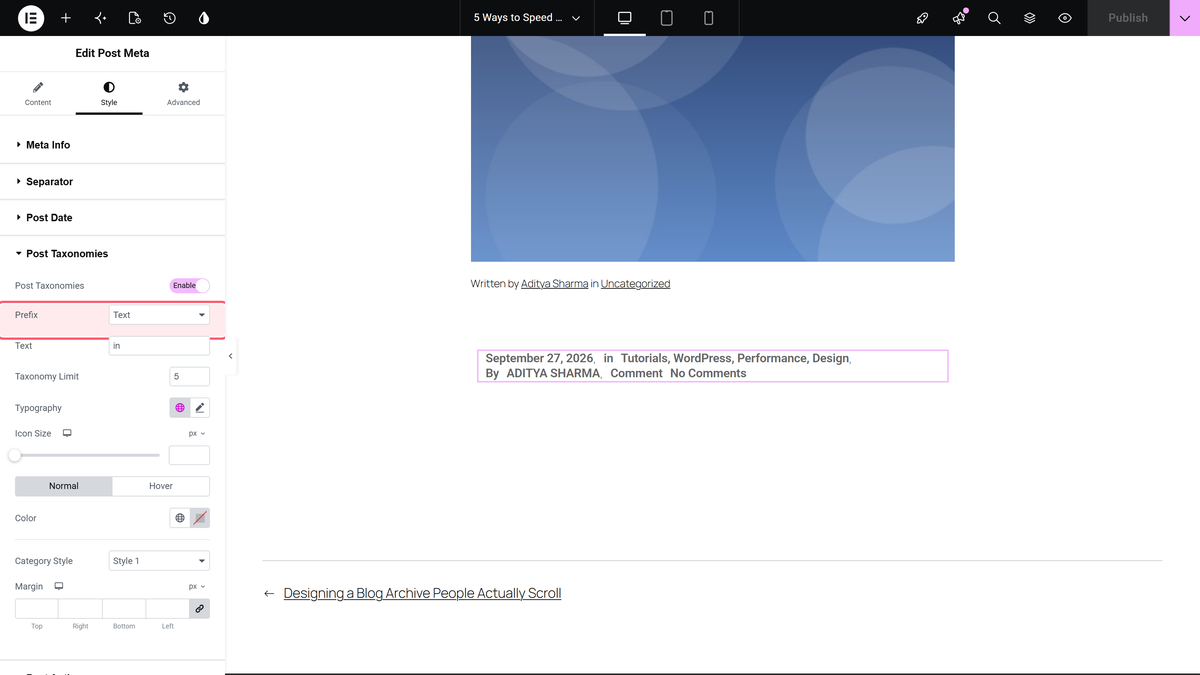
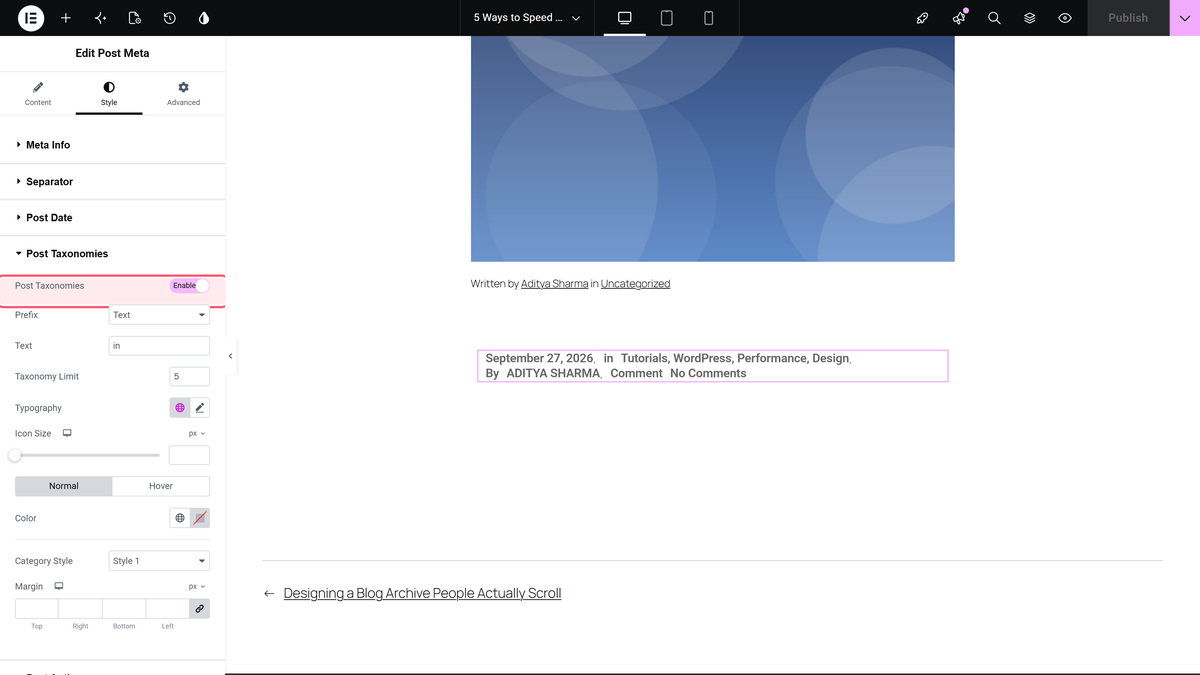
From the Style tab, you can customize the style further.

Post meta demo

About the Author

Photo of Aditya Sharma CMO of The Plus Addons for Elementor
CMO · The Plus Addons for Elementor · 10 years experience

He has spent years in the WordPress ecosystem building, breaking, and optimizing sites until they actually perform. He works at the intersection of speed, growth, and usability, helping creators ship websites that load fast and convert. An active WordPress community contributor sharing through tools, tutorials, and direct collaboration. Tested practice, not theory.

WordPressElementorn8nAIClaudeAutomationServer
Get Instant Answers to all your questions about The Plus Addons for Elementor, trained on 1000+ Docs and Videos

Related Frequently Asked Questions

What should I do if the Post Meta widget isn't showing up in Elementor?

If the Post Meta widget isn't visible, ensure that The Plus Addons for Elementor plugin is installed and activated. Additionally, check that the widget is enabled by navigating to The Plus Addons u2192 Widgets, searching for Post Meta, and turning on the toggle. This step is crucial as the widget must be activated to function properly.

How can I show post taxonomies like categories and tags in my blog post?

To display post taxonomies such as categories and tags, use the Post Meta widget and select Taxonomies from the Select Field dropdown. You can then choose specific taxonomies like category or post_tag from the Taxonomies dropdown. This feature helps in organizing content and improving navigation for readers.

What is the best way to align post meta content in Elementor?

The best way to align post meta content is to use the Box Alignment and Content Alignment sections within the Post Meta widget settings. Proper alignment enhances the visual appeal and readability of your blog post. Experiment with different alignments to see what works best for your layout.

How do I show the number of comments on my blog post using Elementor?

To display the number of comments on a blog post, add the Post Meta widget and select Comments from the Select Field dropdown. This feature provides readers with insight into the engagement level of your post, which can encourage more interaction and discussion.

Last reviewed: April 10, 2026