





Books, properties, recipes, case studies — anything you have registered as a custom post type can go into the same magazine layouts you use for blog posts.
The Post Type dropdown in the Dynamic Smart Showcase widget from The Plus Addons for Elementor lists every post type on your site, so no extra setup is needed beyond having the content.
To check the complete feature overview documentation of The Plus Addons for Elementor Dynamic Smart Showcase widget, click here.
Requirement – This widget is a part of The Plus Addons for Elementor Pro, make sure it’s installed & activated to enjoy all its powers.
Before You Start
- Edition: Pro — Dynamic Smart Showcase is only in The Plus Addons for Elementor Pro. With the Pro plugin switched off the widget is not in the editor at all, and a page that already uses it shows nothing where the widget was.
- Widget to enable: Dynamic Smart Showcase, switched on under The Plus Addons > Widgets.
- You need a custom post type: registered as public with show_ui on, or it will not appear in the Post Type dropdown.
- Raise the post count: Maximum Posts Display in Content Source defaults to 1, so a freshly dropped widget shows a single post. Set it to the number you want, or to -1 for every matching post.
How to List a Custom Post Type
- Publish a few entries in your custom post type, with featured images.
- Drag the Dynamic Smart Showcase widget onto your page.
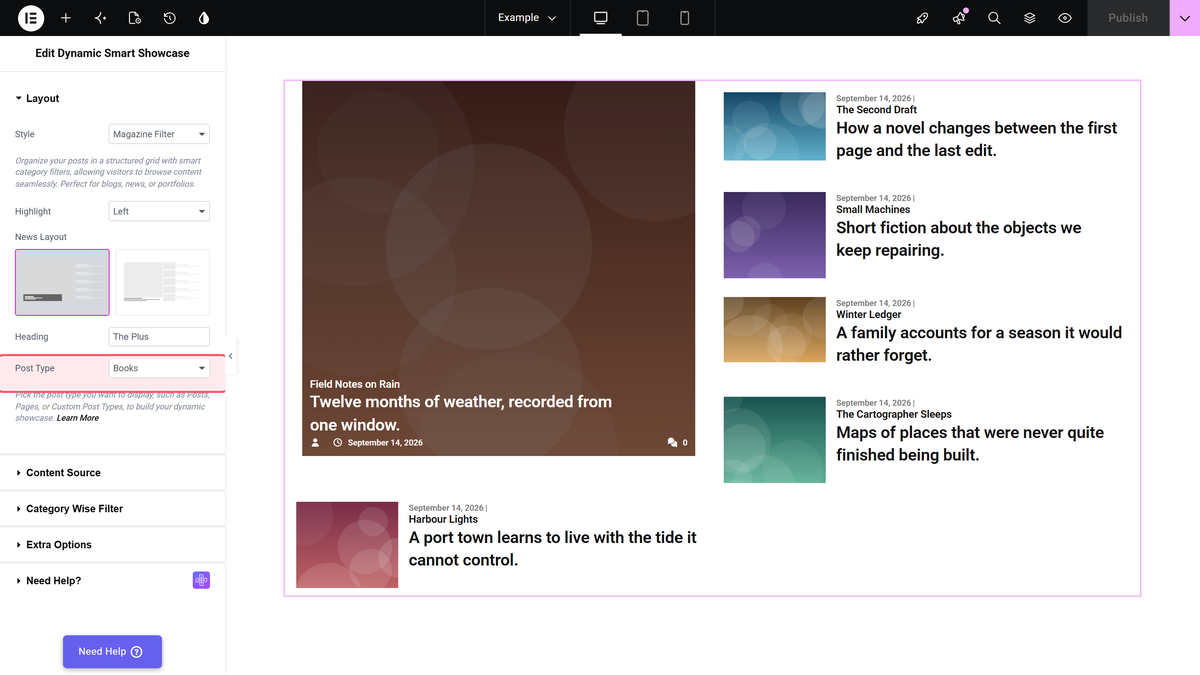
- In Layout, choose Magazine Slider for a carousel or Magazine Filter for a grid.
- Open the Post Type dropdown and pick your custom post type. In the example below it is Books.
- Open Content Source and raise Maximum Posts Display from 1.
The Result
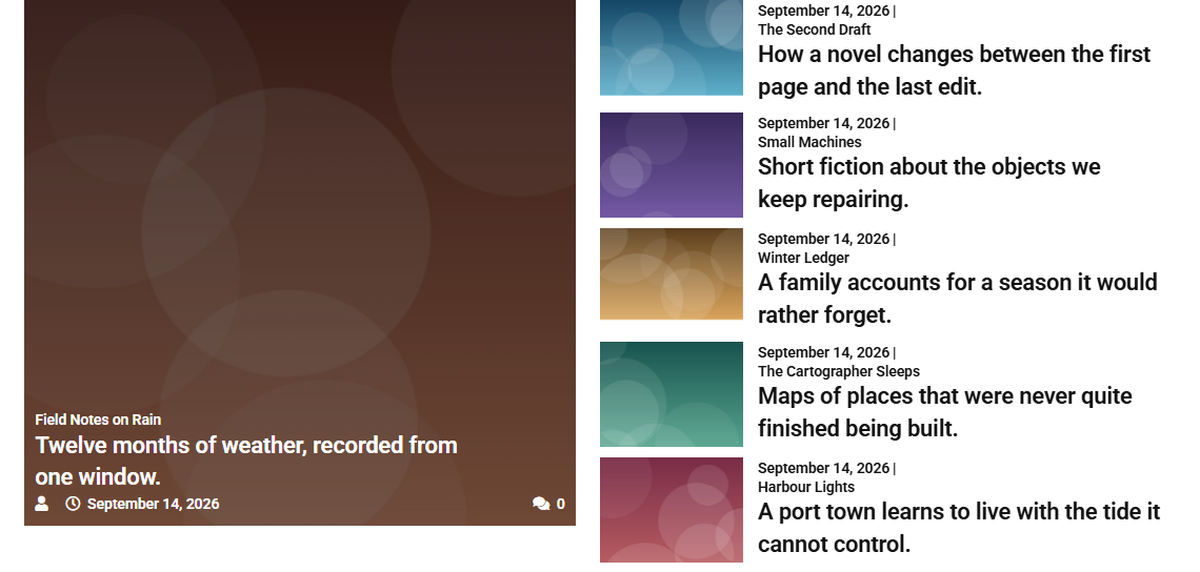
The custom posts fill the layout exactly as blog posts would, with their featured images, titles and excerpts:
Narrowing It Down by Taxonomy
As soon as Post Type is set to anything other than Posts, the Content Source section swaps Select Category for two fields:
- Taxonomies — the taxonomy to filter by. The dropdown lists the taxonomy names as they are registered, so a taxonomy labelled “Book Authors” appears as
book_author. - Taxonomies Slug — the term slugs to keep, comma separated.
Leave Taxonomies Slug empty to show the whole post type.
How It Behaves
- A post type only appears in the dropdown if it was registered as public with an admin screen. Post types registered for internal use are not listed.
- Pages is in the list too, including pages other plugins add such as the WooCommerce cart and account pages.
- Include Post(s), Exclude Post(s), Offset Posts, Order By and Order all work the same way for a custom post type as they do for blog posts.
- When the post type has no published entries the widget prints Posts not found.
Limitations
- Select Category and Select Tags read the built-in post categories and tags. For a custom post type, use Taxonomies and Taxonomies Slug instead.
- The Taxonomies dropdown shows registered taxonomy names, not their human-readable labels, so you need to know the slug of your taxonomy.
- Display Image Size and Image Resolution are ignored; the full-size featured image is always used.
Troubleshooting
My custom post type is not in the dropdown
It has to be registered as public and with an admin screen. If you created it with a plugin, check that its “public” and “show in UI” options are on.
Entries show but with grey cards
The custom post type needs featured-image support and each entry needs a featured image set.
Only one entry shows
Raise Maximum Posts Display in Content Source; it defaults to 1.
