






The built-in Content Source controls (category, tags, order, include/exclude) cover most listings, but some require logic those controls can’t express – a meta-value comparison, for example.
Dynamic Listing’s Custom Query option accepts raw query arguments so you can go beyond the built-in filters.
For the full settings tour of the Dynamic Listing widget, see Dynamic Listing Widget Settings Overview.
Requirement – This widget is a part of The Plus Addons for Elementor Pro, make sure it’s installed & activated to enjoy all its powers.
Before You Start
- Prerequisite: Elementor (free) installed and active.
- Edition: Dynamic Listing is a Pro widget – it needs The Plus Addons for Elementor Pro installed and its license activated. It will not appear in the free plugin.
- Widget to enable: go to The Plus Addons > Widgets, search for Dynamic Listing and turn its toggle on.
Steps
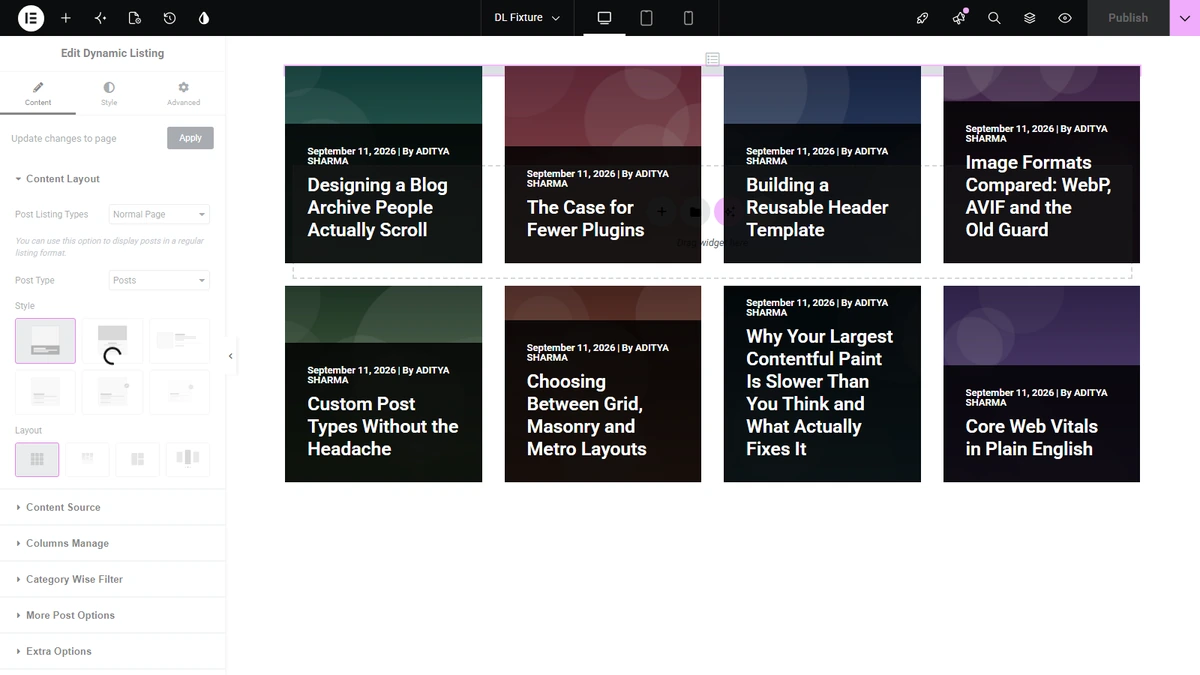
- Add the Dynamic Listing widget to the page, with Post Type set to
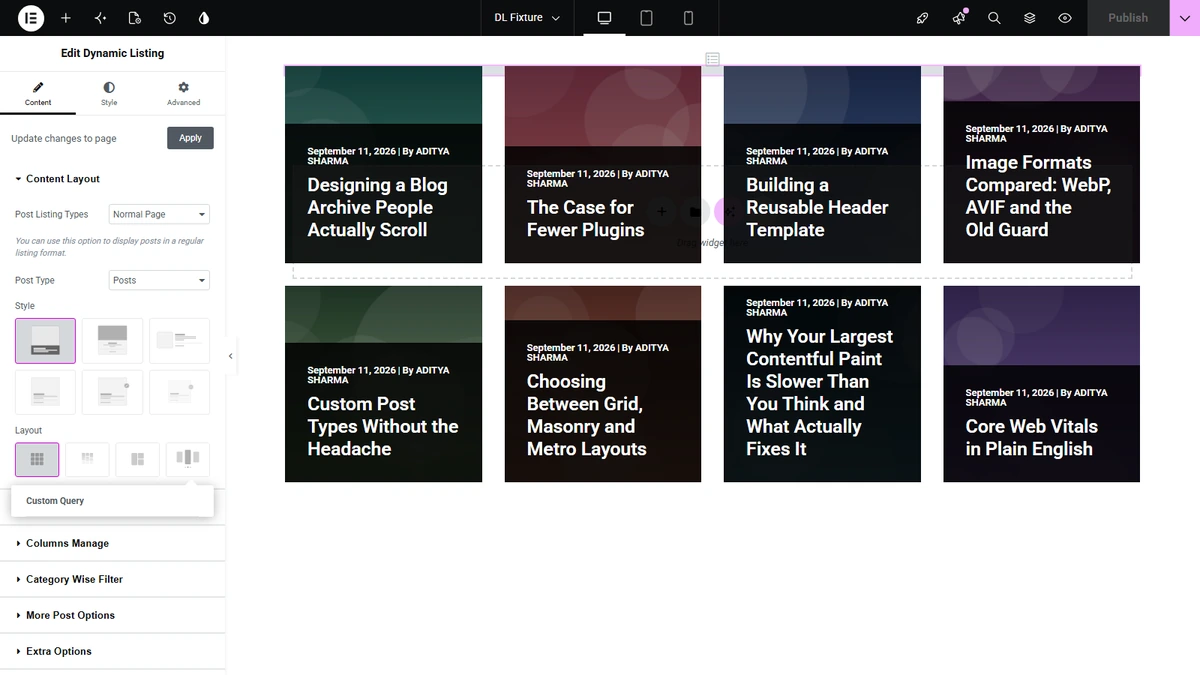
post. - Under Content Layout, turn on Custom Query.
Enter an identifier in Custom Query ID – this ties the widget instance to a custom query filter you register in code (via the plugin’s documented WP_Query argument filter hook), letting a developer inject extra query arguments for that specific widget.
Settings Overview
| Setting | What it does | Default |
|---|---|---|
| Custom Query | Enables the Custom Query ID hook-in point. | Yes |
| Custom Query ID | Identifier a developer’s filter hook matches against. | (empty) |
Limitations
- This requires a developer to actually write the PHP filter that reacts to the Custom Query ID – setting the ID alone in the panel does not change the query by itself.
Related Docs
- How to Create Elementor Loop with Custom Post Query?
- How to Order Custom Post Types by Date in Elementor?
Not verified
So you know exactly what has and has not been checked:
- A real PHP filter callback reacting to a Custom Query ID was not written/tested in this pass – only that the ID field itself saves and persists.
