






If your Elementor contact form is filling your inbox with junk, reCAPTCHA is the fix most people reach for first, and for good reason. It is the standard way to stop bots from hammering a form without making real visitors jump through hoops.
This guide walks through what reCAPTCHA actually is, which version to use, and the exact steps to add it to an Elementor form, both with Elementor Pro and without it.
What is Google reCAPTCHA for Elementor forms?
Google reCAPTCHA is an anti-bot service that checks whether the thing filling in your form is a human or a script. It is free to use for a typical website: you generate the keys at no cost from Google’s reCAPTCHA admin console.
Google also sells reCAPTCHA Enterprise for very high volume and advanced fraud cases, but for a normal Elementor contact form the standard, free version is all you need. There are two versions you will choose between.

reCAPTCHA v2: visible or invisible
reCAPTCHA v2 is the version most people picture. It is the “I’m not a robot” checkbox, and it also has an invisible variant that runs in the background and only shows an image challenge when a visit looks suspicious.
It is a definitive, visible gate: the user passes the check, or they do not submit.
reCAPTCHA v3: score-based, no interaction
reCAPTCHA v3 works differently. In Google’s own words, it “returns a score for each request without user friction” where “1.0 is very likely a good interaction, 0.0 is very likely a bot,” and it “will never interrupt your users.”
There is no checkbox and no challenge. You decide what to do with the score, usually by setting a threshold below which a submission is blocked or flagged.
Which version should you use on Elementor forms?
Use v3 when you want zero friction and are comfortable acting on a score; it is the better experience for most visitors. Use the v2 checkbox when you want a visible, unambiguous challenge that a user has to clear.
A common setup is to run v3 by default and fall back to a v2 challenge only when a score comes back low. Whichever you pick, keep your keys consistent: a v2 key will not work in a v3 slot.
Why add reCAPTCHA to Elementor forms
Spam is the obvious reason, but it is not the only one. Bot submissions waste your team’s time, pollute your CRM and analytics, can trigger fake notification emails, and on a busy form can even add server load.
A protected form keeps your leads real and your data clean. reCAPTCHA is the lightest-touch way to get there, and it pairs well with the other tactics in our guide on how to stop Elementor contact form spam completely.
How to add reCAPTCHA to an Elementor form with Elementor Pro
The Form widget is an Elementor Pro feature, so these steps assume you have Pro active. The whole process takes about five minutes.
Step 1: Register your site in the reCAPTCHA console
Go to the Google reCAPTCHA admin console, give your site a label, choose the reCAPTCHA type you decided on above, and add your domain. Submit the form to register the site.
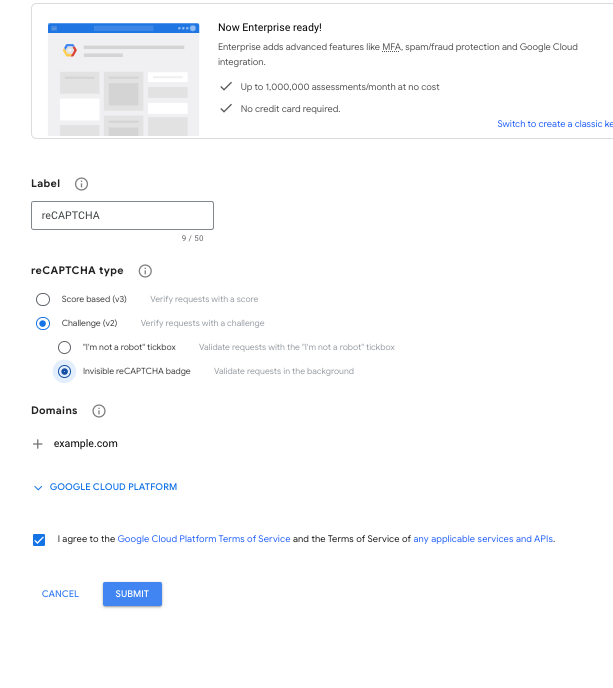
Step 2: Copy the Site Key and Secret Key
After registering, Google shows you two keys: a Site Key (used on the front end) and a Secret Key (used server-side). Copy both. You will paste them into Elementor in the next step.
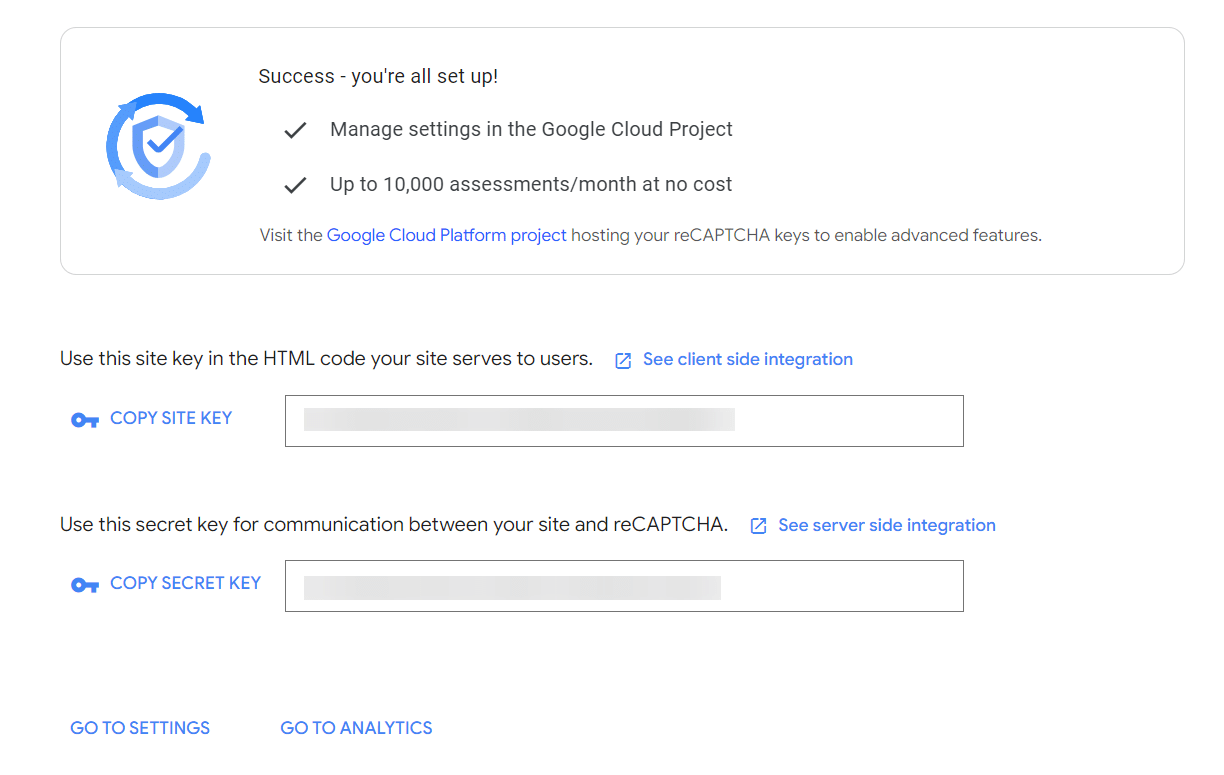
Step 3: Connect the keys inside Elementor
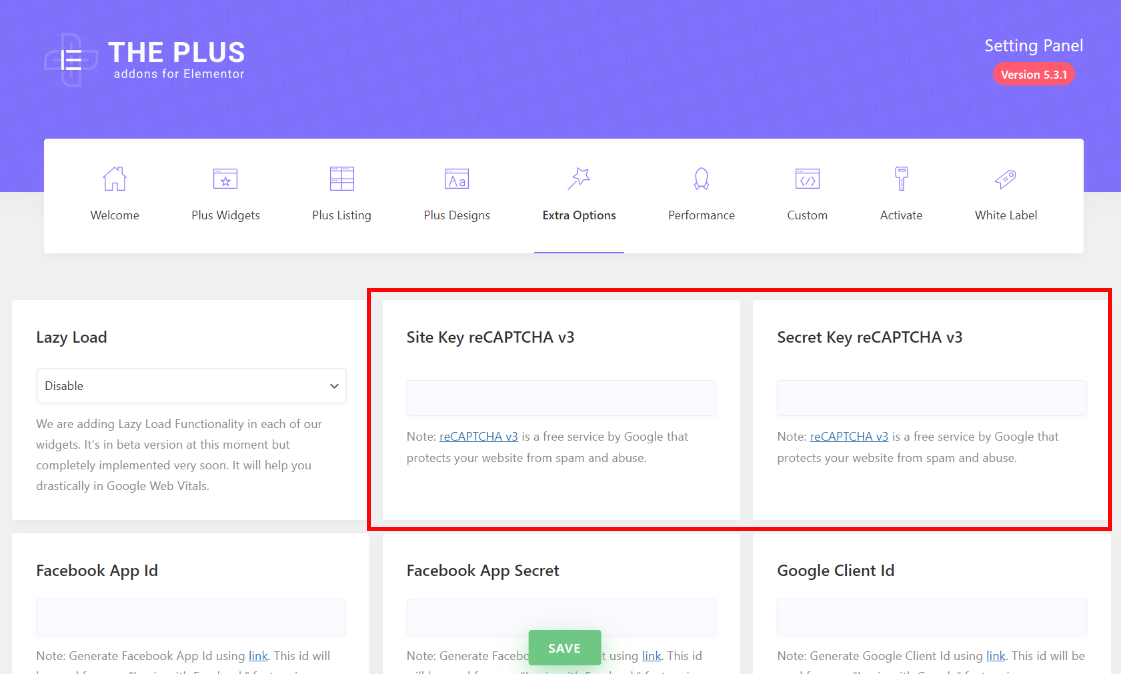
In your WordPress dashboard, go to Elementor, then Settings, then the Integrations tab. Find the reCAPTCHA or reCAPTCHA V3 section that matches your version, paste in the Site Key and Secret Key, and save.
This connects your whole site to reCAPTCHA once, so you do not repeat it per form.
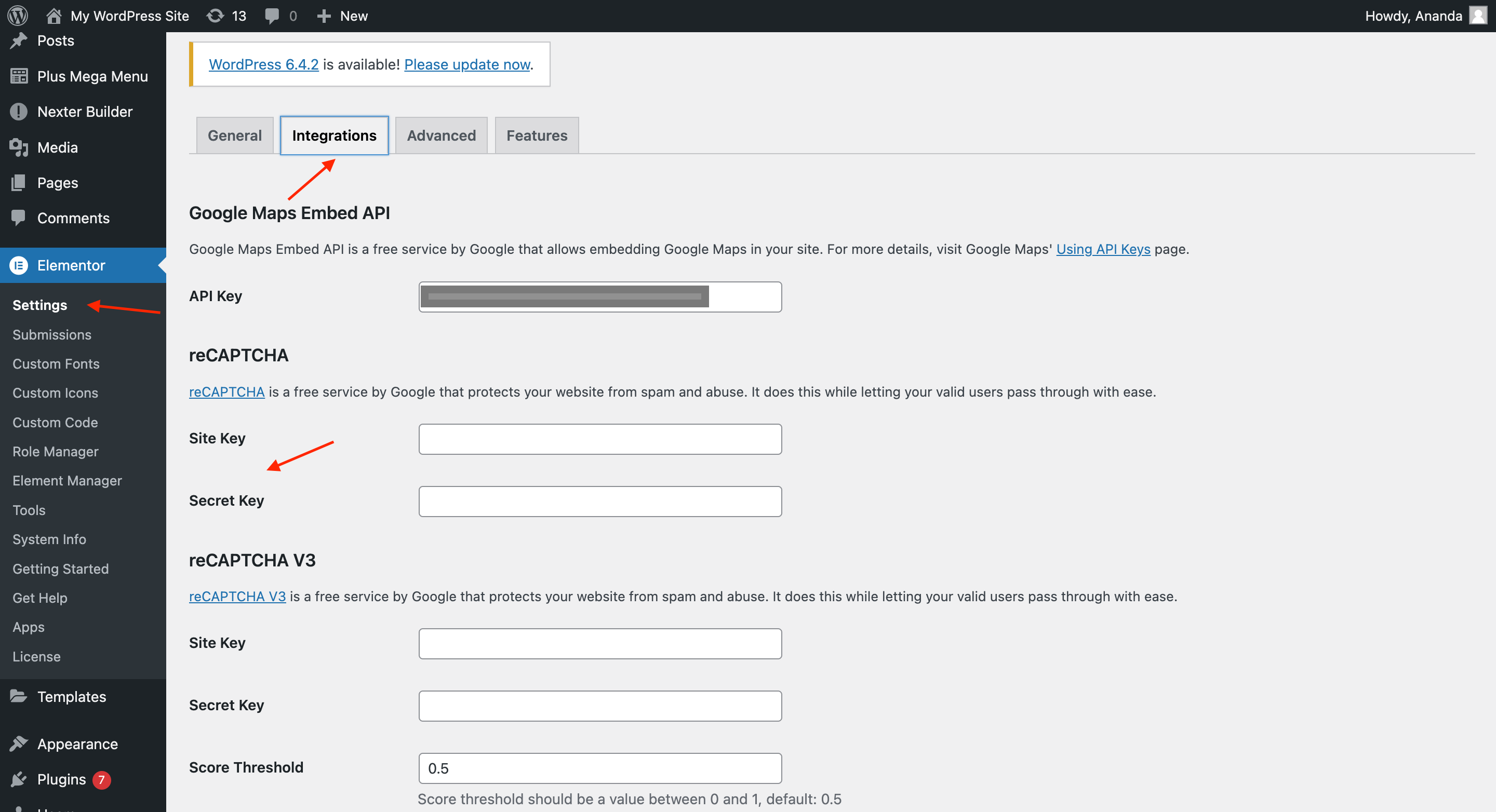
Step 4: Add the reCAPTCHA field to your form
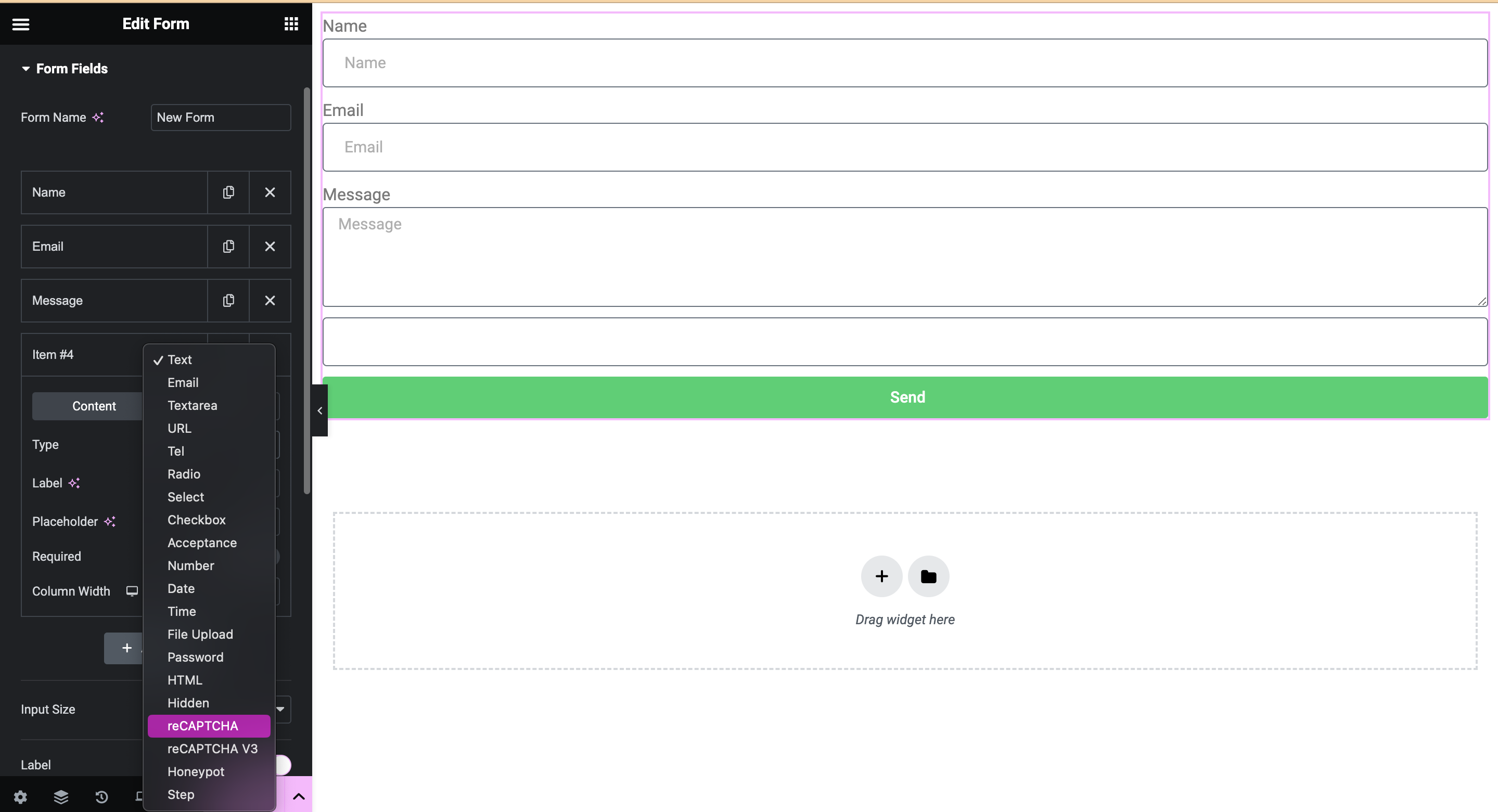
Edit the page with your form, open the Form widget, and under the form fields click Add Item to create a new field. Then set that field’s Type to reCAPTCHA or reCAPTCHA V3, matching the keys you connected in Step 3.
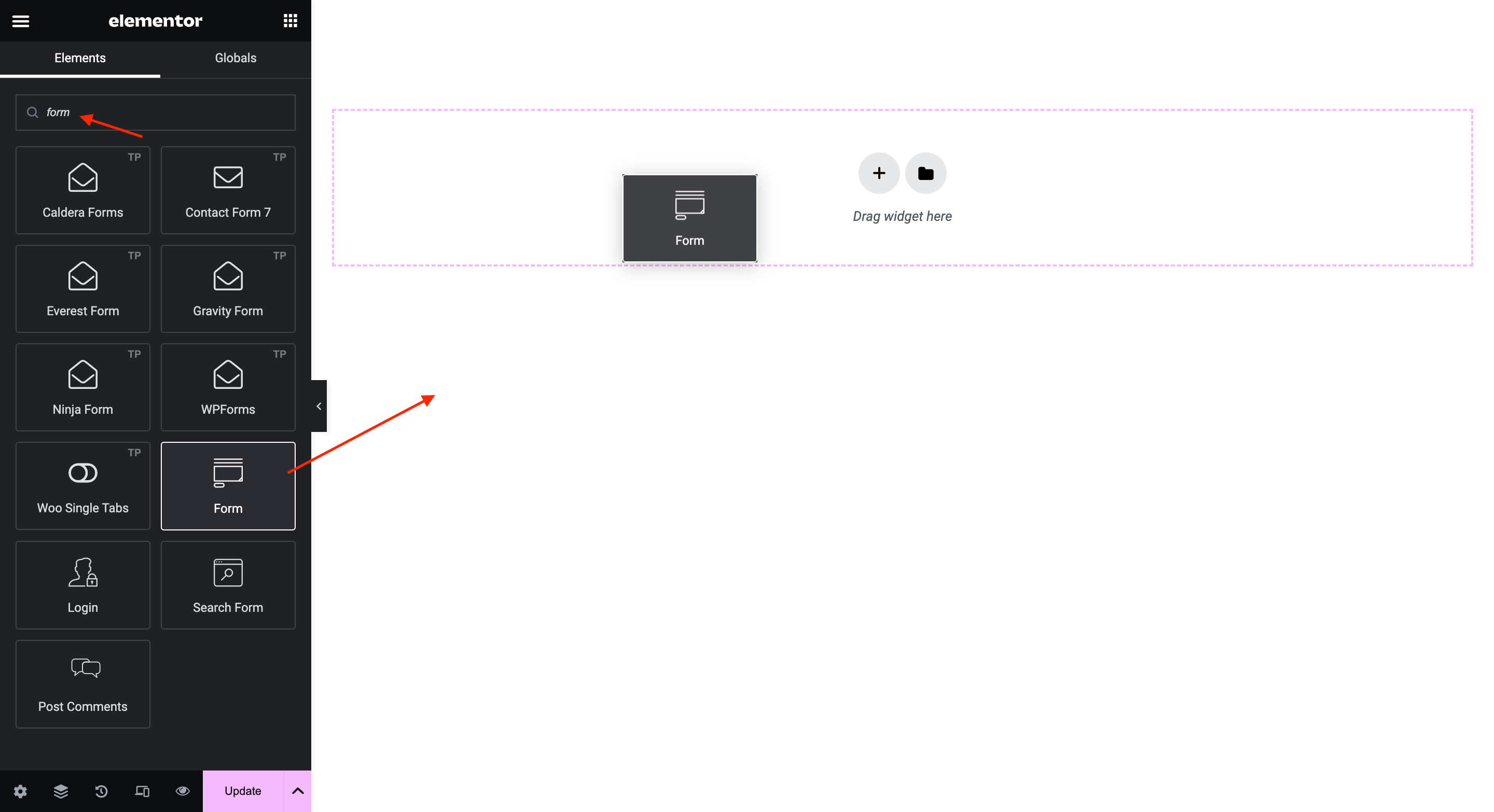
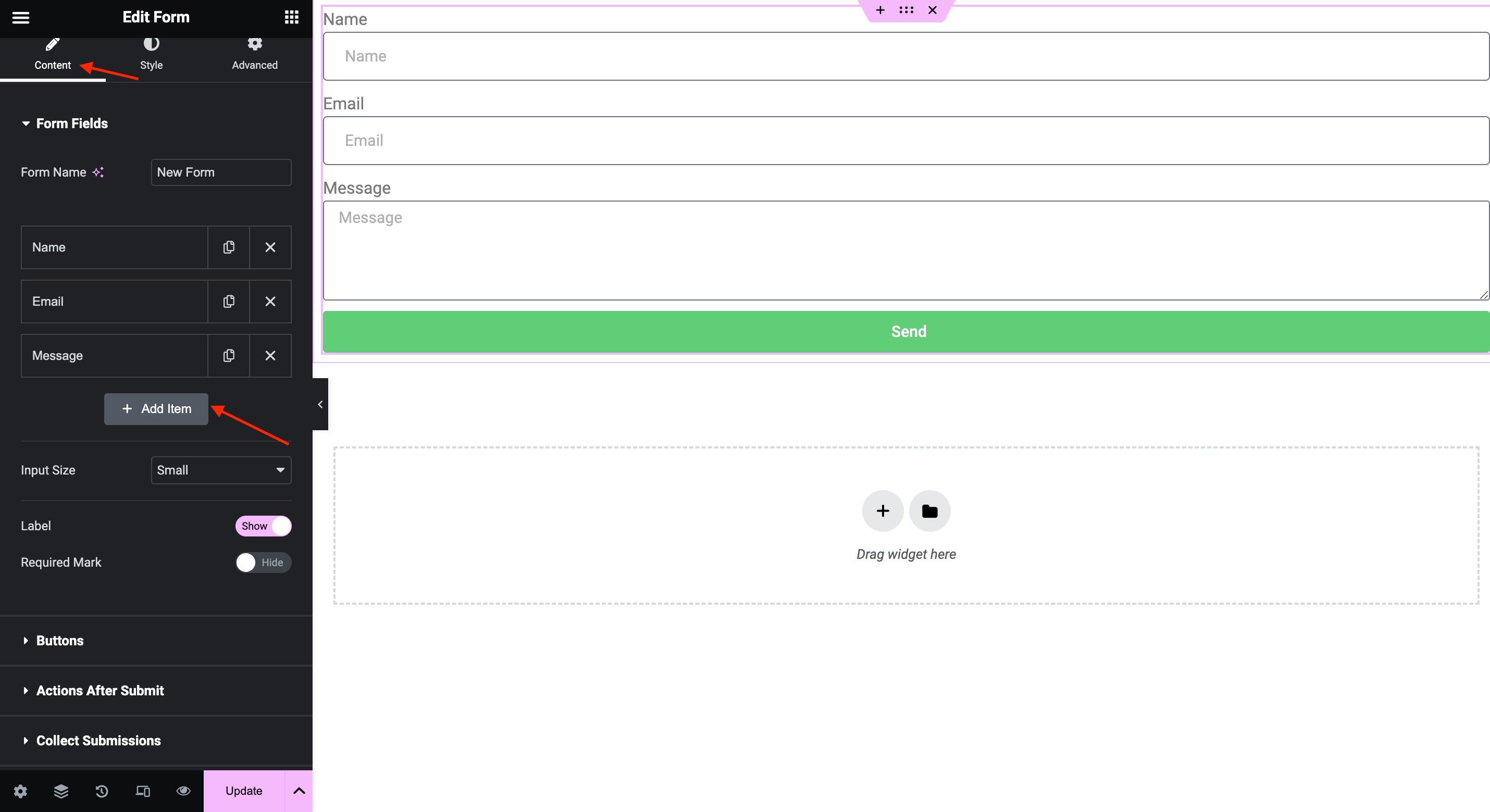
Step 5: Choose the type and customize
For a v2 checkbox you can set the size and the light or dark theme so it fits your design. For v3 there is nothing visible to style, but you set the score threshold that decides which submissions to block; a lower threshold is stricter.
Start moderate, then tighten it if spam still slips through. Update the page and test a real submission.


How to add reCAPTCHA without Elementor Pro
Elementor’s Form widget is Pro-only, so if you are on free Elementor you cannot use the steps above. You still have good options.
The most common is to build the form with a free form plugin that has its own reCAPTCHA support, such as Contact Form 7 or WPForms, and then style it to match your design with The Plus Addons for Elementor, which includes dedicated styler widgets for Contact Form 7, WPForms, Gravity Forms, Ninja Forms, and more.
The reCAPTCHA itself is handled by the form plugin, and The Plus Addons makes it look like part of your site.
The Plus Addons also ships its own form widgets with built-in spam protection, including Cloudflare Turnstile, a privacy-friendly alternative to reCAPTCHA that works the same way: it scores visitors quietly and only challenges the suspicious ones.
If you would rather not depend on Google at all, that is a clean route. Either way, you are not forced to buy Elementor Pro just to protect a form.
Troubleshooting reCAPTCHA on Elementor forms
The badge or checkbox never appears
This is almost always a key mismatch. Confirm the keys are pasted into the right version slot in Elementor’s Integrations tab, and that the field type on the form matches that version. A v2 key in a v3 field, or the reverse, fails silently.
The form submits fine but still gets spam
If you are on v3, your score threshold is probably too lenient. Tighten it so more low-score submissions are blocked. If spam continues, layer a second defence; our guide to stopping Elementor form spam covers honeypots and other methods that catch what reCAPTCHA misses.
Real users get blocked or see challenge loops
The opposite problem. On v3 a too-strict threshold blocks genuine visitors, so loosen it. Repeated v2 challenge loops usually point to a domain mismatch, so make sure every domain and subdomain you use is listed in the reCAPTCHA console for that key.
Keys work on staging but not production
reCAPTCHA keys are tied to the exact domains you registered. If you built on a staging URL and moved to the live domain, add the production domain to the same key in the console, or generate a fresh key for it.
Still weighing your options? Our roundup of the 5 best Elementor form builder plugins compares the main ways to build and protect a form, and keeping spam down is part of the wider hygiene in our WordPress maintenance checklist.
Wrapping up
Adding reCAPTCHA to an Elementor form is a five-minute job that pays for itself the first time it blocks a wave of junk. With Elementor Pro, generate your keys, connect them under Settings and Integrations, and add a reCAPTCHA field.
Without Pro, style a free form plugin with The Plus Addons for Elementor or use its built-in Cloudflare Turnstile protection. Pick v3 for a frictionless score-based check or v2 for a visible challenge, keep your keys and domains consistent, and test a real submission before you call it done.
The Plus Addons for Elementor adds 120+ widgets and extensions to your toolkit, including the form stylers above. See the complete list of widgets and extensions, or grab the free version on WordPress.org.