




Short answer: Elementor is the best WordPress page builder for most people, with 10 million active installs, a free tier you can genuinely build on, and the largest addon ecosystem of any builder. Gutenberg is the lightest choice because it already ships inside WordPress. Bricks and Oxygen 6 suit performance-first developers, Divi 5 is the pick for a lifetime license across unlimited sites, Beaver Builder is the safest option for client sites, SeedProd is fastest for landing pages, Visual Composer covers full theme building, WPBakery mainly matters when a purchased theme already bundles it, and Brizy is the gentlest starting point for a complete beginner.
Choosing a WordPress page builder used to be simple, because there were only a couple worth using. In 2026 there are more strong options than ever, and the right one depends on whether you care most about speed, design freedom, developer control, or just shipping a page without touching code. This guide compares the 10 best WordPress page builders, what each is genuinely good at, what it costs today, and who should pick it.
A page builder is a plugin that lets you create and edit pages visually, usually with drag and drop, so you can build landing pages and custom layouts without writing code. Some are full design suites, some are lightweight and developer-first, and a few double as a theme. All ten below are current, actively maintained, and checked against each vendor’s own pricing page on 10 August 2026.
What Are WordPress Page Builders?
Page builders are WordPress plugins that let you create, edit, and personalize pages without writing any code. Instead of editing templates by hand, you drag elements onto the canvas, adjust them in a side panel, and see the result live. That control is why they remain one of the most popular ways to build on WordPress, which powers a huge share of the web.
Do Page Builders Bloat Your Website?
Used carelessly, any page builder can add markup and scripts that slow a page down. Used well, the impact is small and manageable. Elementor, for example, adds some CSS and JavaScript, but with sensible settings and a lightweight theme it does not have to slow your site down more than any other plugin. The bigger 2026 story is that the leading builders have been rewritten for performance: Elementor shipped its V4 editor with a leaner DOM, and Divi rebuilt its core in Divi 5. If speed is your priority, pick a performance-focused builder and pair it with a fast theme.
How We Picked These Page Builders
Every number in this guide was re-checked on 10 August 2026. Active install counts, version numbers, last-updated dates and WordPress compatibility come from the WordPress.org plugin API. Prices come from each vendor’s own pricing page on the same day. Where a vendor was running a discount we print the list price alongside the sale price instead of the sale price on its own, because a sale-only figure is the fastest way for a comparison post to go out of date.
Four of the ten are commercial-only products that WordPress.org does not distribute: Divi, WPBakery, Bricks and Oxygen. No repository install count or update date exists for them, so those cells read “Not listed” rather than carrying a guess. Gutenberg is a special case in the other direction, because the standalone plugin has its own install count while the block editor itself is part of every modern WordPress install.
One disclosure worth making plainly: we build The Plus Addons for Elementor, so we have a commercial interest in Elementor. Elementor is placed first here on install base, free-tier usefulness and ecosystem size, and you can check all three against the table below. If your priority is the leanest possible site rather than the most flexible one, Gutenberg is the honest answer, and it costs nothing.
The 10 Best WordPress Page Builders in 2026
Here is the quick comparison, with pricing verified against each vendor’s site in June 2026. Prices change, so confirm the current figure before you buy.
| Page Builder | Type | Best for | Price (Aug 2026) | WP.org installs | WP.org last update |
|---|---|---|---|---|---|
| Elementor | Freemium plugin | Most users and the biggest addon ecosystem | Free, Pro from $49/yr | 10,000,000 | 6 Aug 2026 |
| Gutenberg | Built into WordPress | Native, lightweight block editing | Free | 300,000 (plugin), plus core | 7 Aug 2026 |
| Beaver Builder | Freemium plugin | Stable, developer-friendly client sites | Lite free, Starter $89/yr | 100,000 (Lite) | 8 Jun 2026 |
| Divi | Commercial theme and builder | All-in-one design with a lifetime option | $89/yr or $249 lifetime | Not listed | Not listed |
| Visual Composer | Freemium plugin | Theme building plus a content library | Free, Single $49/yr | 40,000 | 23 Jul 2026 |
| WPBakery | Commercial plugin | Theme bundles and existing sites | $82 once, 1 site | Not listed | Not listed |
| SeedProd | Freemium plugin | Landing pages and full themes fast | Lite free, Basic $79/yr | 700,000 (Lite) | 27 Jul 2026 |
| Bricks | Commercial plugin | Performance-first developers and agencies | $79/yr, $599 lifetime | Not listed | Not listed |
| Oxygen | Commercial plugin | Code-level control, rebuilt as Oxygen 6 | $129 lifetime | Not listed | Not listed |
| Brizy | Freemium plugin | Beginners building landing pages | Free, Personal $59/yr ($69 list) | 70,000 | 28 Jul 2026 |
1. Elementor
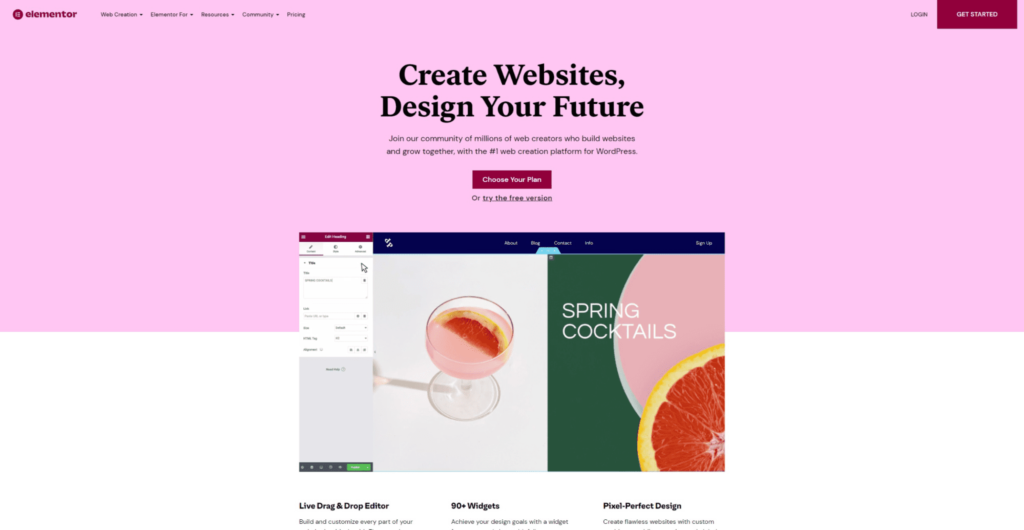
Elementor is still the default recommendation for most people. It is a true drag-and-drop builder, it has a genuinely useful free version, and no other builder comes close to its addon ecosystem. In 2026 it runs on the rewritten Editor V4, which trimmed the DOM and markup for better performance. Pro starts at $49 a year.
Its biggest practical advantage is extensibility. The Plus Addons for Elementor is a good example, adding 120+ widgets and extensions on top of Elementor, including:
- WooCommerce Builder
- Full Page Scroll and Smooth Scroll
- Dynamic content and custom loop layouts
- Social feeds, reviews, and search filters
Key strengths
- Capable free version and the largest addon ecosystem
- Simple interface with deep customization
- Theme builder for headers, footers, and templates
- Huge community, so help is easy to find
Watch out: with so many widgets available it is easy to overload a page, so keep an eye on performance.
Best for: most WordPress sites, and anyone who wants the widest possible choice of addons, templates and tutorials.
Want a deeper look? Read our honest Elementor review.
2. Gutenberg
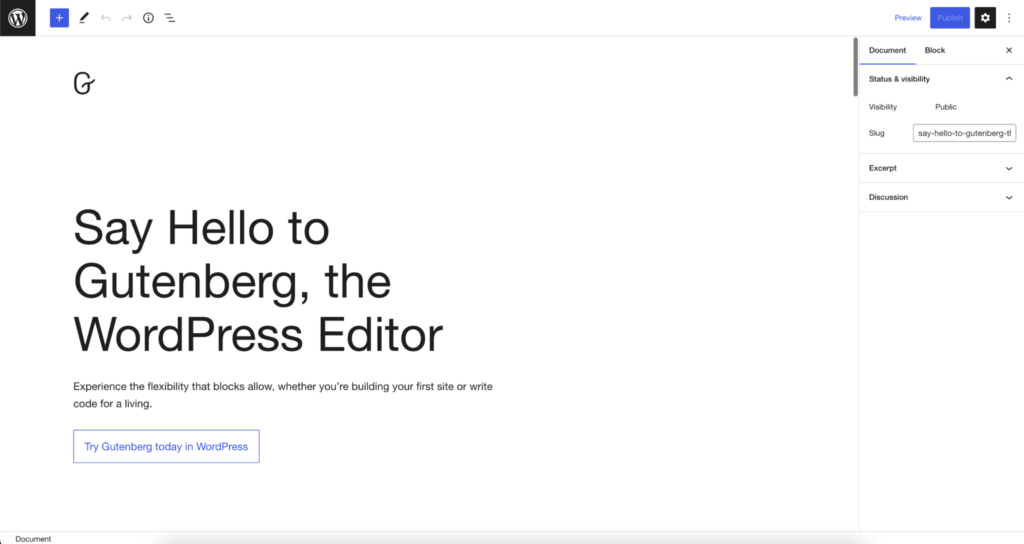
Gutenberg is the block editor built into WordPress core, so it is free and already installed on every site. It has grown steadily, and WordPress 7.0 added more native blocks and full-site editing maturity. For lightweight, no-extra-plugin building, it is the fastest option simply because there is nothing extra to load.
Out of the box it is leaner on design options than a dedicated builder, which is where block libraries help. Nexter Blocks adds a large set of free Gutenberg blocks for things like carousels, data tables, and mega menus, and it pairs well with a lightweight block theme such as Nexter.
Key strengths
- Built into WordPress, nothing to install or pay for
- Fast, since it is part of core
- Improving every release, with full-site editing now mature
Watch out: the native design controls are still simpler than Elementor or Divi, so complex layouts usually need a block library.
Best for: lean sites, and anyone who would rather stay on core WordPress than add another builder plugin.
Also Read: Elementor vs Gutenberg for a direct comparison of the two most common choices on this list.
3. Beaver Builder
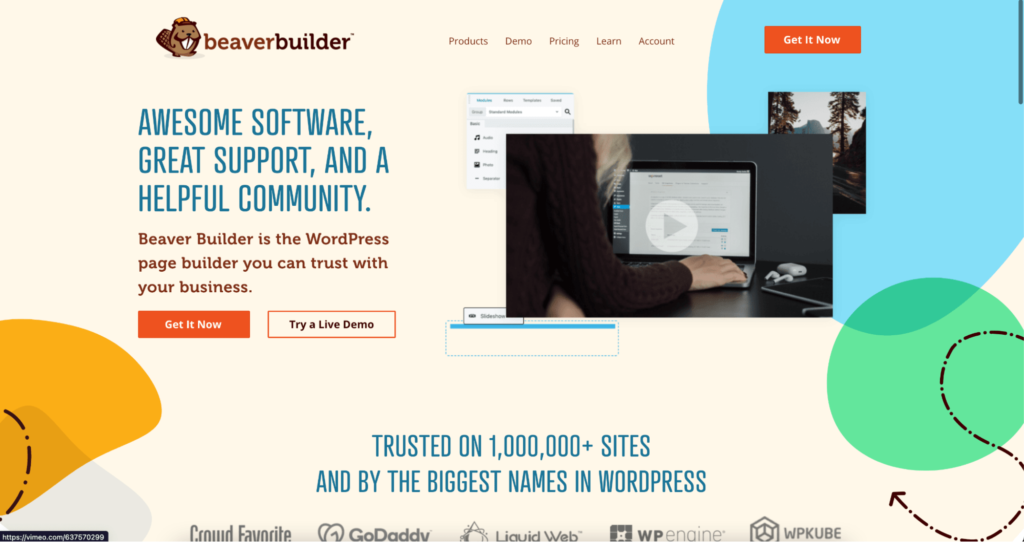
Beaver Builder has a loyal following among developers and agencies who value stability over flash. It is a live front-end editor with clean output and a reputation for not breaking your site when you switch it off. There is a free lite version on WordPress.org, and paid plans start at $89 a year.
Key strengths
- Clean, stable code that is kind to performance
- Front-end live editing with a gentle learning curve
- Works on unlimited sites on the higher plans
- Companion theme and add-on for headers, footers, and archives
Watch out: it has fewer flashy design options and a smaller widget ecosystem than Elementor.
Best for: agencies handing sites to clients, where predictable and stable beats novel.
Also Read: Elementor vs Beaver Builder if you are deciding between the two for client work.
Speed matters for any builder. See the best cache plugins to keep scores healthy.
4. Divi
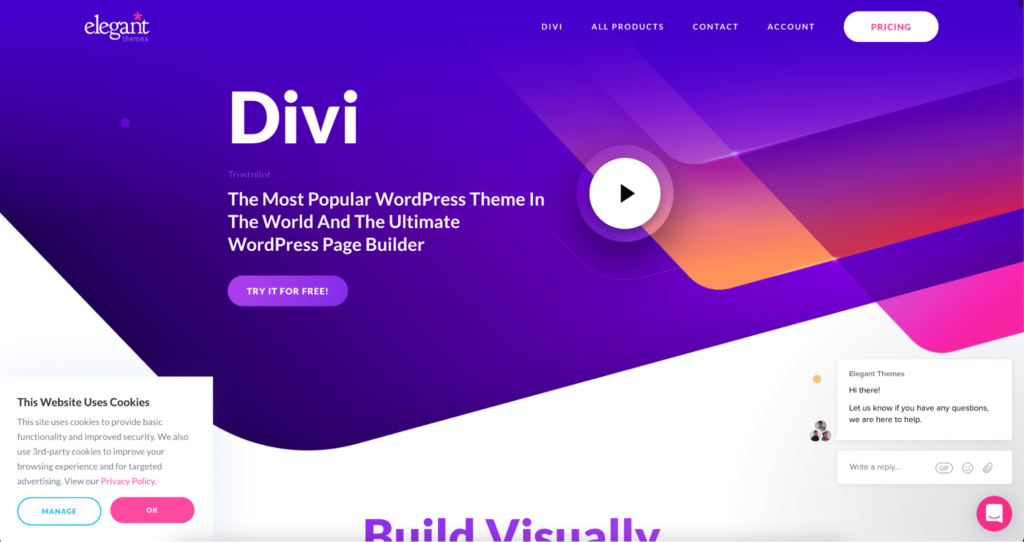
Divi, from Elegant Themes, was released in 2013 and is used by more than 1,000,000 customers. It is an all-in-one theme and builder with a deep library of layouts and design controls. Its standout commercial feature is pricing: $89 a year, or $249 once for lifetime access to Divi across unlimited sites.
Divi historically had a reputation for heavy output. That is the main thing the 2026 release, Divi 5, set out to fix with a rebuilt core aimed at better performance. If you build a lot of sites and like a one-time price, Divi is worth a serious look.
Key strengths
- Lifetime pricing across unlimited sites
- Huge library of prebuilt layouts and modules
- Built-in A/B testing and custom CSS controls
- Theme plus builder in one product
Watch out: Divi uses its own shortcode-based format, so moving content off Divi later takes work.
Best for: designers who want one lifetime license they can use across unlimited sites.
Also Read: Divi vs Elementor for a feature-by-feature breakdown.
5. Visual Composer

Visual Composer is a drag-and-drop builder with a free forever tier and paid plans from $49 a year. Worth noting up front: it is a separate product from the old WPBakery editor it grew out of. It includes a theme builder, a popup builder, and a hub of templates and elements you can pull in as you work.
Key strengths
- Front-end drag-and-drop with a theme builder
- Large hub of templates and elements
- Popup builder and many integrations
Watch out: some of the more useful elements sit behind the paid tiers.
Best for: building an entire theme, header and footer included, without leaving one plugin.
6. WPBakery Page Builder
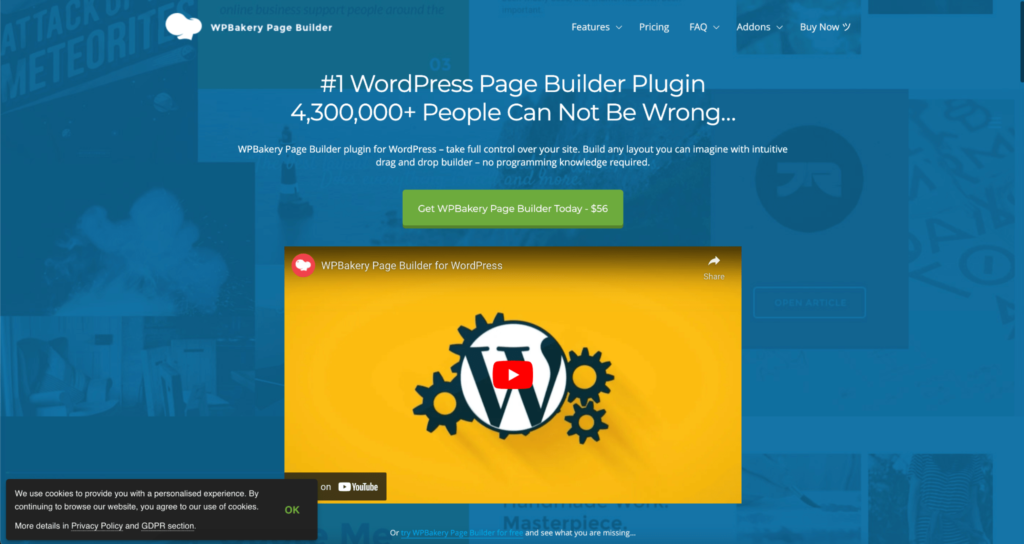
WPBakery Page Builder is one of the most widely bundled builders, shipping inside countless ThemeForest themes. It offers both front-end and back-end editing and works with almost any theme. There is no free version, only a demo, and the Regular one-site license is a one-time $82. Multi-site bundles run $299 for five sites and $592 for ten, and Support Plus renews at $59 a year after the first year.
Key strengths
- One-time price rather than a subscription
- Works with virtually any theme
- Front-end and back-end editing modes
- Often already included with a premium theme you own
Watch out: it relies heavily on shortcodes, which can leave residue in your content if you deactivate it.
Best for: sites that already ship with it inside a purchased theme, rather than new builds.
Also Read: best Elementor alternatives if you are migrating off an older shortcode-based builder.
7. SeedProd
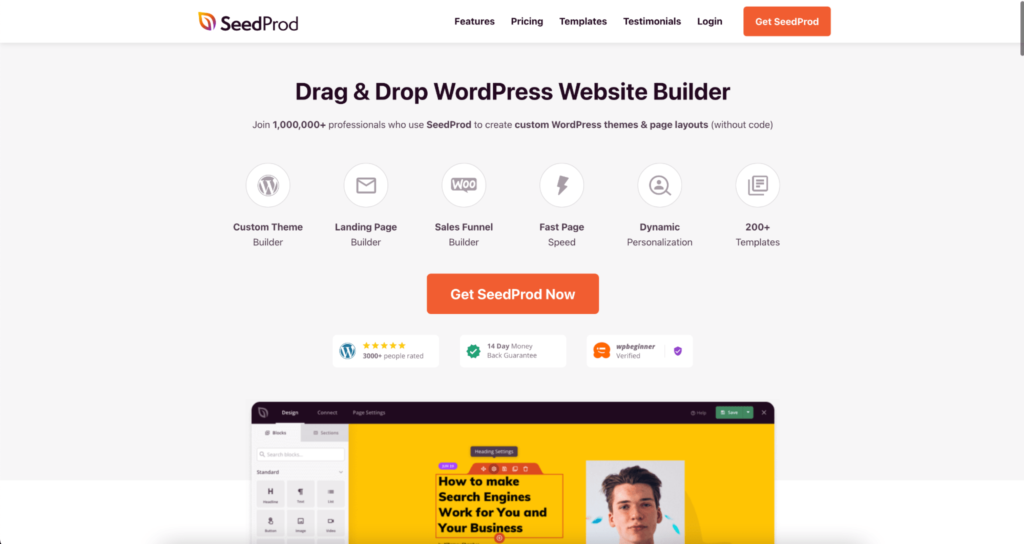
SeedProd is built for speed and conversions. It started as the go-to coming-soon and landing-page tool, and its free version on WordPress.org has more than 700,000 active installs. It has since grown into a full theme builder, so you can assemble an entire site from its blocks. Paid plans start at $79 a year.
Key strengths
- Lightweight output focused on page speed
- Excellent for landing pages, coming-soon, and maintenance modes
- Full theme building from one tool
- Strong email and marketing integrations
Watch out: it is more focused on marketing pages and themes than on intricate, design-heavy layouts.
Best for: getting a landing page, coming-soon page or full theme live in an afternoon.
Also Read: free one-page website builders if a single landing page is all you need.
8. Bricks
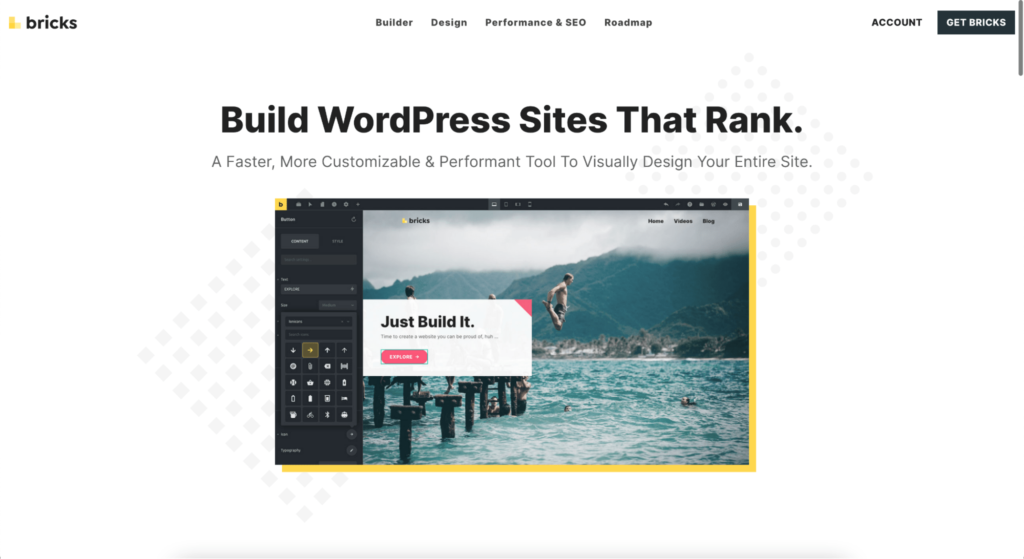
Bricks launched in March 2021 and has since become a favorite among developers who want speed and clean markup. It is a theme and builder in one, with a structure panel, granular control, and output that consistently scores well on performance. Pricing starts at $79 a year. The single-site lifetime plan was retired in early 2024, so lifetime is now only the unlimited tier at $599.
Key strengths
- Excellent performance and clean code
- Developer-friendly with deep control and query loops
- Theme plus builder, no separate theme needed
- Active community and frequent updates
Watch out: the deeper controls mean a steeper learning curve than Elementor.
Best for: developers who will trade a steeper learning curve for lean, controllable markup.
Also Read: Bricks vs Elementor for how the two compare on speed and workflow.
9. Oxygen
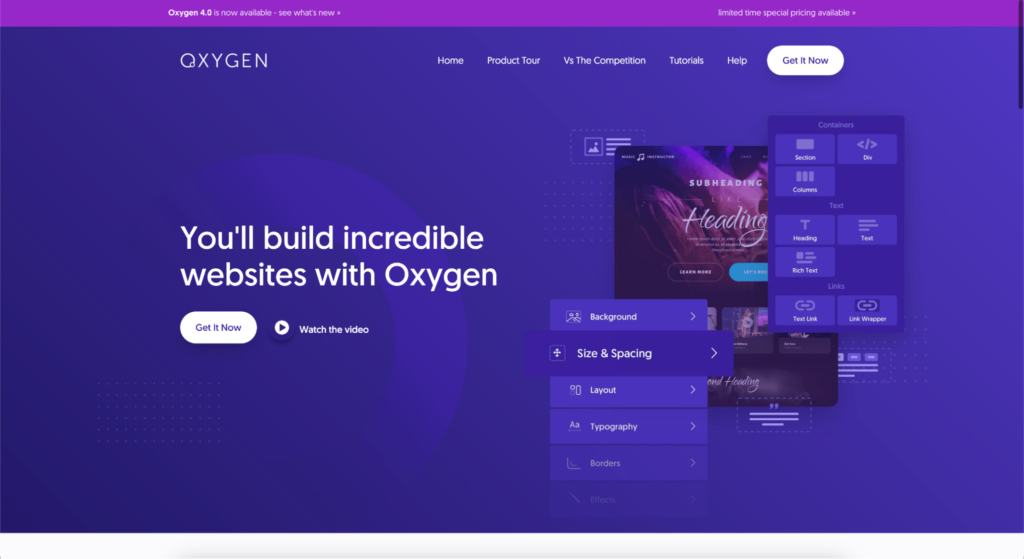
Oxygen is the most code-level builder on this list, long loved by developers for the control it gives over markup and styling. In 2026 it was rebuilt from the ground up as Oxygen 6, with the previous version kept available as Oxygen Classic. It is made by Soflyy, the same company behind Breakdance, though the two are separate products. Oxygen is sold as a one-time license starting at $129 for lifetime access.
Key strengths
- Fine-grained, code-level control over output
- One-time lifetime pricing
- Fully rebuilt in Oxygen 6
- WooCommerce and Gutenberg integrations
Watch out: it is built for people comfortable with web fundamentals, so it is the least beginner-friendly option here.
Best for: developers who want code-level control over output and one-time pricing.
10. Brizy
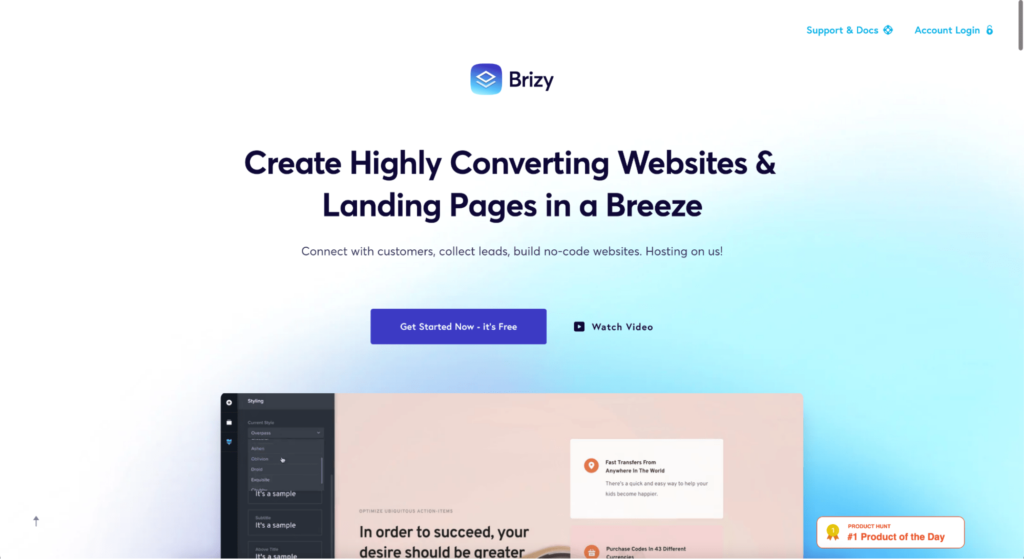
Brizy is the most beginner-friendly builder here, designed to get a clean landing page live with as little friction as possible. It has a free plugin on WordPress.org and paid Pro plans for the advanced features. If you have limited design experience and want good-looking pages fast, Brizy is built for you.
Key strengths
- Very easy to learn, with a clean interface
- Lots of landing-page templates
- Mobile previews and native marketing integrations
Watch out: it is less suited to large, complex sites than the heavyweight builders.
Best for: complete beginners building a first landing page without a learning curve.
Also Read: Brizy vs Elementor if you want to know what you give up by starting simple.
How to Choose a WordPress Page Builder
Weigh these factors before you commit, because switching builders later is rarely painless. Content built in one builder often needs reformatting when you move it to another, so back up your site first and expect some cleanup if you change.
- Performance: pick a builder that does not drag your Core Web Vitals down, then keep pages lean.
- Design freedom: match the builder’s flexibility to how custom your layouts need to be.
- Pricing model: decide whether an annual subscription or a one-time lifetime license fits your budget and number of sites.
- Support and community: a large community means faster answers when something breaks.
- Lock-in: consider how hard it would be to move your content off the builder later.
Which Page Builder Should You Use?
There is no single winner, only the right tool for your situation:
- Most people: Elementor, for its free tier, ease of use, and unmatched addon ecosystem.
- Lightweight and native: Gutenberg, especially paired with a block library like Nexter Blocks.
- Performance-first developers: Bricks or Oxygen 6.
- One-time pricing across many sites: Divi.
- Landing pages and conversions: SeedProd.
- Total beginners: Brizy.
If you land on Elementor or Gutenberg, you can stretch either one much further with add-ons. The Plus Addons for Elementor adds 120+ widgets and extensions to Elementor, and Nexter Blocks does the same for Gutenberg, both with free versions you can start with today.
Suggested Reading
- WordPress page builder guide for 2026
- How to speed up an Elementor website
- Best free Elementor addons
- Best Elementor themes
- Best Elementor addons compared
New to Elementor? Check these best blogs and YouTube channels to learn Elementor.