





Key Takeaways
- A transparent header lets your hero image or video show through the navigation bar instead of sitting behind a solid strip.
- The Plus Addons for Elementor’s Header Builder has a native transparent-header toggle, no custom CSS required.
- Pair transparency with a scroll trigger so the header solidifies (and the logo swaps) once visitors scroll past the hero.
- The most common failure is logo/menu contrast disappearing over a bright hero image – fix it with a logo swap or a subtle background overlay.
- Test on mobile separately; many themes force a solid mobile header regardless of the desktop transparency setting.
A client once sent us a screenshot of their new landing page and asked why the navigation bar looked like “a grey box slapped on top of a beautiful photo.” The hero image was striking: a full-bleed product shot with the headline placed dead center. But the header above it was a flat white strip with a drop shadow, and it made the whole page look like two different designs stitched together. The fix took less than five minutes once we knew where to look, and it is the exact same fix in this guide.
A transparent header removes that seam. Instead of a solid bar sitting on top of your hero section, the header blends into it, so the hero image or video reads as one continuous piece of design rather than a photo with a UI element bolted on. It is a small detail, but it is one of the fastest ways to make an Elementor page look like it was built by a design team instead of assembled from a template.
What a Transparent Header Actually Does (and When to Use One)
A transparent header sets the header section’s background to fully see-through so whatever sits behind it, usually a hero image, a video background, or a gradient, shows through the navigation area instead of being covered by a solid color. It only makes sense on pages where the very first section is tall enough and visually strong enough to sit behind a nav bar: landing pages, portfolio homepages, agency sites, and product launch pages are the classic cases.
It is a bad idea on content-heavy pages where the first section is plain text on a white background, because there is nothing for the header to blend into and you just end up with low-contrast menu items floating on white. The setting works best when it is scoped to specific pages rather than applied site-wide, which is exactly how The Plus Addons for Elementor’s Header Builder handles it.
Elementor’s own core header controls don’t give you a clean way to make a header conditionally transparent on some pages and solid on others without writing custom CSS per template. That is the specific gap the widget-level toggle below is built to close.
Setting Up a Transparent Header with the Header Builder
The Plus Addons for Elementor ships a dedicated Header Builder that treats your header as its own template, separate from the rest of the page, with its own set of display and effect conditions. That separation is what makes transparency safe to turn on: you are styling one template, applying it to the pages that need it, and leaving every other page on your default solid header.
To set it up:
- Open Templates > Theme Builder > Header and either create a new header template or duplicate your existing one so your default header stays untouched.
- Select the header container and open the Header Effects panel (this is where the plugin keeps scroll and transparency behavior, separate from basic styling).
- Toggle the background to transparent and set the initial state to apply only on page load, before any scroll has happened.
- Set the display condition so this transparent version only applies to the specific page, template, or post type where the hero section is tall and visually strong enough to support it.
- Preview on the actual page, not just in the template editor. Transparency reads very differently once your real hero image is behind it.
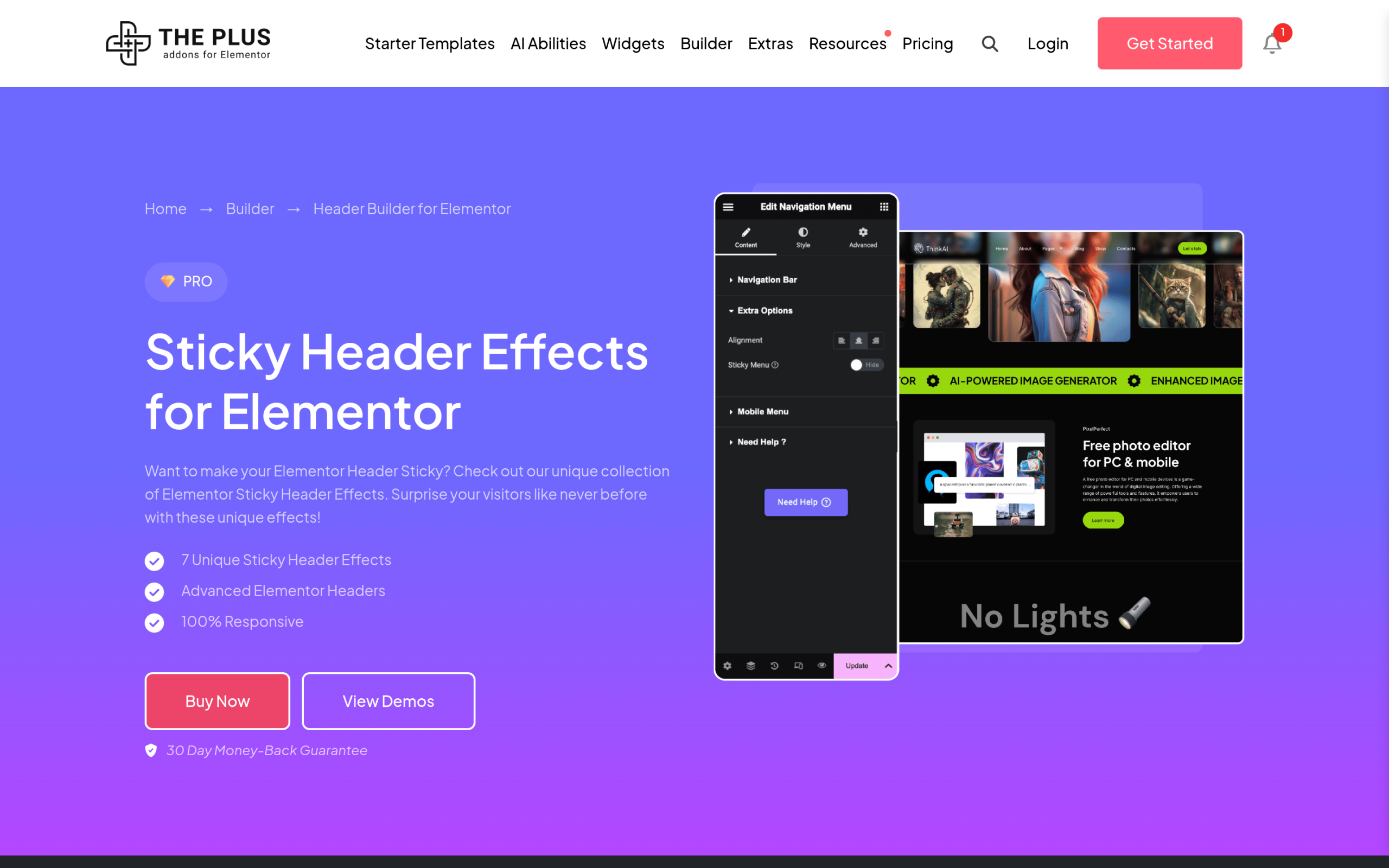
Also Read: Header Effects documentation for the full list of scroll and transparency behaviors you can combine with this setup.
Making the Header Solidify on Scroll (Scroll-Trigger Settings)
A transparent header that stays transparent for the whole page almost never works, because eventually your visitor scrolls past the hero and into a section with real content, and the “invisible” header now has no contrast to sit against. The fix is a scroll trigger: the header starts transparent, then switches to a solid background once the visitor scrolls past a defined point, usually the height of the hero section.
In the Header Effects panel, this is controlled with a “sticky on scroll” or “shrink on scroll” behavior layered on top of the transparency setting. You define a scroll offset (in pixels, or tied to the hero section’s height), and past that point the plugin swaps the header’s background from transparent to your solid brand color, often shrinking its height slightly at the same time so it reads as a distinct, more compact state.
Two settings matter most here. First, the transition should be fast, under 300 milliseconds, so it reads as a snap rather than a laggy fade. Second, test the scroll offset against your actual hero height on both desktop and the first mobile breakpoint, because a header that solidifies too early will visibly clip through a tall hero image before the visitor has scrolled far enough to justify it.
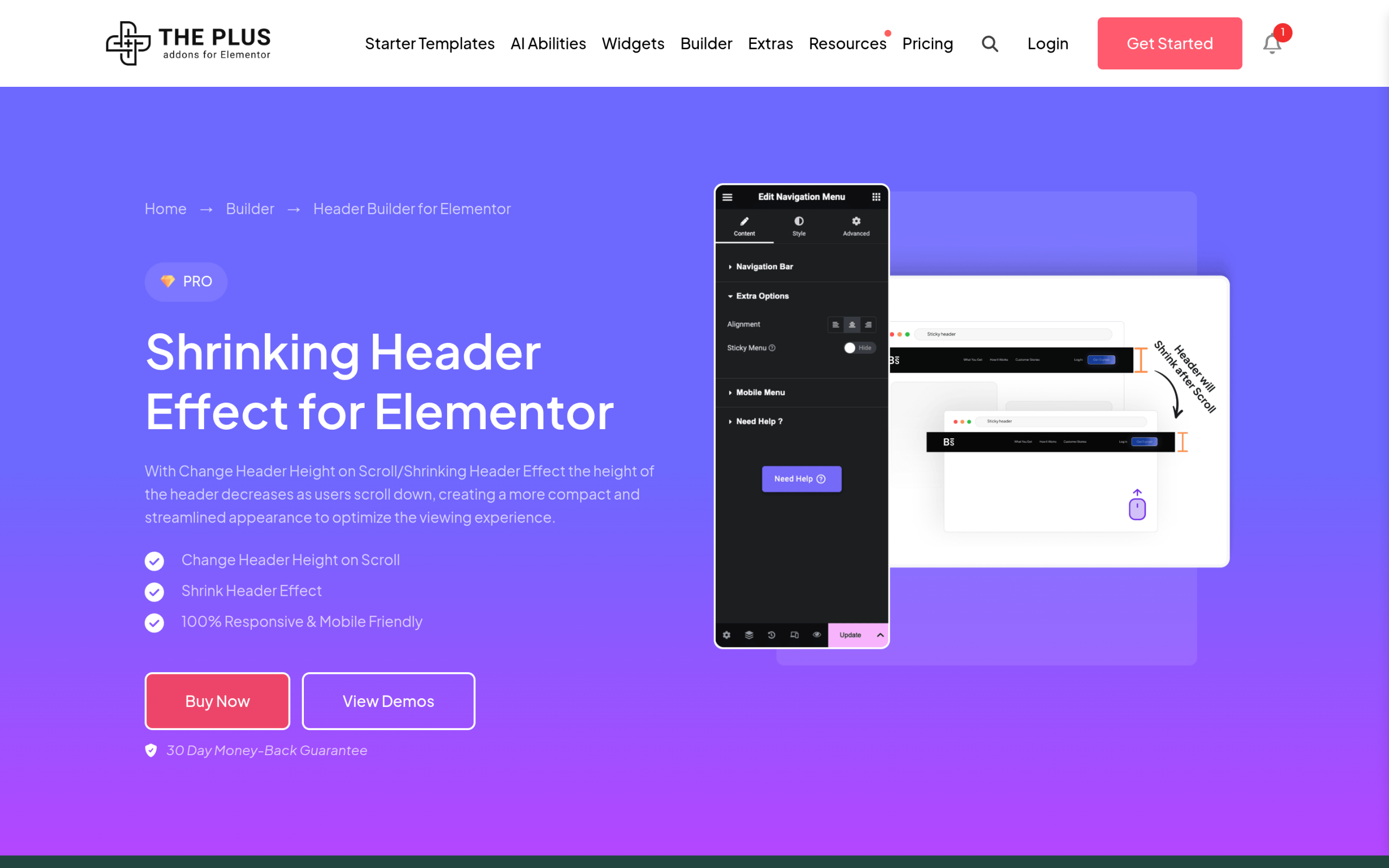
Also Read: Shrinking Header Effect in Elementor if you want the header to visibly compact itself at the same moment it solidifies.
Common Transparent Header Mistakes (and How to Avoid Them)
Most transparent header problems come down to contrast, not configuration. The setting itself is simple; the mistakes happen in how it is styled against real content.
- Dark logo on a bright hero image. A transparent header inherits whatever is behind it, so a dark-text logo that reads fine on white becomes invisible on a bright photo. Keep a light-color logo variant ready and swap it in specifically for the transparent state.
- No fallback for image-less pages. If a page using the transparent header template ever ships without a hero image (a draft, a stripped-down landing variant, a future edit), the header falls onto a plain background with no contrast plan. Add a subtle dark overlay as a safety net so the header never has to rely entirely on the image behind it.
- Menu items with no hover state adjustment. A hover color that works on solid backgrounds can vanish on some hero images. Test hover and active states against your actual hero, not just the default state.
- Ignoring the mobile breakpoint. Several themes and builders force a solid mobile header regardless of desktop settings, which is usually the right call for a small screen with a hamburger menu, but it needs to be a deliberate choice in your header template, not an oversight you discover in QA.
- Sticky conflicts. If a transparent header is also set to “sticky,” make sure the solid-on-scroll state actually engages before the header becomes sticky. Otherwise you get a sticky header that stays invisible the entire time it is stuck to the top of the viewport.
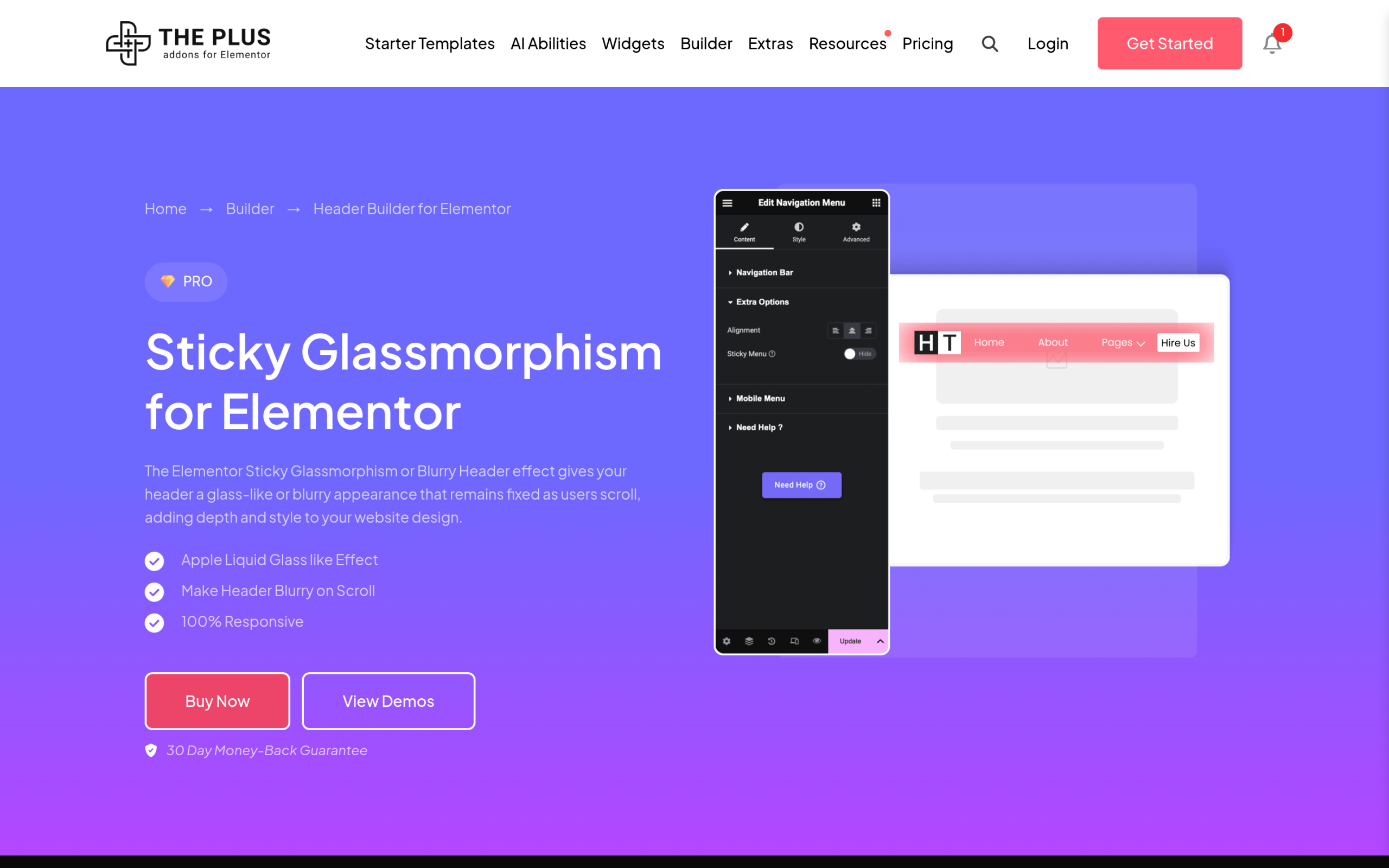
Bonus Combo: Transparent Header + Logo Swap on Scroll
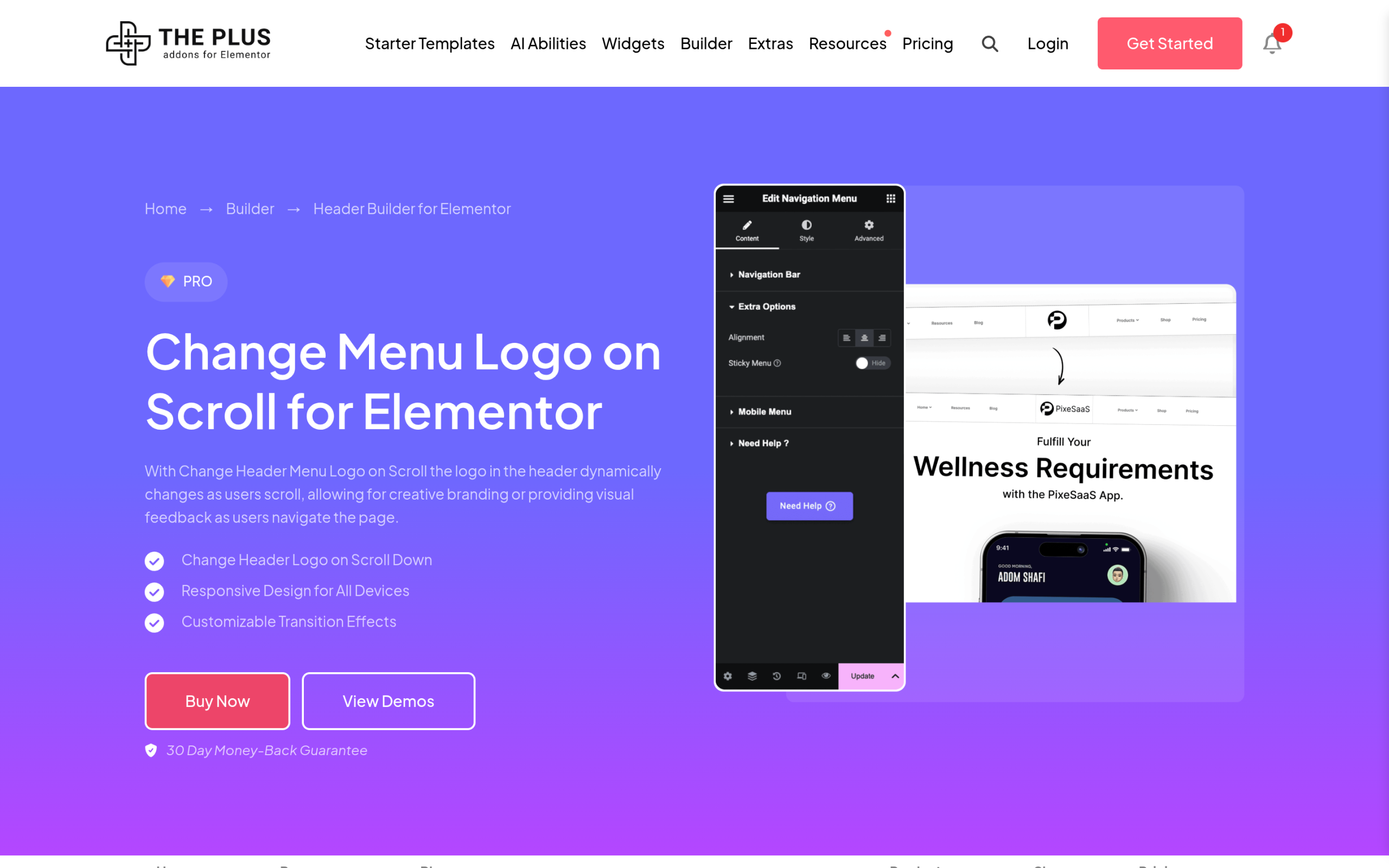
Once the base transparent-to-solid transition is working, the next upgrade most sites want is a logo swap tied to the same scroll trigger: a white or light-colored logo while the header is transparent over the hero, and your standard full-color logo once the header solidifies. This is a two-second visual cue that reassures visitors the page is still branded consistently, and it removes the single most common contrast failure described above.
The Header Builder ties this to the same scroll offset you already configured for the solidify effect, so the logo change and the background change happen at the same scroll position rather than needing a second, separately tuned trigger.
Also Read: Change Menu Logo on Scroll in Elementor for the full setup of this combo.
Quick QA Checklist Before You Publish
Before you ship a page using this setup, run through a short checklist. It takes about two minutes and catches almost every issue described above before a real visitor does.
- Load the page on desktop with cache cleared and confirm the header is transparent on first paint, not a flash of solid color that then fades out.
- Scroll slowly and confirm the solidify trigger fires at a sensible point, not mid-headline and not after the visitor has already scrolled past the entire hero.
- Check the logo and menu text against the actual hero image at its darkest and lightest points, not just the average brightness.
- Resize to your first mobile breakpoint and confirm the mobile header behaves the way you intended, solid by design or transparent by design, but not by accident.
- If the header is also sticky, confirm the solid state engages before or exactly as the header becomes sticky, never after.
- Duplicate the header template’s display conditions to a second, unrelated page in staging to confirm it is not accidentally applying site-wide.
Suggested Reading
- How to Create a Header and Footer in Elementor
- Header Effects Overview
- Shrinking Header Effect
- Change Menu Logo on Scroll
Frequently Asked Questions
Does a transparent header hurt SEO or page speed?
No. Transparency is a CSS background property, not extra markup or scripts, so it has no meaningful effect on load time. The only speed factor that matters is the hero image behind it, which you should optimize regardless of whether the header is transparent.
Can I make the header transparent on every page instead of just one?
You can, but it is rarely a good idea. Set the display condition on your header template to “entire site” only if every page has a hero section strong enough to support it. Otherwise, scope it to specific pages or templates and keep a solid header as the site-wide default.
Why does my transparent header show a white flash before the page loads?
This is usually a render-order issue: the header briefly displays its default background before the transparency style applies. Make sure the transparent state is set as the initial load state (not a scroll-triggered state) in the Header Effects panel, so there is nothing to “flash” from.
Does this work with a video background hero section?
Yes. A transparent header sits above whatever the hero section contains, image or video, without needing separate configuration. The contrast advice in the mistakes section above applies even more with video, since brightness can shift across the clip.
Do I need custom CSS to do any of this?
No. Everything described here is a native control inside the Header Builder’s Header Effects panel. Custom CSS is only useful for micro-adjustments beyond what the panel exposes, such as a very specific transition easing curve.