





A true archive page – the URL WordPress generates for a post type, category or tag automatically – is different from a manually-built page with a hardcoded query.
Dynamic Listing’s Archive Listing mode plugs into that real archive context, so the same template works for every term/date archive WordPress generates for the post type, without hardcoding which posts to show.
For the full settings tour of the Dynamic Listing widget, see Dynamic Listing Widget Settings Overview.
Requirement – This widget is a part of The Plus Addons for Elementor Pro, make sure it’s installed & activated to enjoy all its powers.
Before You Start
- Prerequisite: Elementor (free) installed and active.
- Edition: Dynamic Listing is a Pro widget – it needs The Plus Addons for Elementor Pro installed and its license activated. It will not appear in the free plugin.
- Widget to enable: go to The Plus Addons > Widgets, search for Dynamic Listing and turn its toggle on.
Steps
- Create (or edit) an Elementor Archive template under Templates > Theme Builder, and condition it to the custom post type’s archive.
- Add the Dynamic Listing widget to that archive template.
- Set Post Listing Types to Archive Listing.
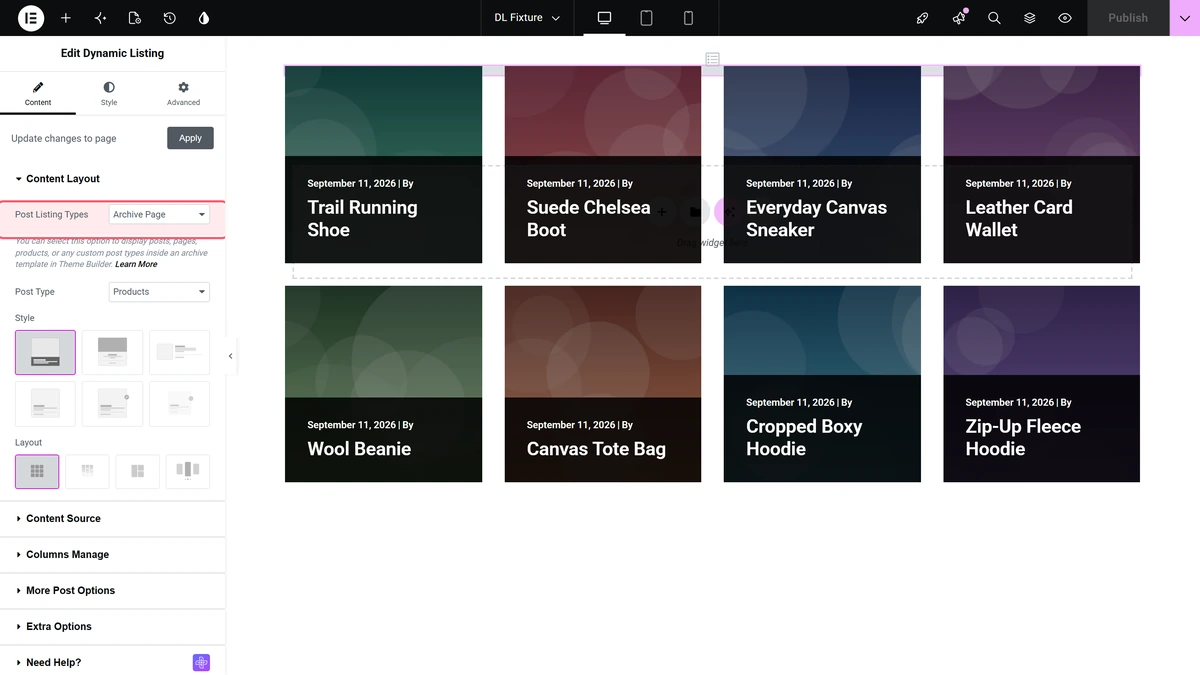
With Archive Listing selected, the widget automatically follows whichever archive URL a visitor is on – the post type’s main archive, or one of its category/tag/date archives – instead of running a fixed query you configure by hand.
Settings Overview
| Setting | What it does | Default |
|---|---|---|
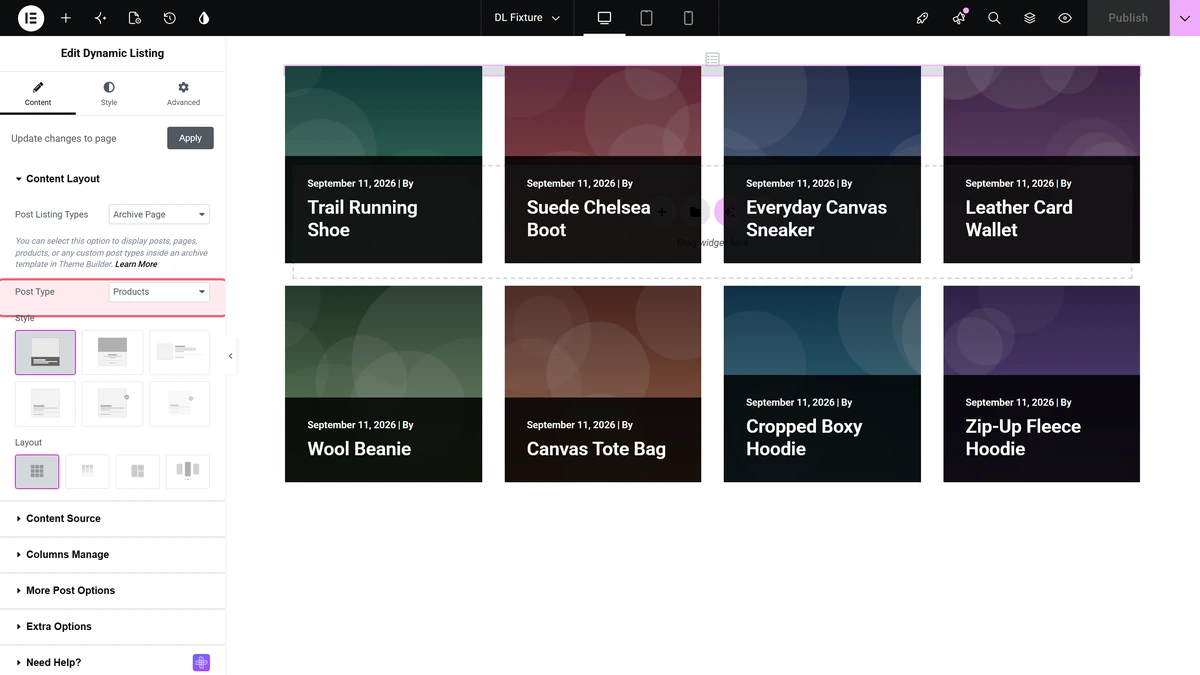
| Post Listing Types | Archive Listing follows the current archive context. | Page Listing |
Related Docs
- Dynamic Listing Widget Settings Overview
- How to Show Related Custom Posts on a Custom Post Types Page?
Not verified
So you know exactly what has and has not been checked:
- Behavior on a date-based archive URL (year/month) specifically, as opposed to a category/tag archive, was not separately tested.
