

There is a frustrating stage every content site hits. You have written a dozen good posts, a few of them rank for their exact keyword, and yet search engines still do not seem to treat you as a go-to source for your subject. New posts start slowly.
Competitors with thinner writing but broader coverage outrank you. The missing piece is almost always topical authority, and in the AI search era it matters more than any single keyword you target.
This guide explains what topical authority is, how a topical map turns it into a plan, why it has become the deciding factor for getting cited by AI engines, and how to actually measure it on a WordPress site instead of guessing.
What topical authority actually is
Topical authority is how completely and credibly your site covers a subject. Instead of one page chasing one keyword, you build a connected body of content that answers nearly every question a reader could have about a topic.
SEOs widely observe that once a site covers a subject in depth, search engines treat it as a more trustworthy source on that subject, and new posts on the same topic tend to rank faster, even before they earn many backlinks.
The important shift is that this is not about repeating a keyword more often. Modern search engines map the relationships between concepts, entities, and questions across your whole site, and they judge whether your content forms a complete knowledge network around a topic.
Coverage and connection beat repetition. This is closely tied to semantic SEO and to the expertise signals behind E-E-A-T.
From keywords to topics
The old playbook was one keyword, one page, repeated across a spreadsheet. It still has its place, but on its own it produces a scattered site that ranks for a handful of terms and owns no subject. The topic-first approach flips the order.
You choose a subject you want to be known for, then map every angle of it, and only then assign keywords to the individual pieces.
The payoff is compounding. Once a site has demonstrated depth in an area, each new post in that area tends to benefit from the trust the cluster has already earned, so it can rank faster and get pulled into more answers.
That is why a focused site often beats a larger but unfocused one.
What a topical map is
A topical map is the plan that turns the idea of authority into something you can actually build. You pick one core topic as your pillar, then map the supporting subtopics, the clusters, that prove you understand the subject from every side.
Unlike a flat content calendar, a topical map is organized around entity relationships, not isolated keywords. It is the architecture of your site’s expertise.
The most common structure is the pillar and cluster model, sometimes called hub and spoke. It works in three tiers:
- Pillar page the broad, definitive guide to the core topic.
- Cluster posts focused pieces that answer specific questions and how-tos under that topic.
- Connector posts comparisons, best-of lists, and troubleshooting articles that link clusters to one another.
Every cluster post links up to the pillar, the pillar links down to the clusters, and connectors stitch related clusters together. Those internal links are not decoration. They are how a search engine, or an AI crawler, understands that these pages belong to one coherent topic.
How to build a topical map
You do not need expensive software to start. The process is straightforward, even if the execution takes time.
- Pick one pillar topic you genuinely want to be known for, broad enough to support twenty or more posts.
- List every subtopic and question a reader might have. Mine People Also Ask, Reddit threads, and your own support inbox for the real questions.
- Group them into clusters of related questions, each cluster becoming a small set of posts around one angle.
- Assign one clear primary keyword or question to each page so two posts never compete for the same intent.
- Plan the internal links up front: every post links to its pillar and to the most relevant siblings.
Publish the pillar first if you can, then fill in the clusters over time. The map is a living document, so add branches as the topic evolves.
Topical authority in the AI search era
Here is why this jumped from a nice-to-have to the main event. Answer engines like ChatGPT, Perplexity, and Google’s AI features do not return ten blue links. They synthesize an answer and cite a few sources.
To be one of those cited sources, a single well-optimized page is rarely enough.
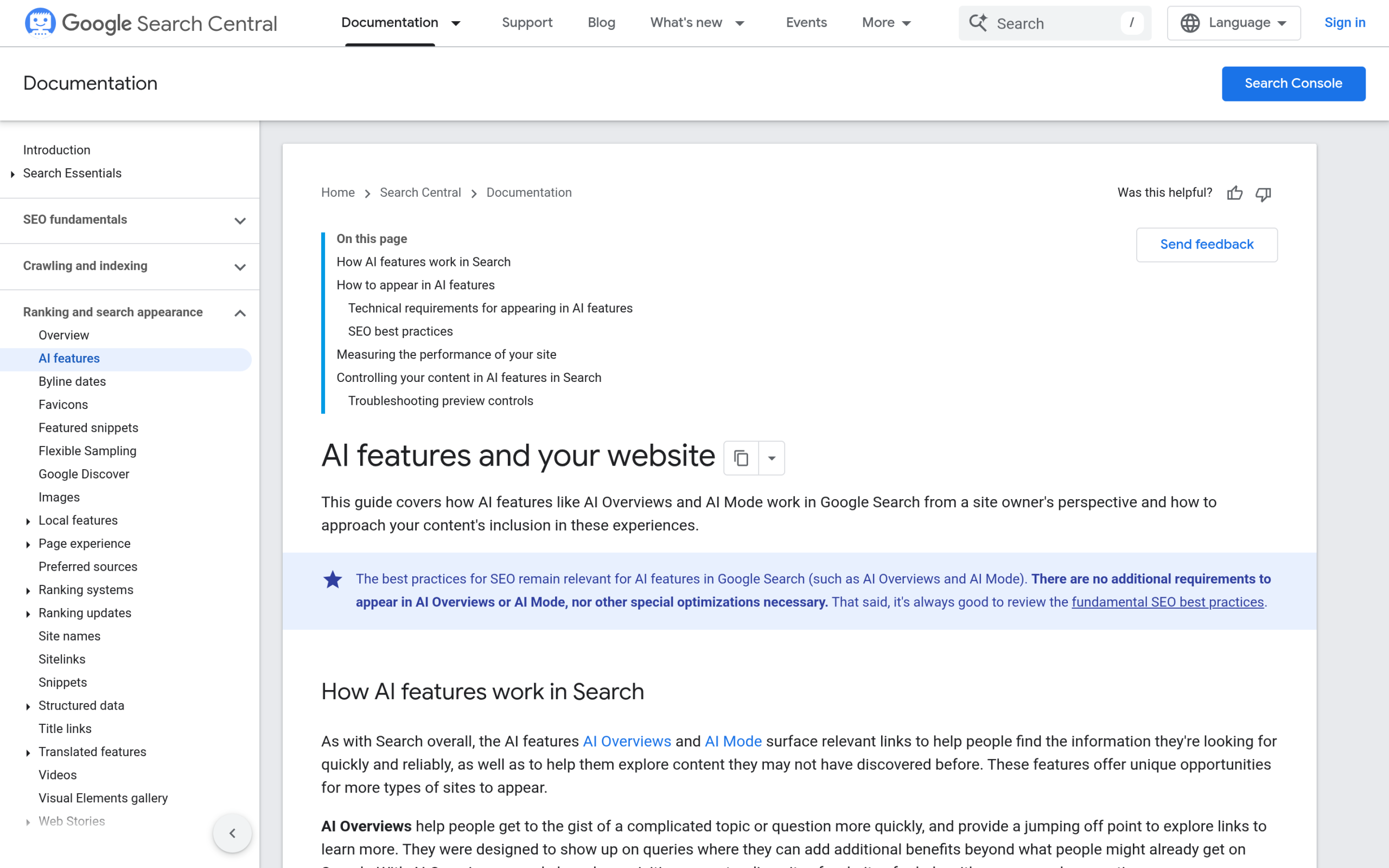
In practice, broad and genuinely useful coverage tends to help: Google’s own guidance on appearing in AI features stresses useful, reliable content rather than any single trick, and a site that addresses a whole topic gives these systems more reason to treat it as a reliable source to cite.
Topical maps also line up with how these models are generally understood to work. They reason about entities and relationships, which is exactly what a well-linked pillar and cluster structure expresses.
The same architecture that builds traditional ranking authority is what makes your content easy for an AI crawler to parse when it is deciding whether to cite you.
If you want the deeper version of this argument, see our guides on generative engine optimization and how Perplexity cites WordPress sites.
How to measure topical authority on WordPress
The hard part of topical authority is that for a long time you could not see it working. You publish a cluster and hope an AI engine notices.
This is where a measurement layer helps, and on WordPress the free, GPL-licensed RankReady plugin is built for exactly this gap. It does not write your topical map for you.
It tells you whether the coverage you have built is actually being fetched and cited.
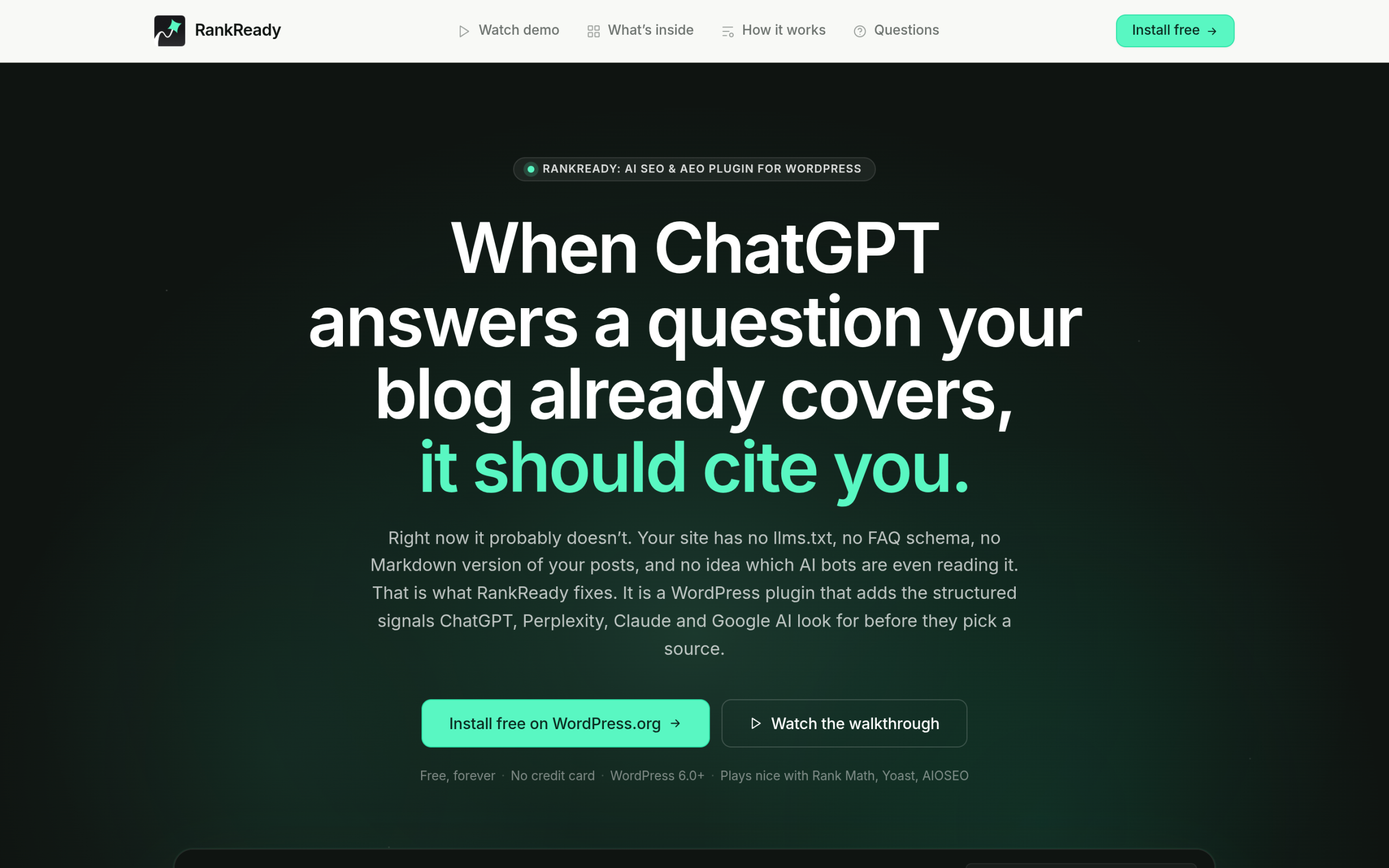
- Citation Candidates is a leaderboard of your own posts that citation-style bots fetched in the last 30 days, so you can see which parts of your topic AI engines are actually pulling.
- The Live AI crawler log records every time an AI bot hits your site, with the timestamp, page, and bot name, so you can confirm the crawlers are reaching your clusters.
- AI referral traffic counts visits arriving from chatgpt.com, perplexity.ai, claude.ai, gemini.google.com, and copilot.microsoft.com.
- A per-post readiness score from 0 to 100 grades each post on schema, freshness, content depth, and author signals, which doubles as a checklist for strengthening weak posts in a cluster.
Put together, that turns topical authority from a hope into a feedback loop: build a cluster, watch which posts get fetched, and reinforce the gaps. RankReady also generates llms.txt files and the schema that helps those crawlers parse your structure in the first place.
Common topical authority mistakes
- Thin clusters. Three shallow posts do not prove depth. A cluster needs enough genuinely useful pieces to cover the angle properly.
- Orphan posts. A great article with no internal links to the rest of the cluster is invisible as a topical signal.
- Keyword cannibalization. Two posts targeting the same question split your authority and confuse search engines about which to rank.
- Chasing volume over coverage. Skipping low-volume but on-topic questions leaves holes in the map that competitors fill.
- Building once and walking away. Topics evolve. A map that is never updated slowly decays.
Wrapping up
Topical authority is the difference between a site that ranks for a few terms and a site that owns its subject. Pick one topic, map it honestly into pillars and clusters, link it tightly, and keep filling the gaps. Then measure what is actually getting fetched and cited so you are improving the map with evidence rather than guesswork. In an era where AI engines pick a small number of sources to trust, being the site that covers the whole topic is how you become one of them.
To see which of your posts AI engines are already fetching, and to score each one for citation readiness, start with the free RankReady plugin.