




A few years ago, E-E-A-T was an acronym only SEO nerds argued about. Now it is the thing that quietly decides whether Google trusts your page, and whether ChatGPT, Perplexity, and Google’s AI surfaces are willing to cite you.
The letters did not change much, but the stakes did. This guide covers what E-E-A-T actually means, why it matters more in the AI-search era, and how to build it on a WordPress site so machines can see your expertise, not just your readers.
What E-E-A-T Actually Stands For
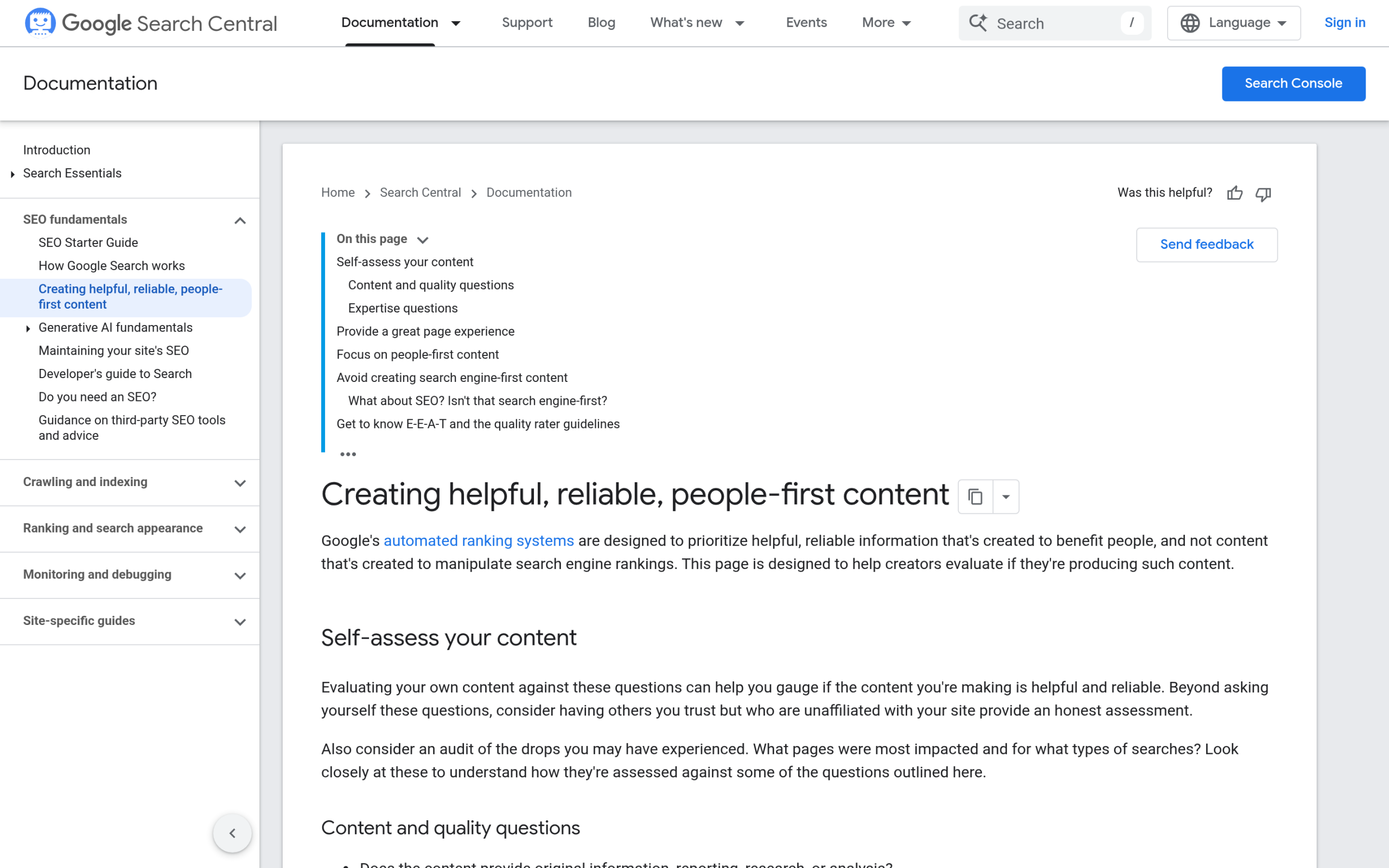
E-E-A-T stands for experience, expertise, authoritativeness, and trustworthiness. It comes from Google’s Search Quality Rater Guidelines, the document Google’s human quality raters use to judge whether search results are actually good. Two things are worth getting right up front, both straight from Google.
- Trust is the center. In Google’s words, “Of these aspects, trust is most important. The others contribute to trust, but content doesn’t necessarily have to demonstrate all of them.” Experience, expertise, and authoritativeness all exist to build toward trust.
- It is not a switch you flip. Google is explicit: “While E-E-A-T itself isn’t a specific ranking factor, using a mix of factors that can identify content with good E-E-A-T is useful.” There is no single E-E-A-T score in the algorithm, just a basket of signals that together point at it.
Google also notes its systems “give even more weight to content that aligns with strong E-E-A-T” for YMYL topics, the ones that can affect a person’s health, financial stability, or safety. The extra E, experience, was added to recognize first-hand, lived knowledge, not just credentials.
Why E-E-A-T Matters More in the AI-Search Era
Traditional search shows ten blue links and lets the reader judge. AI answer engines do not. They have to pick a small handful of sources to actually quote, and they lean on the same trust signals to choose. If two pages say the same thing, the one with a named, credentialed author, a real about page, cited sources, and clean structured data is the safer one to cite. That is why how Perplexity decides which sites to cite and how to show up in Google’s AI Overview both come back to the same place: demonstrable trust.
The Signals That Actually Show E-E-A-T
- A real author byline and bio. A named human with credentials, not “admin” or “editorial team.”
- Demonstrated experience. First-hand phrasing like “I tested this” or “in our setup,” which is exactly what the extra E rewards.
- Citations to primary sources. Linking out to the original study, doc, or data instead of asserting.
- A clear About and Contact page. Who you are, why you are credible, how to reach you.
- Accurate, current content. Dated, maintained, and corrected when things change.
- Off-site reputation. Mentions, reviews, and links that corroborate your authority.
How to Build E-E-A-T on a WordPress Site
- Put a real author on every post. A named author with a photo, a bio, and a link to their wider work. An author box at the end of each post does this visibly.
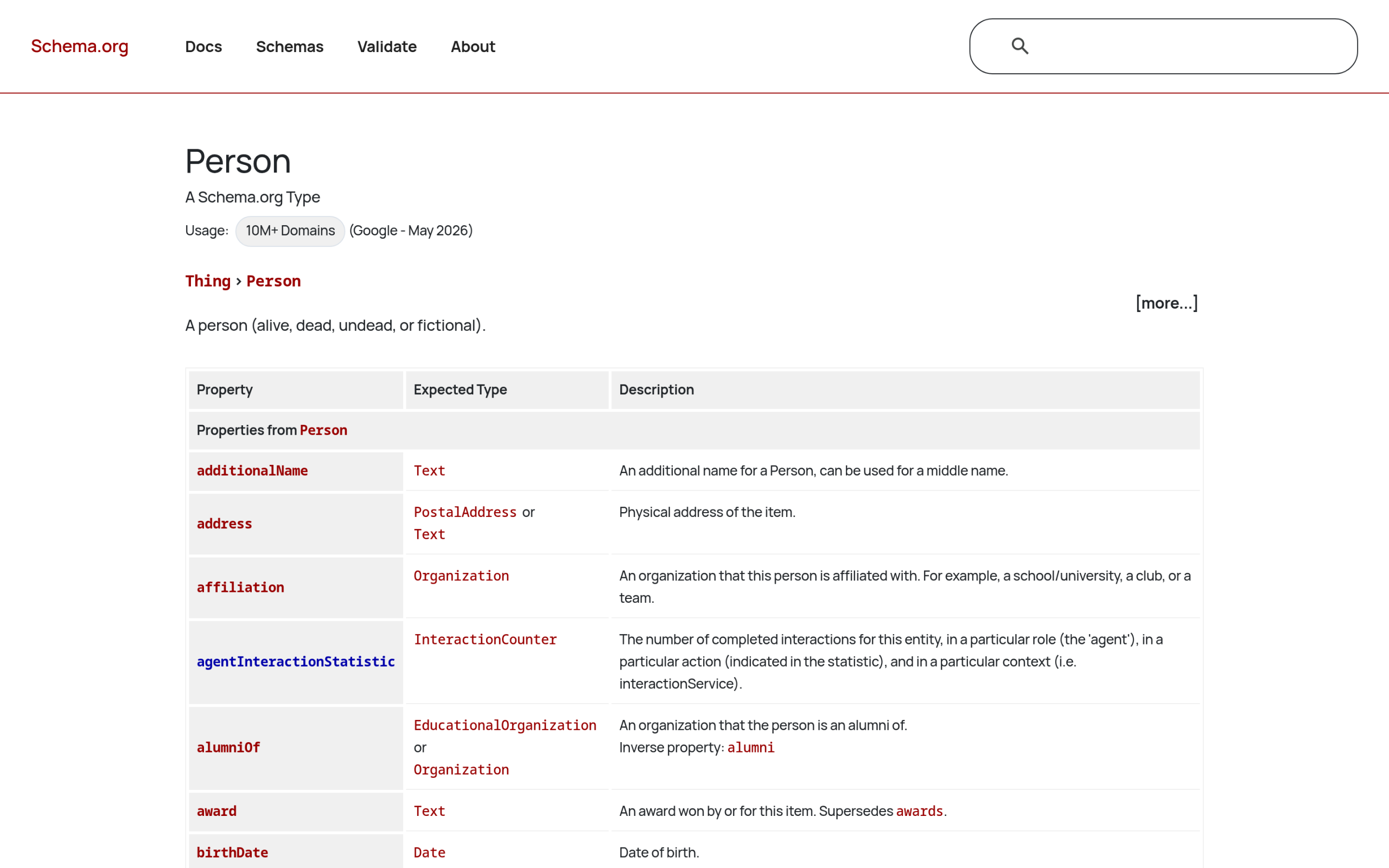
- Make the author and publisher machine-readable. Add Person and Article schema so a crawler can connect the byline to a real entity. This is the structured-data side of schema markup for AI citations.
- Write a genuine About and Contact page. Then link to it from author bios.
- Cite primary sources and link out. It signals confidence, not weakness.
- Keep pages current. Review and update, and say when you did.
Making Your Expertise Machine-Readable for AI Citations
This is where E-E-A-T meets answer engine optimization. A human reader can infer your expertise from how you write. A crawler cannot, unless you spell it out in structure. That gap is exactly what RankReady is built to close. It ships author boxes that count toward author signals, Article and Speakable schema, and a per-post readiness score that tells you whether a page is structured well enough to be cited, plus an agentic readiness scorecard for the AI-agent era. It is free, forever, and runs on WordPress 6.0+.
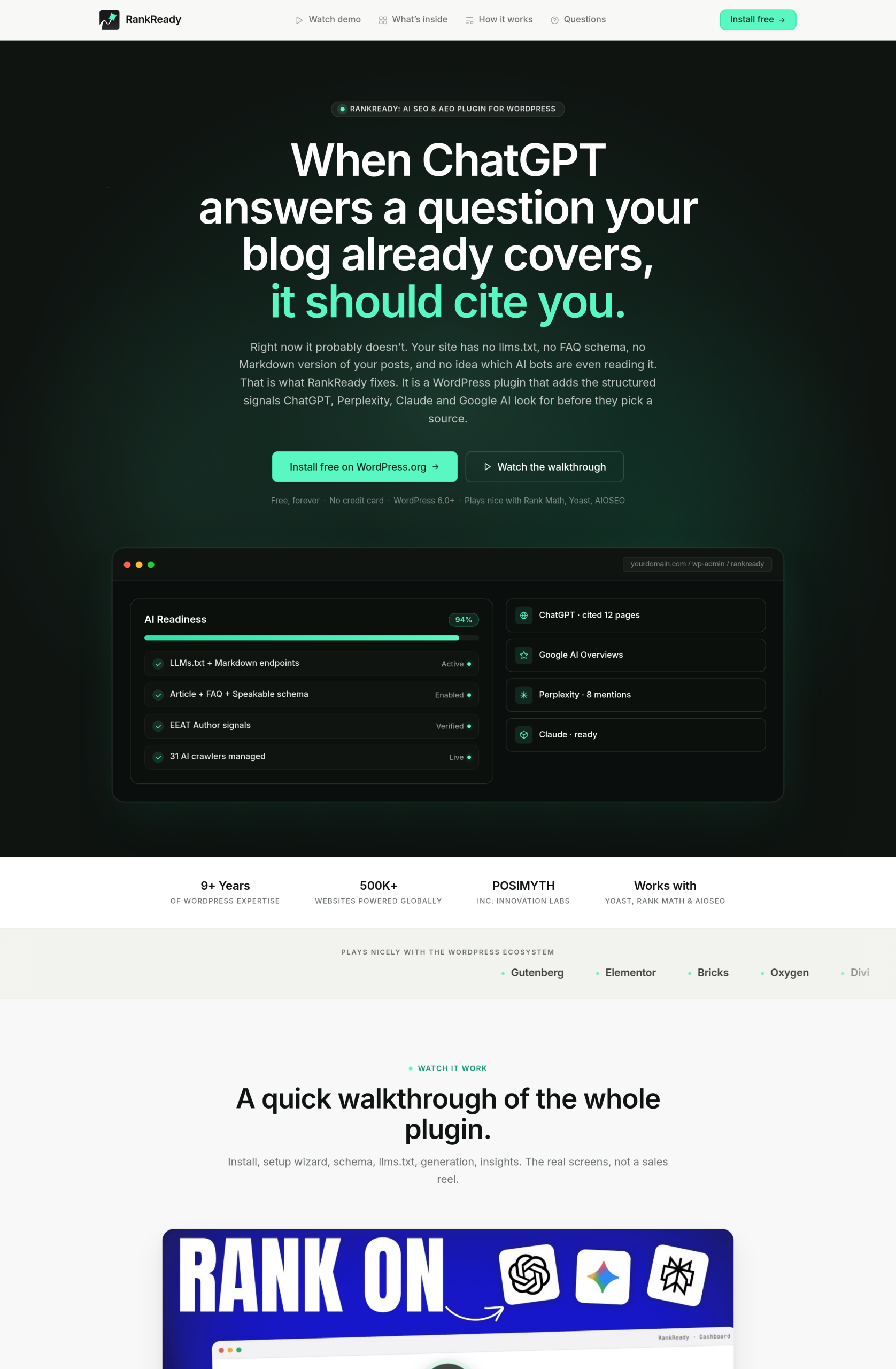
If you are weighing it against a traditional SEO plugin, our comparison of Yoast versus RankReady for AI SEO and the wider roundup of the best SEO plugins for WordPress put it in context. The short version: a classic SEO plugin optimizes you for blue links; RankReady optimizes the E-E-A-T and structure that answer engines read.
Common E-E-A-T Mistakes
- Faceless content. No author, or a generic “admin” byline.
- Thin or fake bios. A name with no real credentials or body of work behind it.
- Unreviewed AI content. Published with no human experience, editing, or fact-check, which is the fastest way to erode trust.
- No sources. Strong claims with nothing to back them.
- Stale pages. Advice that was true three years ago and was never revisited.
Wrapping Up
E-E-A-T is not a trick or a score to chase. It is the boring, durable work of being a credible source and making that credibility legible to both people and machines. Put real authors on your content, back your claims with sources, keep pages current, and mark up the structure so a crawler can see who stands behind the words. Do that, and you are ready for whichever engine, blue link or AI answer, sends the next reader your way.