




AI SEO might be the most over-used and least-defined phrase in marketing right now. Half the people saying it mean using ChatGPT to write meta descriptions faster.
The other half mean getting their site quoted inside an AI answer. Those are two different jobs, and only one of them is genuinely new.
This guide untangles what AI SEO actually means in 2026, and exactly how to do the part that matters on WordPress.
What Is AI SEO, Really?
AI SEO is the practice of optimizing your site and content so AI-powered search engines discover it, cite it, and recommend it. That includes ChatGPT, Google AI Overviews, Perplexity, Gemini, Claude, and Copilot, all of which now answer questions by synthesizing web content instead of just listing links.
The term gets used in two senses, and it helps to separate them. The first is using AI as a tool to do ordinary SEO faster, drafting outlines, clustering keywords, generating schema. Useful, but not new in kind.
The second is optimizing so that AI engines treat your content as a trustworthy source worth quoting. That second sense is the shift, because discovery is moving from ranked links toward synthesized answers, and being cited in the answer is the new visibility.
This guide is mostly about that second job.
AI SEO vs Traditional SEO, and Where They Overlap
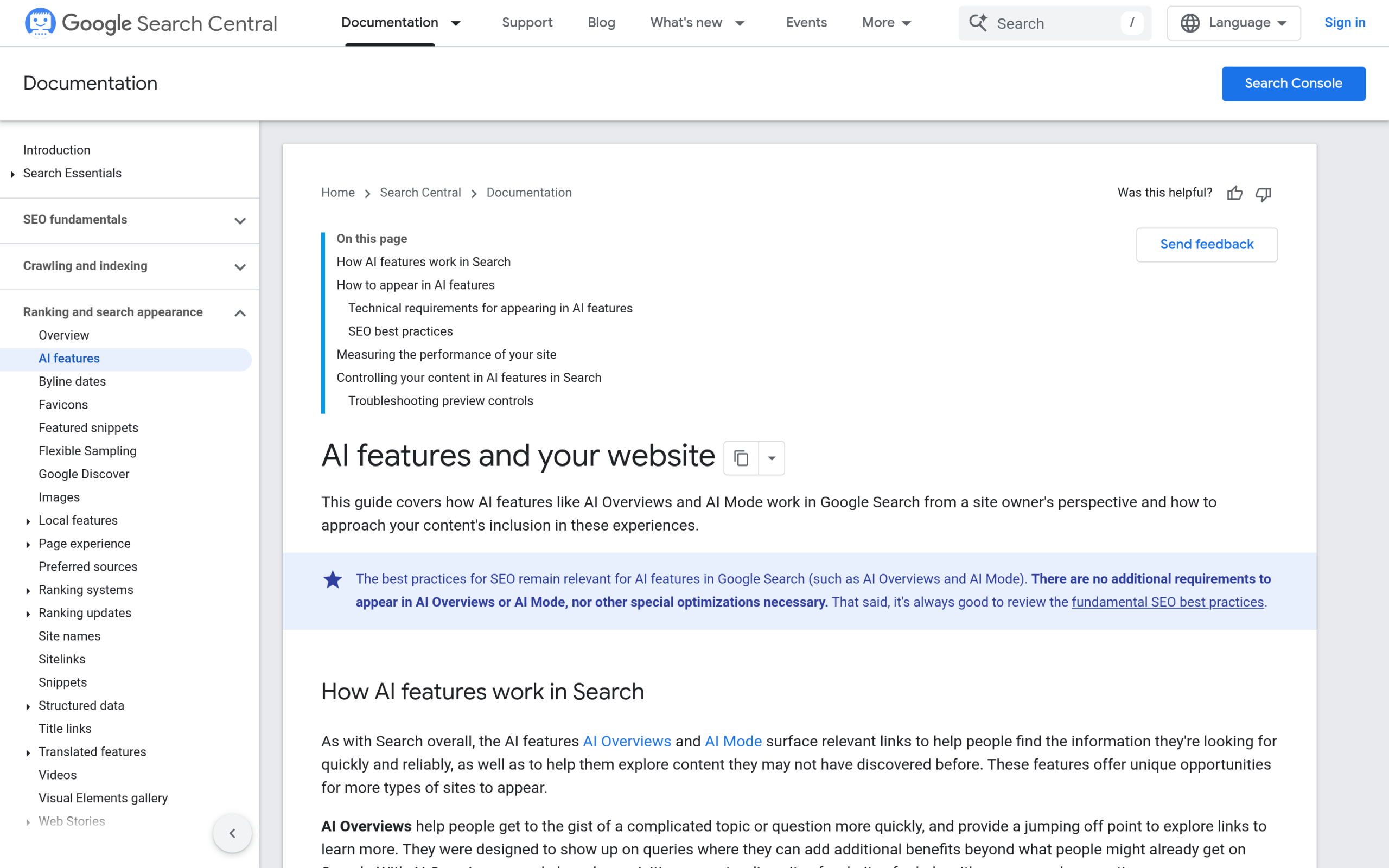
Traditional SEO is not dead, and anyone telling you to abandon it is selling something. For plenty of queries there is no AI answer box, and a ranked blue link still wins the click.
The right approach in 2026 is a dual one: keep ranking for queries where AI features are absent, and separately optimize your content structure, citation-worthiness, and entity relationships for the queries where AI engines answer directly.
Two sub-disciplines have grown up around the AI side. Generative Engine Optimization, or GEO, is about making your content quotable and trustworthy for AI models.
Answer Engine Optimization, or AEO, is about winning direct-answer slots like featured snippets, People Also Ask, and voice results. AI SEO is the umbrella over both.
Also Read: Go deeper on each layer with our guides to Generative Engine Optimization and Answer Engine Optimization.
How AI Engines Decide What to Cite
Modern AI search rarely answers a question in one shot. It breaks the question into smaller sub-queries, searches each one, reads the top results, and stitches the pieces into a single answer.
This is often called fan-out querying. The practical lesson is that your content needs to clearly answer the smaller questions an AI pulls out of a big one.
From there, a few things make a page more likely to get quoted. Extractability: clear, self-contained answers, definitions, lists, and Q and A blocks that a model can lift cleanly.
Trust signals: real experience, named authors, and the kind of expertise that E-E-A-T describes.
Entities and topical depth: covering a subject thoroughly so engines see you as an authority on it, not a one-page drive-by. And freshness, because stale pages get passed over for current ones.
Also Read: The trust side matters more than ever. See what E-E-A-T really means, how to build topical authority, and how Perplexity picks what to cite.
The AI SEO Checklist for WordPress
None of this requires a rebuild. On a WordPress site, AI SEO comes down to a handful of concrete moves.
- Write extractable content. Lead sections with a clear answer, use descriptive headings, and keep definitions and steps self-contained so a model can quote them without guessing.
- Add the right schema. Article, FAQ, and HowTo markup help engines understand and reuse your content. Match the schema to what the page actually is.
- Publish an llms.txt file. It works like robots.txt but for AI crawlers, giving you a say in how models access your content.
- Strengthen author and trust signals. Real author bios, clear sourcing, and updated dates all feed the trust judgment.
- Cover topics in depth. Interlink related posts into clusters so engines see genuine subject coverage rather than isolated pages.
- Keep the technical base healthy. Fast loading, clean mobile, and solid Core Web Vitals still matter, because AI crawlers are sharper than they used to be.
Also Read: The mechanics, step by step: schema markup for AI citations and how to add an llms.txt file in WordPress.
How to Measure AI SEO (the Part Most Guides Skip)
Here is the gap in almost every AI SEO guide: they tell you what to do, but not how to tell whether it worked. Traditional analytics do not show you whether an AI engine actually fetched your page or quoted it. You can do everything on the checklist and still be flying blind.
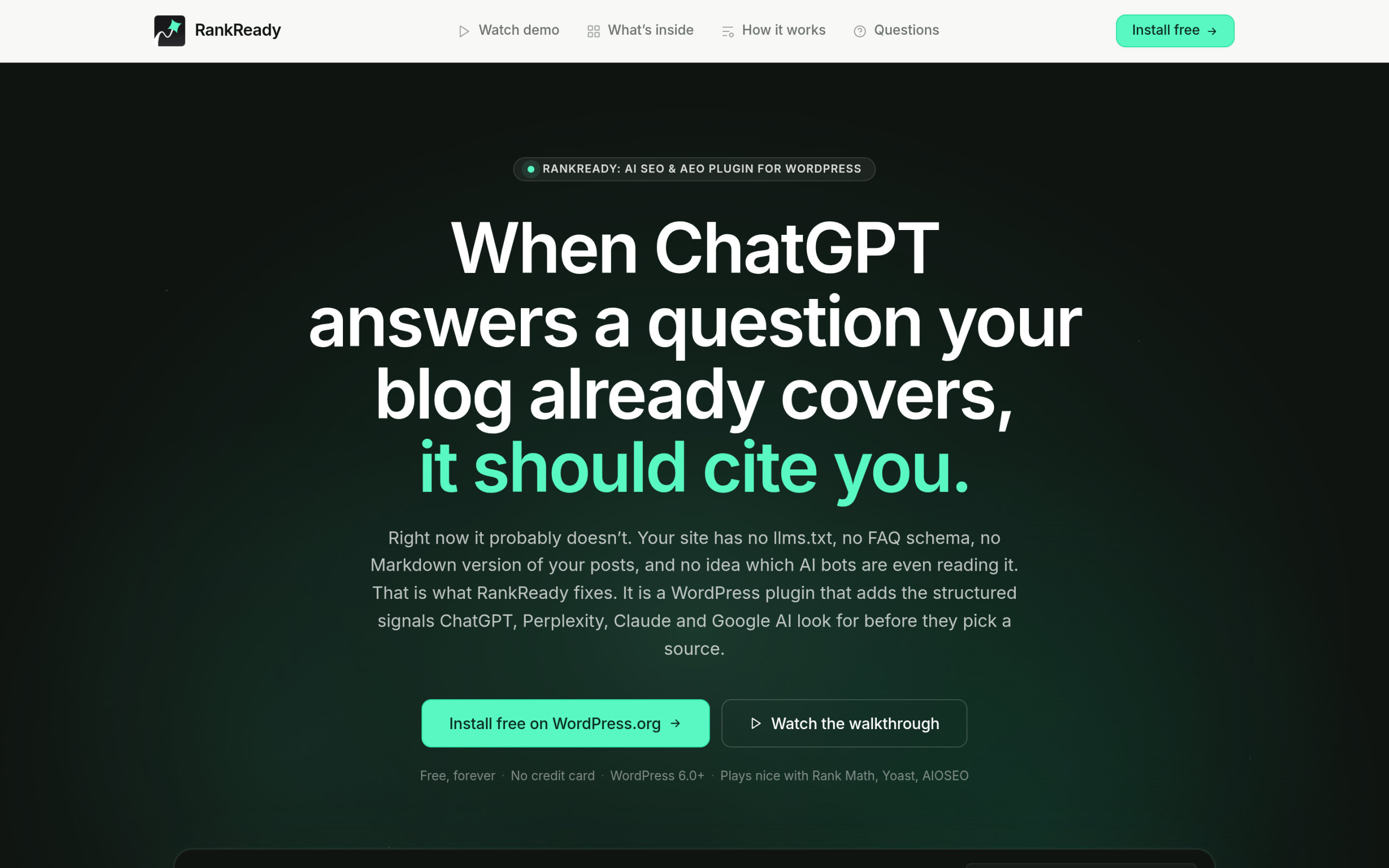
This is where a measurement layer earns its place. RankReady is a free, GPL-licensed WordPress plugin built for exactly this. It keeps a live AI crawler log that names the bots hitting your site, including GPTBot, ClaudeBot, PerplexityBot, Google-Extended, Bytespider, and more.
It surfaces a leaderboard of your own posts that citation-style bots fetched in the last 30 days, so you can see which content AI engines are actually reading.
It tracks AI referral traffic from chatgpt.com, perplexity.ai, claude.ai, gemini.google.com, and copilot.microsoft.com. And it gives each post a readiness score based on schema, freshness, content depth, and author signals, so you know what to fix next. If you are weighing it against a dedicated visibility tracker, our breakdown of RankReady vs Profound walks through where each one fits.
One honest caveat, because it matters. A tool like this measures and scores your AI-readiness and shows you what AI engines are doing with your content. It does not write the content for you or build your authority.
The work on the checklist above is still yours to do. What the measurement gives you is a feedback loop instead of guesswork.
Also Read: If you are shopping around, compare options in our best AI SEO tools for WordPress roundup.
AI SEO Myths Worth Dropping
A few ideas need to go. AI SEO is not a magic plugin that ranks you in ChatGPT overnight. It is not the end of traditional SEO either, since both run in parallel.
And it is not just stuffing in more keywords, because AI engines reward clear, trustworthy, well-structured answers, not density. Treat it as a discipline, not a hack.
Also Read: We unpack the rest in AI SEO myths.
Wrapping Up
AI SEO comes down to one shift: being cited in the answer, not just ranked in the list. Structure your content to be quotable, add schema and an llms.txt file, build real author trust and topical depth, and keep the technical base solid.
Then measure what AI engines actually do with your pages so you are improving on evidence, not vibes. Do that consistently and you are doing AI SEO, no hype required.