




Rank Math and Yoast are the two SEO plugins most WordPress sites end up choosing between, and both are genuinely good at the job they were built for: titles, meta descriptions, sitemaps, schema, and on-page analysis.
Picking between them is a real decision, not a trick question.
But there is a second question that matters more in 2026 than which traffic-light tells you to add a keyword. Neither plugin was built to get you cited by ChatGPT, Perplexity, or Google’s AI answers.
So this is two comparisons in one: Rank Math against Yoast, and then the layer both of them leave out.
Here is the honest breakdown.
Rank Math vs Yoast at a Glance
Both plugins do the SEO fundamentals well. The differences show up in how much you get for free, how the premium tiers are priced, and how each one feels to use.
Prices below are what the vendors list at the time of writing, and both run discounts, so check the current rate before you buy.
| Rank Math | Yoast SEO | |
|---|---|---|
| Free focus keywords | Unlimited | Core on-page analysis |
| Free schema | 18 pre-defined types + custom JSON-LD | Over 50 schema types |
| Free extras | Redirections, 404 monitor, Search Console integration | Readability analysis, real-time insights |
| Premium price | Pro from about $72/year (billed annually) | $118.80/year ex VAT, single site |
| Best for | Feature-rich free tier, value pricing | Beginners who want guided readability |
Free Version: Where Rank Math Pulls Ahead
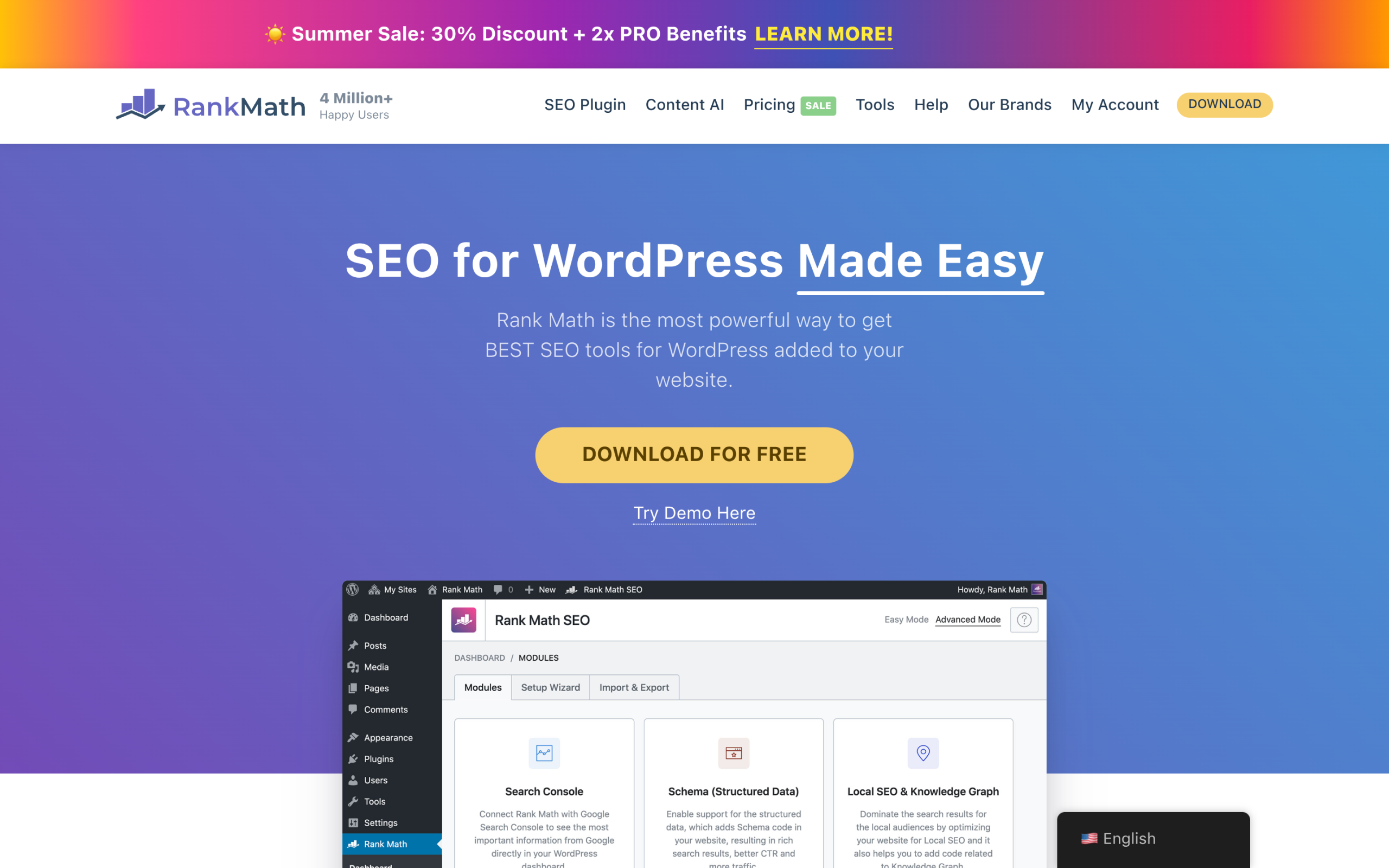
If you are comparing the free versions, Rank Math packs more into its.
The free tier includes unlimited focus keyword optimization per post, 18 pre-defined schema types plus custom JSON-LD, an advanced redirection manager, a 404 monitor, and Google Search Console integration inside your dashboard.
For a free plugin, that is a lot of technical SEO in one place.
Yoast’s free version is not thin, it is just pointed in a different direction. It leans into readability analysis, real-time on-page insights, and over 50 schema types, which is actually a wider schema range than Rank Math’s free tier offers.
If your priority is guided writing and broad structured data out of the box, Yoast free holds its own. If it is redirects, 404s, and Search Console in one screen, Rank Math free is the fuller toolkit.
Premium and Pricing
On price, Rank Math is the cheaper entry point. Rank Math Pro is billed at $5.99 per month on an annual plan, roughly $72 a year at current pricing, with Business and Agency tiers above it for people managing client sites.
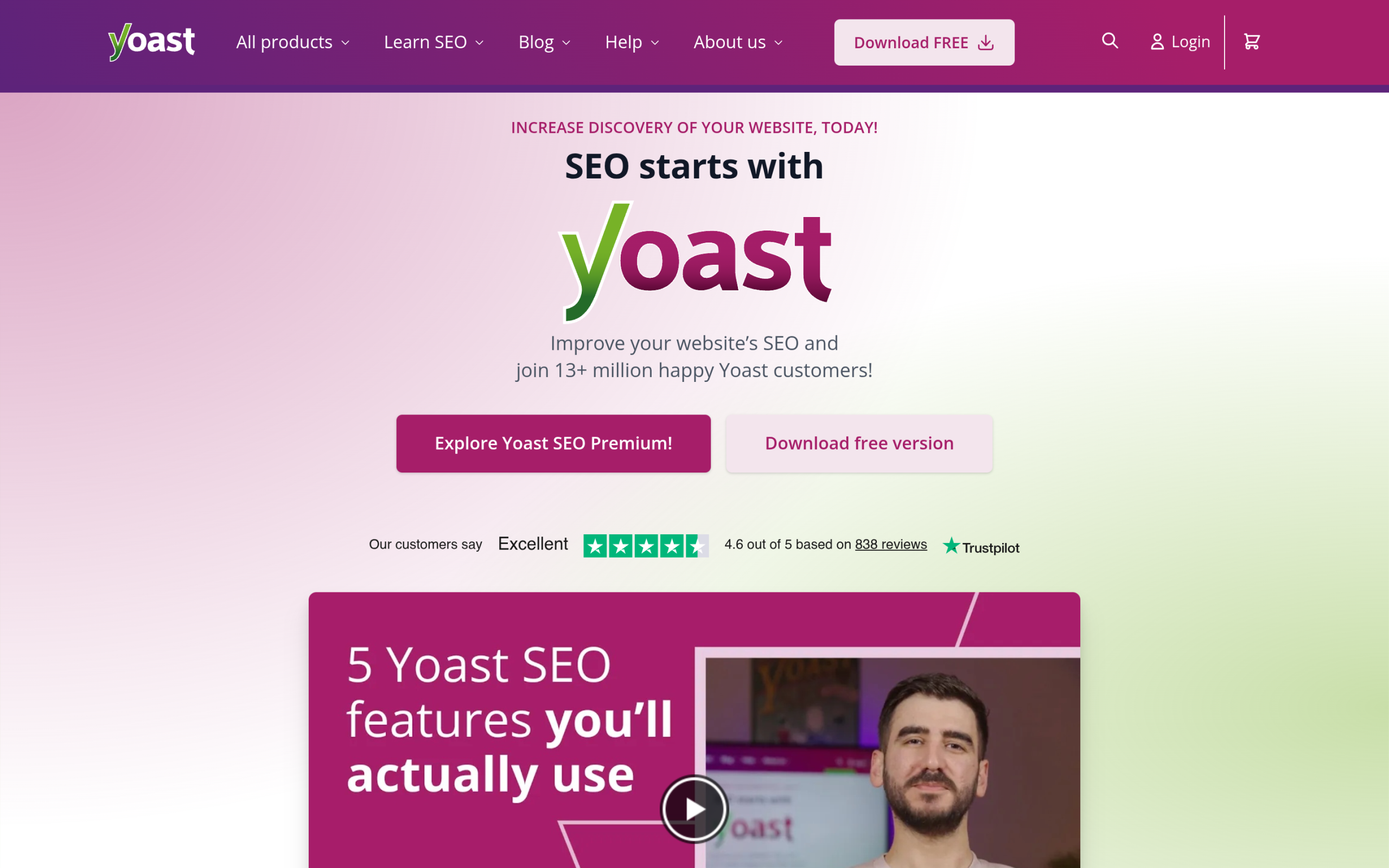
Yoast SEO Premium lists at $118.80 per year excluding VAT for a single site, and the current Premium plan now bundles Local SEO, News SEO, and Video SEO at no extra cost, which it used to sell separately.
That bundling closes a gap that older comparisons still hold against Yoast, so judge it on today’s terms.
If you want the wider field before deciding, our roundup of the best free SEO plugins for WordPress covers the alternatives to both.
Ease of Use and Support
This is where Yoast has earned its reputation.
Its setup wizard, plain-language readability checks, and the familiar red, orange, and green lights make it easy for someone with no SEO background to publish a reasonably optimized post. For agencies handing a site to a non-technical client, that hand-holding is worth a lot.
Rank Math is not hard to use, but it exposes more options up front, which is a strength if you know what you want and mild clutter if you do not. The honest read: Yoast is the gentler on-ramp, Rank Math is the deeper toolbox.
Performance
Rank Math is widely reported by users to be lighter on server resources than Yoast, which matters most on shared hosting or large sites running many plugins.
Treat that as the general consensus rather than a guaranteed number for your specific setup, because real-world impact depends on your host, your theme, and what else is installed. If performance is your deciding factor, test both on a staging copy of your own site before committing.
The AI-SEO Layer Both Miss
Here is the part the Rank Math vs Yoast debate skips. Both plugins optimize you for the traditional search engine: the blue links, the meta descriptions, the rich snippets.
Neither was built for the way people increasingly find answers now, by asking an AI engine that reads your content, decides whether to trust it, and cites a handful of sources. That is the goal of answer engine optimization, and it is a different job from ranking a blue link.
This is where RankReady fits, and it is built to run alongside whichever of the two you pick, not replace it.
It generates an llms.txt and llms-full.txt file and a clean Markdown copy of every post so AI crawlers can read your content without the page clutter, adds Article and Speakable schema aimed at AI answers, and gives you a live AI crawler log plus citation candidates so you can see which bots fetched which posts.
It is free, GPL licensed, and runs on WordPress 6.0 or newer with PHP 7.4 or newer. Keep Rank Math or Yoast for traditional SEO, and add the AI-readability layer on top.
We have the full head-to-heads if you want them: Rank Math vs RankReady and Yoast vs RankReady.
Verdict: Which Should You Choose?
- Choose Rank Math if you want the most in a free plugin, value pricing on premium, and you are comfortable with more options on screen.
- Choose Yoast if you are a beginner or handing the site to one, and the guided readability and gentle setup matter more than raw feature count.
- Either way, add an AI layer. Whichever you run, neither makes your content AI-citable on its own. That is the gap to close in 2026.
The Rank Math vs Yoast choice is close, and you will do fine with either. The bigger miss is treating traditional SEO as the whole game when AI engines are already deciding who gets cited.