


As AI moves from a search box to agents that fetch pages on your behalf, getting cited changes shape. An agent reads sources, picks the ones it trusts, and quotes them. Your job is not to trick that process, because you cannot.
Your job is to be the easiest, most trustworthy page for an agent to pick. Here is the honest version of how to do that on WordPress, and how to actually measure whether it is working.
What you’ll learn: what being cited by an AI agent really means in 2026, the levers that genuinely raise your odds, and how to measure citations instead of guessing.
What “Cited by an AI Agent” Means Now
When someone asks an AI assistant a question, it often fetches a handful of pages and quotes the ones it finds most useful, with a link back. Being cited means your page is one of those sources.
In the OKF era, more of this happens through agents fetching content programmatically rather than a person clicking a blue link. You cannot force a citation, and anyone who says they can guarantee one is selling something, as we covered in our AI SEO myths guide.
What you can do is stack the odds.
The Honest Levers That Raise Your Odds
- Be the best answer. Agents favor pages that answer the question clearly and completely. Helpful, specific content wins.
- Be fetchable. Your page must be indexed, reasonably fast, and not accidentally blocking AI crawlers. If you have tightened robots rules, double-check you have not shut out the bots you want, as in our guide to ChatGPT and OpenAI’s crawlers.
- Be readable by machines. A clean Markdown version and clear structure make your page easy to parse, the theme of Markdown is becoming the language of AI agents.
- Be trustworthy. Schema, clear authorship, and topical depth all signal reliability. Our schema guide covers the markup side.
The OKF and Agent Angle
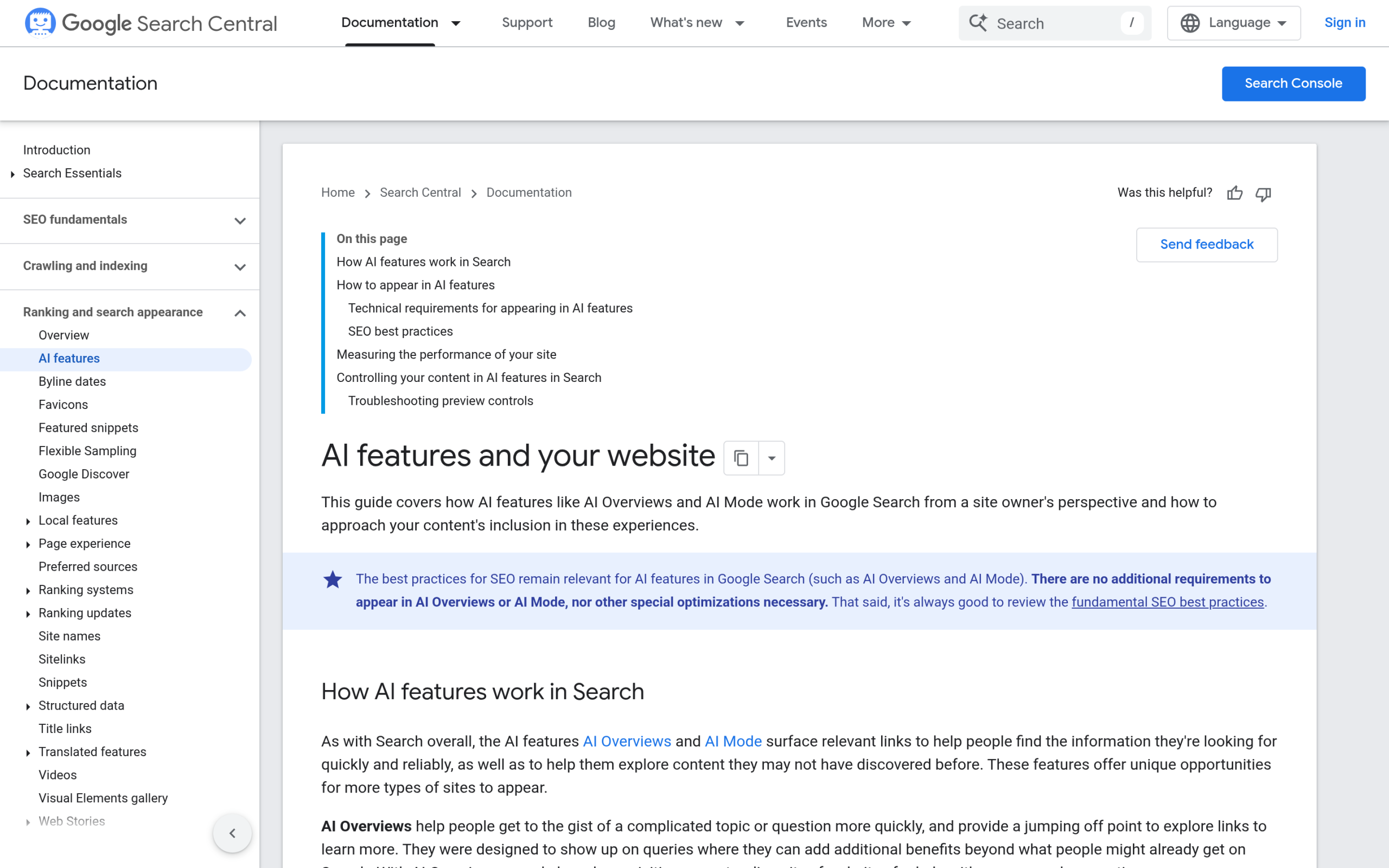
Why does this feel different now? Because agents increasingly fetch structured content directly. The same Markdown and structure that Google’s Open Knowledge Format formalizes for internal knowledge is exactly what makes a public page agent-readable.
You do not need to publish an OKF bundle to benefit, as we explained in OKF vs llms.txt. You need your public pages to be clean, structured, and trustworthy enough that an agent can lift an answer from them with confidence.
You Cannot Manage What You Cannot Measure
Here is the part most advice skips. Even if you do everything right, you are flying blind unless you can see what AI agents do with your site. This is where RankReady earns its place.
It keeps a live log of which AI crawlers hit your pages, including GPTBot, ClaudeBot, and PerplexityBot, shows a leaderboard of the posts citation-style bots fetched in the last 30 days, tracks referral visits from chatgpt.com, perplexity.ai, claude.ai, gemini.google.com, and copilot.microsoft.com, and scores each post from 0 to 100 for readiness.
It will not promise you citations. It shows you, with real data, where you are being picked up and where you are not. RankReady is free, GPL-2.0, and works alongside Rank Math, Yoast, AIOSEO, and SEOPress.
A Practical Checklist
- Pick a question your page should own, and answer it clearly near the top.
- Confirm the page is indexed and not blocking the AI crawlers you want.
- Add schema and a clean Markdown version so machines can read it.
- Strengthen author and trust signals.
- Measure which agents fetch the page, and improve the posts that are not getting pulled.
The Bottom Line
Getting cited by AI agents is not a trick you unlock; it is the natural result of being the best, most readable, most trustworthy answer, then measuring and improving.
Do the fundamentals, make your content easy for a machine to read, and watch the data instead of the hype. That is how you earn citations in the OKF era.