


A client asked me last month why their traffic was flat while their content was getting quoted in ChatGPT answers without a single click coming back. That is the whole shift in one sentence. People are getting their answer from the AI and never visiting the page that supplied it. Optimizing for that new reality has a name, actually several competing names, and the acronym soup (AEO, GEO, LLM SEO) is enough to make anyone tune out. This guide cuts through it for WordPress site owners, with what is real, what is hype, and what to actually do.
Here is the honest version up front: AEO and GEO are not a replacement for SEO, they are a layer on top of it. If your pages cannot be found and indexed the old way, they will not be cited the new way either. The rest of this is how the pieces fit, what Google actually says (it is not what most guides claim), and the WordPress-specific steps that move the needle.
AEO, GEO, LLM SEO: what the acronyms actually mean
The terms overlap so much that even the people selling the services argue about them. The practical split most of the industry has settled on:
- Answer Engine Optimization (AEO): making your content easy for an answer engine to extract a direct answer from, such as Google’s AI Overviews and featured snippets.
- Generative Engine Optimization (GEO): getting your site cited when a generative engine like ChatGPT, Claude, or Perplexity synthesizes an answer from multiple sources.
- LLM SEO: the broad umbrella for optimizing toward large language models, used interchangeably with the two above.
Do not get attached to the labels. Some practitioners argue GEO and AEO are the same discipline with different marketing, and they are mostly right. The work underneath is one thing: structure your content so a machine can lift a clean, trustworthy answer out of it, and so the engines can reach it. The formula people land on is SEO plus AEO plus GEO, not one instead of another.
Where the term GEO actually comes from
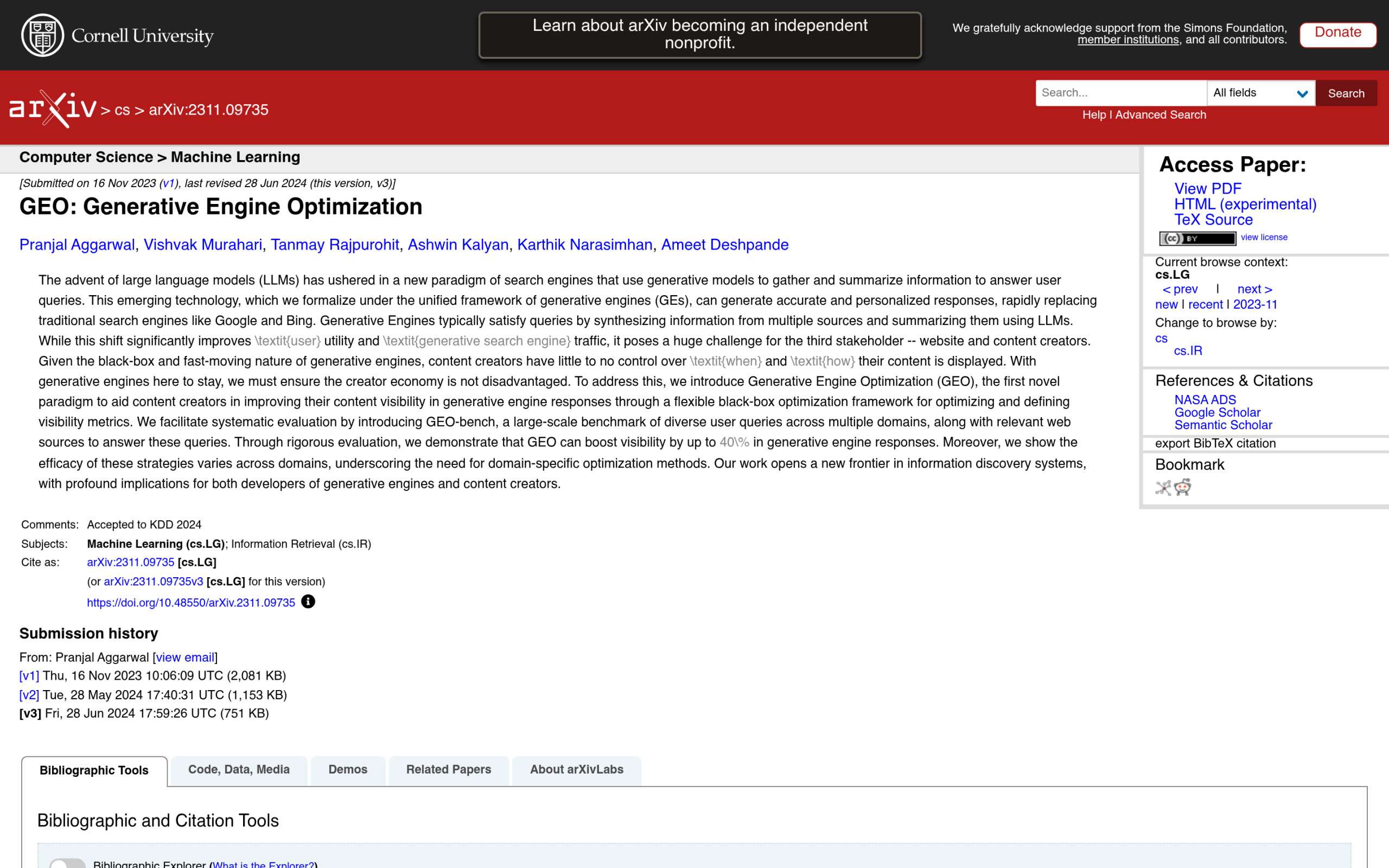
GEO is not a marketing invention. It comes from a 2023 research paper titled “GEO: Generative Engine Optimization” by Aggarwal, Murahari, Rajpurohit, Kalyan, Narasimhan, and Deshpande. They describe it as “the first novel paradigm to aid content creators in improving their content visibility in generative engine responses through a flexible black-box optimization framework.” The headline result is the part worth remembering: the research found that “GEO can boost visibility by up to 40% in generative engine responses.” That is the evidence base under all the noise. The tactics that worked in the study were not tricks, they were citing sources, adding statistics, and quoting authorities, which is to say, writing genuinely better content.
What Google actually says about AI Overviews (most guides get this wrong)
This is where I have to push back on most AEO advice. A huge number of guides tell you to bolt on special schema to win AI Overviews. Google’s own documentation says the opposite, in plain words: “There are no additional requirements to appear in AI Overviews or AI Mode, nor other special optimizations necessary.” It goes further: “You don’t need to create new machine readable files, AI text files, or markup to appear in these features. There’s also no special schema.org structured data that you need to add.”
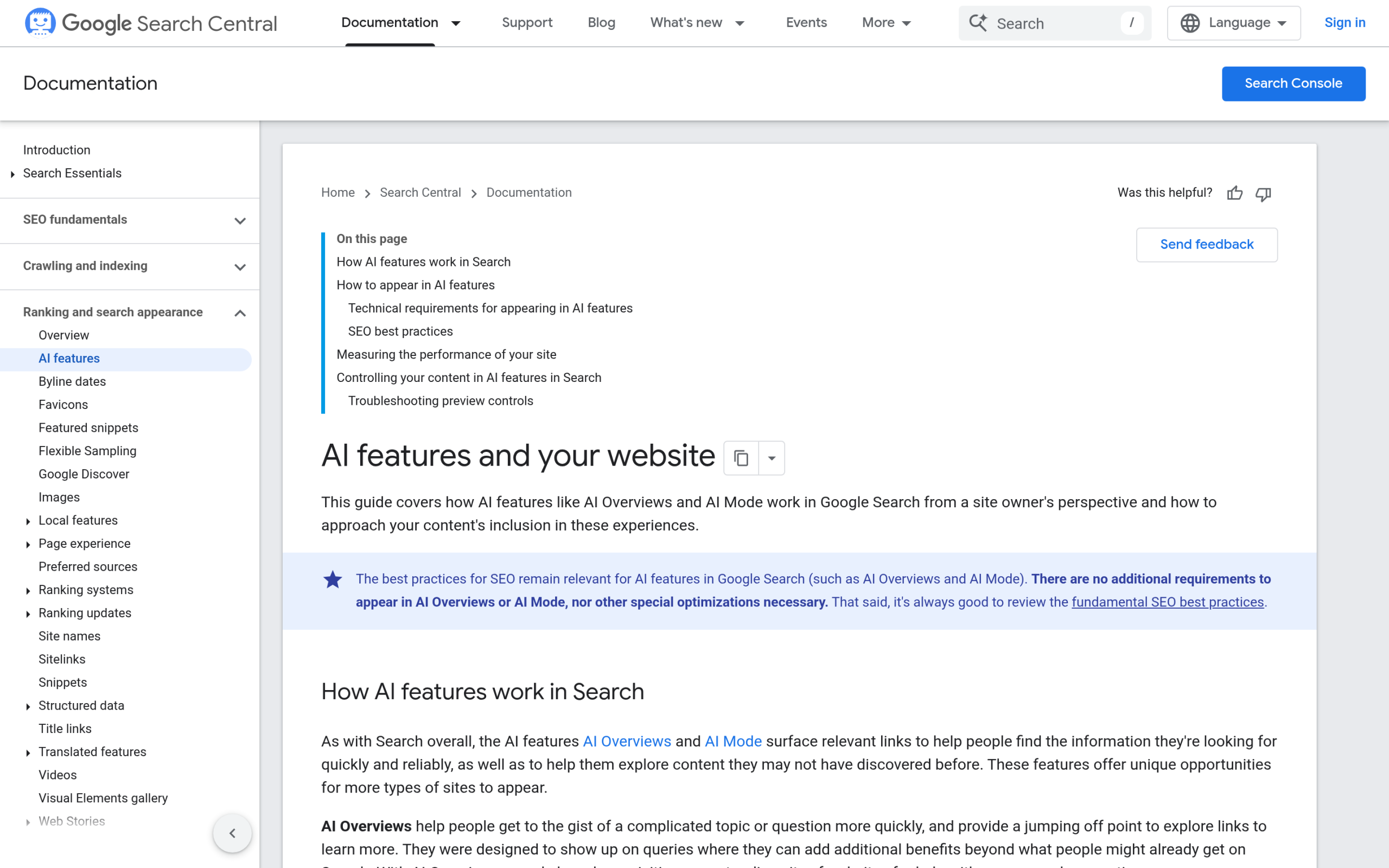
What Google does require is mundane and important: a page “must be indexed and eligible to be shown in Google Search with a snippet,” and you should focus on “creating helpful, reliable, people-first content.” So for Google’s surfaces specifically, AEO is mostly excellent SEO plus genuinely useful answers. Schema still earns you rich results and helps third-party engines parse you, which is real value, but do not believe anyone who says it is your ticket into Google’s AI Overviews. It is not.
Also Read: Google AI Overview: The Complete WordPress Optimization Playbook for the deep dive on this one engine.
The WordPress AEO and GEO playbook
Here is the implementation layer the generic guides skip, written for a WordPress site. None of it requires throwing out your existing SEO.
1. Answer first, then elaborate (the BLUF structure)
Lead each section with the answer in the first two sentences, then expand. Generative engines extract self-contained passages, so a heading followed by a clean, quotable answer is far more likely to be lifted than the same point buried three paragraphs down. This is the single highest-leverage change for most posts, and it costs nothing.
2. Add the schema that helps the engines that use it
Google’s AI Overviews do not need it, but Article, FAQ, and HowTo schema still help third-party engines and earn rich results in classic search. Add it where it is honest and matches the page. On WordPress this is a settings job, not a coding one.
3. Publish an llms.txt file
An llms.txt file gives AI systems a clean map of your most important content. It is an emerging standard, not a Google requirement, but it is cheap insurance for the generative engines that do look for it.
Also Read: llms.txt for WordPress walks through generating one.
4. Let the AI crawlers in
None of this matters if your robots.txt or a privacy plugin is blocking the crawlers that feed these engines (GPTBot, ClaudeBot, PerplexityBot, Google-Extended). Check what you allow on purpose, not by accident.
5. Show real authorship and keep content fresh
Engines lean on trust signals and recency. Real author boxes, honest dates, and updating important posts all help, and they are the same E-E-A-T signals that help in classic search, so the work pays off twice.
How to measure AEO and GEO (so it is not guesswork)
The hard part of this discipline is that the payoff is often a mention with no click, which classic analytics never sees. You need to watch which AI crawlers hit your pages, which pages get surfaced as answers, and whether any referral trickles in from AI tools. A free plugin like RankReady is built for exactly this: it generates llms.txt and AI-focused schema, logs AI crawler visits, tracks citation candidates, and scores each post for readiness, so the playbook above becomes a measurable loop instead of a one-time edit.
Also Read: AI Citation Tracking for WordPress covers the measurement side in depth.
Do you need AEO/GEO tools?
A wave of paid AEO and GEO tools launched in 2026, most priced for agencies. For a single WordPress site, you can get most of the value from a free, WordPress-native setup plus the measurement loop above before you pay for an enterprise dashboard. Start free, prove the channel exists for your site, then decide if a paid tool earns its seat.
Your 2026 AEO and GEO action plan
- Rewrite your top 10 posts so each section answers first, then elaborates.
- Confirm those pages are indexed and snippet-eligible (the only thing Google actually requires for AI Overviews).
- Add Article and FAQ schema where it fits, for rich results and third-party engines.
- Publish an llms.txt file and keep it current.
- Audit robots.txt so the AI crawlers you want are allowed.
- Add real author bios and refresh dates on cornerstone content.
- Turn on crawler and citation tracking so you can see what is working.
That is the whole discipline, minus the acronym anxiety. AEO and GEO reward the same thing good SEO always has: clear, trustworthy, genuinely useful content that a machine can read. The names will keep changing. The work will not.